Alan Jones accuser told friend radio kingpin was ‘in love with him’ years before revealing alleged indecent assaults, court hears
Developed over time first seen 2 months ago
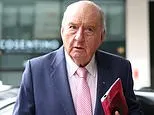
A former radio staffer's friend testified in Alan Jones's Sydney indecent assault trial that the alleged victim had described the veteran broadcaster as being "in love with him" and regularly flirting with him, years before disclosing claims of indecent assault. The witness's evidence forms part of the prosecution case against Jones, 85, who denies 22 charges of indecent assault and sexual touching without consent brought by six men over alleged incidents between 2003 and 2023.
The witness said the radio staffer only confided details of the alleged assaults to him in 2023, after journalist Kate McClymont contacted him ahead of publishing allegations that triggered a police investigation and Jones's eventual arrest. He recounted the staffer, then intoxicated, describing being inappropriately touched by Jones, including at a hotel where the pair had reportedly been seen going into a bedroom together. Separately, the court heard concerns from the defence about a threatening email sent to another witness, Jason Morrison, which NSW Police are now investigating, prompting a warning from the judge against interfering with witnesses. Jones denies all charges, which relate to his decades-long broadcasting career.
- Witness says Jones's accuser called him "in love with him" pre-disclosure
- Alan Jones, 85, denies 22 indecent assault charges from six men
- Police probe threatening email sent to another trial witness
New here? Start with this
Alan Jones is one of Australia's best-known and most influential radio broadcasters, having spent decades as a leading voice in Sydney talkback radio. He is currently on trial in Sydney facing 22 charges of indecent assault and sexual touching without consent, brought by six men who allege incidents took place between 2003 and 2023, during Jones's long broadcasting career. Jones, now 85, denies all the charges.
The case became public after journalist Kate McClymont investigated and published allegations against Jones, prompting a police investigation that led to his arrest. Several former radio staffers and associates are giving evidence during the trial, with the court hearing testimony from witnesses about conversations and incidents said to relate to the allegations.
The trial matters because it involves a public figure with a long and prominent media career, and because the allegations span two decades, raising questions that will be tested through witness accounts and cross-examination as the case proceeds.
Both sides, in good faith
The strongest fair case each way — we don't pick a winner.
The case for
Those who find the allegations credible argue that a young man being flattered by, or even infatuated with, a powerful and charismatic older figure is entirely compatible with that same person later being subjected to unwanted touching; admiration, confusion and fear of professional consequences commonly coexist with abuse, and delayed disclosure is a well-documented pattern among genuine victims, particularly when the alleged perpetrator holds significant influence over their career. On this view, the friend's testimony about earlier flirtatious remarks does not undermine the case but rather reflects the complicated, non-linear way people process and eventually name experiences of unwanted sexual contact.
The case against
Those sympathetic to the defence argue that evidence the complainant once described being "in love with" Jones and regularly flirting with him raises legitimate questions about the nature of their relationship and the reliability of allegations disclosed only years later, after a journalist's intervention and amid a wider group of complainants. On this view, a fair trial requires the jury to weigh whether contemporaneous accounts of mutual, willing interaction are consistent with later claims of non-consensual touching, and to take seriously the possibility that recollections have been reshaped by hindsight, publicity or the influence of other witnesses coming forward together.
Full account
A former radio employee has been described in court as having told a friend that Alan Jones was “in love” with him and frequently flirted with him, years before he later alleged that Jones had indecently assaulted him. Jones, 85, has pleaded not guilty in the NSW Local Court to 22 charges: 20 counts of indecent assault and two of sexual touching without consent. The case concerns allegations by six men who say they were kissed, groped or otherwise subjected to unwanted sexual conduct between 2003 and 2023 in Sydney and the NSW Southern Highlands.
Eight charges concern the former staff member, who alleges that Jones repeatedly kissed and touched him without consent during a five-month period in which they worked together. A former colleague gave evidence that the man had previously spoken of ongoing flirtation, both in person and by text, and had said reports about allegations involving Jones had stirred difficult feelings, possibly referring to trauma. The colleague said those earlier comments had not caused him particular concern at the time.
The former colleague said the staff member did not expressly describe the alleged assaults until 2023, after the colleague had been approached by journalist Kate McClymont in connection with reporting on Jones. He told the court that the man was intoxicated, distressed and agitated when he later alleged that Jones had inappropriately grabbed him. The evidence also touched on an alleged hotel incident in Melbourne, where the colleague said he saw Jones ask the man to accompany him into a bedroom but did not witness what followed. Jones faces no charge over that alleged incident.
The hearing has also examined the role of Ray Hadley, another prominent talkback broadcaster and a longstanding rival of Jones. The staff member had previously said he became upset while telling Hadley about the alleged conduct and declined Hadley’s offer to accompany him to police, asking that the conversation remain private. Jones’s barrister has suggested that the complaint was encouraged by rivalry between Hadley and Jones, an allegation the staff member rejected. Another former colleague nevertheless described a fierce contest between the two broadcasters over 2GB’s breakfast programme, including an alleged plan for Hadley to replace Jones that did not proceed. Jones retired from radio in 2020.
Where outlets differ
Source 1 concentrates on the former colleague’s evidence: the earlier remarks about Jones being in love with the complainant, the 2023 disclosure, and the uncharged Melbourne hotel allegation. Source 2 foregrounds Hadley’s courtroom appearance and the evidence concerning the professional and personal rivalry between Hadley and Jones. Both accounts give the same overall charge total, although Source 1 leads with the 22 combined charges while Source 2 separates them into 20 indecent-assault counts and two sexual-touching counts.