Culture news and discussion on TalkFuse.
Notting Hill Carnival marks 60 years with £4.66m safety funding
Developed over time first seen 3 months ago
Notting Hill Carnival marked its 60th anniversary over the bank holiday weekend, celebrated in an article by London Mayor Sadiq Khan as a landmark moment for the capital. City Hall provided an additional £4.66m in funding this year, more than triple last year's amount, to help organisers strengthen safety measures, including doubling the number of stewards and installing additional signage and temporary CCTV cameras. Khan framed the anniversary not just as a celebration of Caribbean culture but as a testament to how far London has come since the racism and violence Caribbean communities faced after the Windrush generation's arrival.
The carnival, now the world's second-largest street festival, draws visitors from around the globe and generates around £400m for the economy each year. Its origins lie in the response to racist violence in Notting Hill in 1958 and the unsolved murder of Kelso Cochrane in 1959, with activists Claudia Jones and Rhaune Laslett credited with laying its foundations, alongside steelpan musician Russ Henderson, whose impromptu street procession through Portobello Road became the template for the modern event. Sixty years on, the festival features costume parades, sound systems, steelpan bands and Caribbean food, and is regarded as a fixture of London's cultural calendar.
- Sources
- 2
- Outlets
- 2
- Left · Centre · Right
- 1 · 0 · 1
In short
- Notting Hill Carnival celebrated its 60th anniversary this bank holiday
- Mayor Sadiq Khan gave £4.66m, triple last year's funding, for safety
- Festival began in the 1950s/60s as a response to racist violence
How this story developed
- 3 months ago Khan disclosed that City Hall had more than tripled its funding to £4.66m this year to fund extra stewards, signage and temporary CCTV, tying the safety investment to the carnival's founding by Claudia Jones and Rhaune Laslett in response to 1950s racist violence, including the murder of Kelso Cochrane.
- 3 months ago London marked the 60th anniversary of Notting Hill Carnival, with police confirming a record 560 arrests over the two-day bank holiday event and West London facing a major post-festival clean-up as Mayor Sadiq Khan hailed the diamond jubilee's Windrush roots.
Full account
Notting Hill Carnival marked its 60th anniversary over the August bank holiday weekend, with organisers and City Hall hailing record scale and cultural significance even as policing and clean-up figures underlined the challenges of running Europe's largest street festival. Mayor of London Sadiq Khan confirmed an additional £4.66m in funding for this year's event, more than tripling the sum provided in 2025, to help carnival organisers strengthen safety arrangements including doubling the number of stewards and installing extra signage and temporary CCTV cameras across the route.
The Metropolitan Police reported 636 arrests across the two days, with 242 made on the Sunday and 394 on the bank holiday Monday, covering offences ranging from drug and weapons possession to assaults, including attacks on emergency workers and sexual offences. Live facial recognition technology led to 121 arrests and identified 86 registered sex offenders in the crowds, seven of whom were arrested for breaching their conditions. Stop-and-search powers recovered 68 weapons, among them a handgun, and officers recorded two knife-related assaults — one stabbing and one slashing — neither of which caused life-threatening injuries. Police also confirmed that a man in his twenties died after entering a canal in North Kensington while being pursued on foot; he was pulled from the water and given CPR by officers and members of the public before being taken to hospital, where he was pronounced dead.
Beyond the security operation, the Mayor's office framed the carnival's 60th year as a milestone worth celebrating, tracing its roots to the aftermath of the 1958 Notting Hill race riots and the racist murder of Kelso Cochrane, and crediting Trinidadian activist Claudia Jones with organising Britain's first Caribbean carnival event in response. Today, City Hall describes the festival as the world's second-largest street celebration, drawing visitors from around the globe, showcasing steelpan bands, elaborate costumes and Caribbean food, and generating an estimated £400m a year for the London economy.
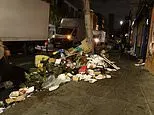
The scale of the celebrations left a substantial clean-up operation in its wake, with streets around the route in west London strewn with discarded food, takeaway packaging, drinks cans and cigarette butts, and landmarks such as post boxes obscured by rubbish. The Royal Borough of Kensington and Chelsea puts its annual clean-up and staffing costs at around £1m, offset by roughly £300,000 recovered through street trader fees, while many nearby residents and businesses had boarded up their properties ahead of the weekend as a precaution.
Where outlets differ
From the full account, which is AI-written from the sources:
The tabloid-style report (Source 1) foregrounds the negative aftermath of carnival — arrest numbers, weapons and sexual offences, a reveller's death, and extensive litter across affluent streets — giving relatively little attention to the festival's cultural purpose.
The City Hall/Mayoral account (Source 2) emphasises celebration, heritage and economic value, presenting the £4.66m funding as a positive investment in safety and inclusion tied to carnival's 60th anniversary and its origins in resisting 1950s racism, while omitting the arrest, crime and litter figures entirely.
Source 1 quantifies the policing response in detail (636 arrests, facial recognition stops, weapons seized); Source 2 instead quantifies the funding increase and economic contribution (£4.66m, £400m), reflecting each outlet's differing focus on law-and-order versus cultural/economic framing.
Left-leaning outlets 1
- Happy 60th anniversary, Notting Hill carnival – a symbol of all that London can be | Sadiq KhanThe Guardian
Only here: happy, 60th, anniversary, symbol, london
Right-leaning outlets 1
Only here: ends, record, arrests
Every side used: notting, hill, carnival
Headline columns compared word for word; nothing in them is AI-written.
Steelman: both sides, in good faith
The strongest fair case each way — we don't pick a winner.
The case for
Supporters of this approach argue that a event of Carnival's scale and cultural significance warrants exactly this kind of serious public investment, and that doubling stewards, adding signage and installing temporary CCTV are sensible, proportionate steps to keep millions of attendees safe without curbing the celebration itself. They point to Carnival's origins as a direct response to racism and division, arguing that properly resourcing its safety honours that legacy by allowing the event to keep growing and thriving rather than being scaled back or restricted. They also note the roughly £400m annual economic contribution as evidence that the funding is a reasonable, even modest, outlay relative to the benefits Carnival brings to London.
The case against
Others would counter that a record 560 arrests, even after tripled funding, raises genuine questions about whether extra money and stewarding are addressing the right problems, and whether an event of this scale needs more fundamental changes to route, capacity or crowd management rather than incremental safety spending. They may also express unease that expanding CCTV and steward or police presence risks altering Carnival's atmosphere, shifting it from a community-led cultural celebration towards something more heavily monitored, a sensitivity that matters given the festival's roots as a response to discriminatory policing of Caribbean communities. This view does not dispute Carnival's value, but questions whether the current strategy for managing its growth is the right one.
Explained simply
Notting Hill Carnival is an annual street festival held in west London over the August bank holiday weekend. It began 60 years ago as a response to racism and division, created by activists including Claudia Jones and Rhaune Laslett after Caribbean migrants of the Windrush generation faced hostility and violence in the late 1950s, including the murder of Kelso Cochrane. It has since grown into the world's second-largest street festival, drawing huge crowds and generating an estimated £400m for the economy each year.
The event is organised by community groups but relies on support from City Hall, led by London Mayor Sadiq Khan, and policing from the Metropolitan Police. Because of its scale, safety and crowd management have long been a focus, alongside the carnival's cultural and historical significance to London's Caribbean communities.
For this year's 60th anniversary, City Hall provided £4.66m in funding, more than three times last year's amount, to help fund extra safety measures such as more stewards, signage and temporary CCTV. This reflects the ongoing balancing act between celebrating the carnival's heritage and scale, and managing the practical challenges of policing and safety at such a large public event.
Coverage · 2 sources
Bias meters
From 2 rated sources.
Art Culture Offbeat Travel Weird & Viral World