Entertainment news and discussion on TalkFuse.
Onslaught review: The nastiest action thriller of 2026, and also the most important
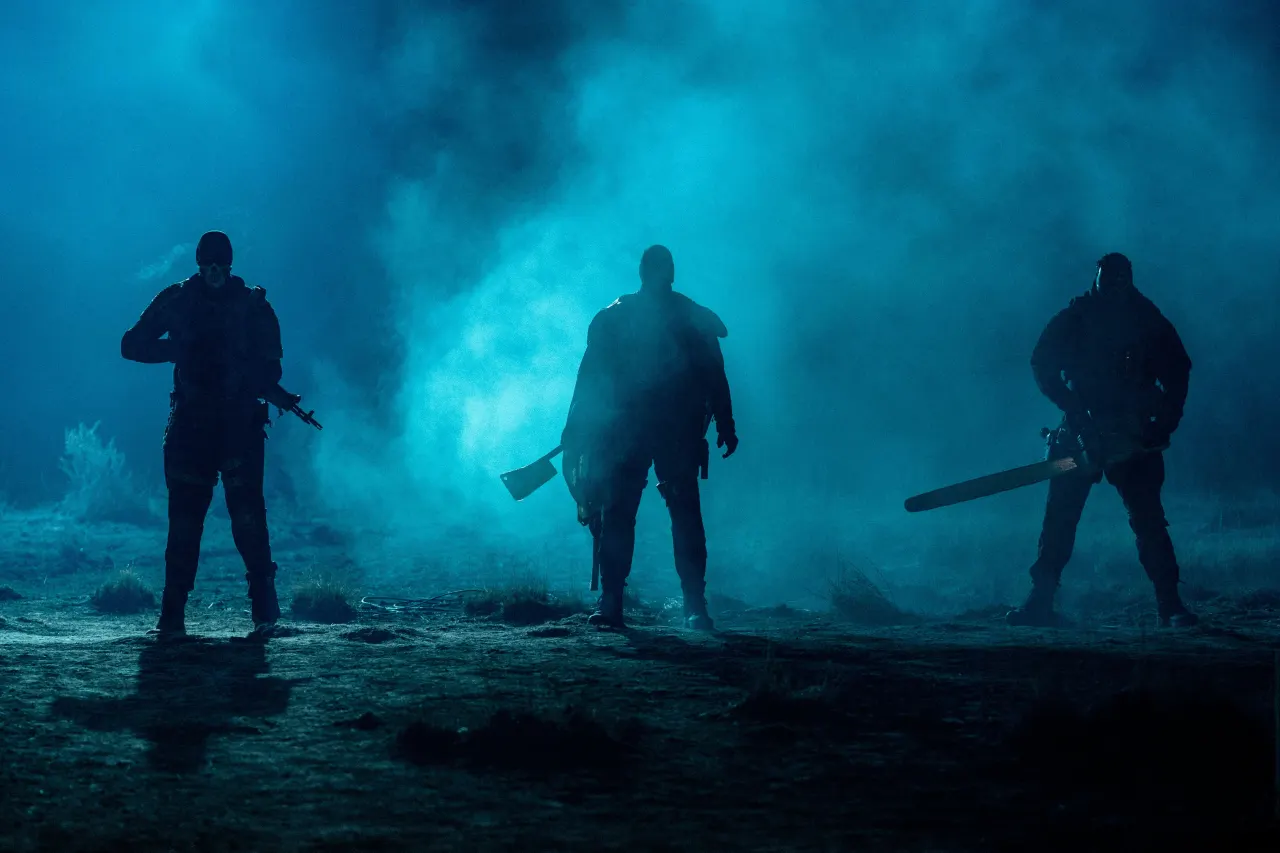
Adam Wingard's new grindhouse action thriller "Onslaught" is a hyper-violent throwback that doubles as pointed political commentary, according to this review. The film, a covert sequel to Wingard's 2014 cult favourite "The Guest", blends the DNA of "Terminator" and "Kill Bill" with a horror sensibility reminiscent of John Carpenter, while using its premise of militarised violence turned inward to reflect on America's "Imperial Boomerang" — the theory that tactics developed for foreign warfare eventually get turned on a nation's own citizens.
The story follows Celeste (Adria Arjona), a former military sniper with PTSD who manages a remote New Mexico trailer park, whose already difficult night — looking after her young daughter while low on supplies and surrounded by illegal firearms — is upended when three genetically enhanced super-soldiers escape a nearby secret military facility. Dan Stevens plays the scientist responsible for creating the soldiers, with Michael Biehn as a government operative overseeing them, and the resulting chaos forces Celeste into a bloody confrontation. The reviewer frames the film's violence as deliberately provocative, drawing an explicit link to real-world concerns about the militarisation of domestic law enforcement, such as reports that a significant proportion of US Immigration and Customs Enforcement personnel are military veterans.
In short
- "Onslaught" is Adam Wingard's ultra-violent "Guest" sequel starring Adria Arjona
- Film mixes "Terminator"/"Kill Bill" style with Carpenter-esque horror
- Reviewer ties its violence to real-world "Imperial Boomerang" political theory
Steelman: both sides, in good faith
The strongest fair case each way — we don't pick a winner.
The case for
The film’s violence can be read as purposeful political criticism: by turning militarised force back on civilians, it dramatises how methods developed for foreign conflict may reshape domestic policing. Its extremity may make that warning harder to ignore, while Celeste’s experience gives the consequences a human focus.
The case against
The same extremity may weaken the film’s political point, making violence feel like spectacle or exploitation rather than careful examination. Drawing a connection between fictional super-soldiers and real law-enforcement militarisation may also invite a sweeping analogy that obscures differences in context and risks substituting provocation for argument.
Explained simply
Adam Wingard is an American filmmaker known for genre films that mix action and horror. Onslaught is linked to his earlier film The Guest, and follows Celeste, a former military sniper living with PTSD, as she faces three enhanced soldiers who have escaped from a secret facility. The cast also includes Adria Arjona, Dan Stevens and Michael Biehn.
The film’s premise connects to the idea of the “imperial boomerang”: that methods used in foreign conflicts can later be used within the country itself. In the United States, debate about military experience in domestic law enforcement forms part of this wider concern. The story uses violent action to explore that tension.