Zelensky says airlines should avoid Russian airspace as Ukraine escalates drone operations
Developed over time first seen 2 months ago
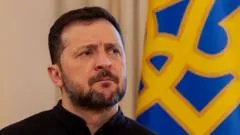
Ukraine has formally notified the UN's aviation body that Russian airspace is unsafe for civilian flights, after President Volodymyr Zelensky warned that the "Russian sky is becoming completely dangerous" as Kyiv escalates long-range drone strikes. Foreign Minister Andrii Sybiha said Ukraine had told the International Civil Aviation Organization it wanted to "prevent unintended incidents", while Zelensky insisted Ukraine was not targeting civilian aircraft but that drone activity over Russia would reach a scale airlines must account for. Vladimir Putin dismissed the move as a "declaration of state terrorism". Despite the warning, flight-tracking data continued to show many aircraft using Russian airspace, including at Moscow's main airports, with delays but few cancellations.
Most Western carriers already avoid Russian skies, but airlines from Turkey, China and the Gulf, including Qatar Airways and FlyDubai, said they were closely monitoring the situation rather than halting flights outright; Turkish carrier Pegasus briefly cancelled some services citing "technical and operational reasons" before resuming its schedule. Ukraine's drone campaign has repeatedly disrupted Russia's biggest airports, at times forcing all four major Moscow hubs to halt arrivals and departures under the country's "Kovyor" air-defence protocol, which grounds flights whenever a drone is detected nearby. Analysts at Osprey Flight Solutions said most strikes were likely to remain within 300km of the border but that daily attacks deeper into Russia were almost certain to continue, raising the risk of "miscalculation or misidentification" near the conflict.
- Sources
- 2
- Outlets
- 2
- Left · Centre · Right
- 1 · 1 · 0
In short
- Ukraine tells UN's aviation body Russian airspace is unsafe for civilian flights
- Zelensky warns of rising drone activity; Putin calls it "state terrorism"
- Non-Western airlines still flying to Russia, but monitoring risks closely
How this story developed
- 2 months ago Ukraine has formally notified the UN's aviation body that Russian airspace is unsafe for civilian flights, escalating President Volodymyr Zelensky's warning that the "Russian sky is becoming completely dangerous" as Kyiv steps up long-range drone strikes.
- 2 months ago Ukrainian President Volodymyr Zelensky has warned airlines, insurers and airports that Russian airspace is becoming increasingly dangerous, as Ukraine escalates its drone campaign against targets deep inside Russia.
- 2 months ago Ukraine has formally notified the UN's aviation body that Russian airspace is unsafe for civilian flights, after President Volodymyr Zelensky warned that the "Russian sky is becoming completely dangerous" as Kyiv escalates long-range drone strikes.
Where outlets differ
Left-leaning outlets 1
Only here: becoming, unsafe, commercial, zelenskyy
Centre outlets 1
Only here: zelensky, avoid, ukraine, escalates, drone
Every side used: russian, airspace, airlines
Headline columns compared word for word; nothing in them is AI-written.
Steelman: both sides, in good faith
The strongest fair case each way — we don't pick a winner.
The case for
Advocates of Ukraine's approach argue that a country repelling invasion has every right to strike military-linked infrastructure deep inside the aggressor's territory, including airports used in the war effort, and that formally notifying the ICAO and airlines is the responsible, transparent way to do so. Rather than concealing the risk, Kyiv is giving carriers fair warning so they can make informed choices, much as airlines already avoid other conflict zones after past tragedies. Given that Russia continues to bombard Ukrainian cities and power stations, supporters see sustained long-range pressure as a legitimate means of altering Moscow's strategic calculations and hastening an end to the war, rather than a reckless act.
The case against
Critics, including those wary of further escalation, contend that deliberately rendering a major country's airspace unsafe for civilian aviation carries real risks that a warning cannot fully offset, since drones and air-defence responses near busy airports can still endanger passenger jets regardless of intent. They argue that expanding strikes and disrupting international air travel broadens the conflict's impact beyond the battlefield and onto global civil aviation, a domain most nations have long sought to keep insulated from military disputes. Even accepting Ukraine's right to self-defence, some believe that normalising drone operations at this scale near civilian infrastructure sets a troubling precedent and risks a catastrophic accident that would be difficult to contain diplomatically.
Explained simply
Ukraine has been using long-range drones to strike targets deep inside Russia as the war, now well into its fourth year, continues. President Volodymyr Zelensky has warned that this drone activity is making Russian airspace unsafe for civilian planes, and Ukraine has raised the issue formally with the International Civil Aviation Organization, the UN body that oversees global air safety standards.
Most Western airlines stopped flying over Russia after the full-scale invasion began in 2022, but carriers from countries such as Turkey, China and Gulf states, including Qatar Airways and FlyDubai, have continued to use the airspace as a shortcut between Europe and Asia. Russia operates an air-defence system that temporarily closes airports when a drone is detected nearby, which has already caused repeated disruption at major hubs including those serving Moscow.
The dispute matters because it touches on the safety of ordinary passengers on commercial flights, not just the military conflict itself. Russian President Vladimir Putin has rejected Ukraine's warning as an act of intimidation, while the war on the ground continues, with both sides carrying out strikes that have caused civilian casualties and damage to infrastructure.
Coverage · 2 sources
Bias meters
From 2 rated sources.