Trump and Rubio’s bold Venezuela oil pact could finally crush communism’s grip
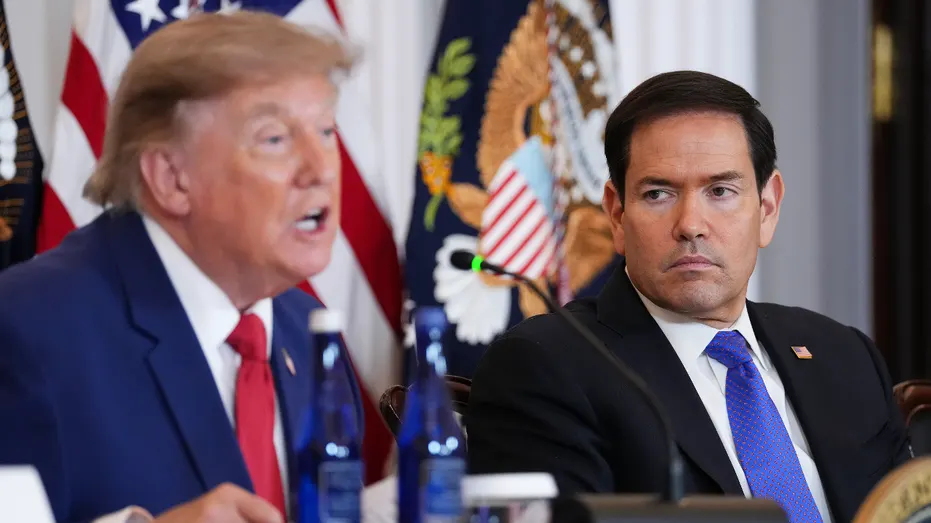
A Fox News opinion piece argues that the new US-Venezuela oil partnership, announced by President Trump and negotiated by Secretary of State Marco Rubio and Secretary of War Pete Hegseth, could help end decades of Cuban, Russian and Chinese influence over Venezuela. The author frames the deal as a strategic and economic safeguard rather than "colonialism," arguing that a secured American stake in Venezuelan oil makes it harder for a future authoritarian regime to seize the industry again and use its proceeds to fund repression and foreign interference across Latin America.
The agreement, confirmed by interim President Delcy Rodríguez, covers 17 oil fields holding more than 65 billion barrels, targets production above 1.5 million barrels a day, and involves over $100 billion in private investment alongside significant fiscal transfers to Venezuela. The piece, written from a strongly pro-Trump administration viewpoint, describes a three-phase US strategy of stabilisation, recovery and transition following the removal of Nicolás Maduro, while acknowledging criticism from the left, hardline Chavistas and parts of the Venezuelan opposition who view the deal as illegitimate or exploitative.
In short
- Opinion piece backs new US-Venezuela oil deal as anti-communist strategy.
- Deal covers 17 fields, 65bn+ barrels, $100bn+ investment pledged.
- Critics call it colonialist; author says it prevents regime resurgence.
Steelman: both sides, in good faith
The strongest fair case each way — we don't pick a winner.
The case for
Supporters argue that investment and a durable US stake could revive Venezuela’s oil production, bring substantial revenue to the country and reduce its dependence on governments that have backed authoritarian rule. They see the partnership as a strategic safeguard against a future regime again using oil wealth to entrench repression or extend foreign influence in the region.
The case against
Critics argue that an agreement made under an interim government after Maduro’s removal may lack democratic legitimacy, and that a large foreign role in Venezuela’s oil sector risks limiting the country’s control over its own resources. They also question whether promised investment and fiscal transfers will benefit Venezuelans fairly, or instead give Washington and private companies undue influence during a vulnerable political transition.
Explained simply
Venezuela has some of the world’s largest oil reserves, and oil has long been central to its economy and politics. Under former president Hugo Chávez and his successor Nicolás Maduro, the state took greater control of the oil industry; years of economic crisis and declining output followed, while Cuba, Russia and China developed ties with the government.
The United States has imposed sanctions on Venezuela and disputed the legitimacy of Maduro’s rule. After Maduro was removed, interim president Delcy Rodríguez took office, and the Trump administration described its approach as a path from stabilisation and economic recovery towards a political transition.
Oil deals can bring investment and government revenue, but they also raise questions about who controls the country’s resources and who benefits. Supporters see US involvement as a way to rebuild production and limit outside influence; critics, including Chavistas and parts of the opposition, question its legitimacy and fear Venezuelans could lose control of their oil.