Burnham’s first PMQs live: New PM faces Badenoch for first time as cost of UK borrowing rises – watch live
Developed over time first seen 2 months ago
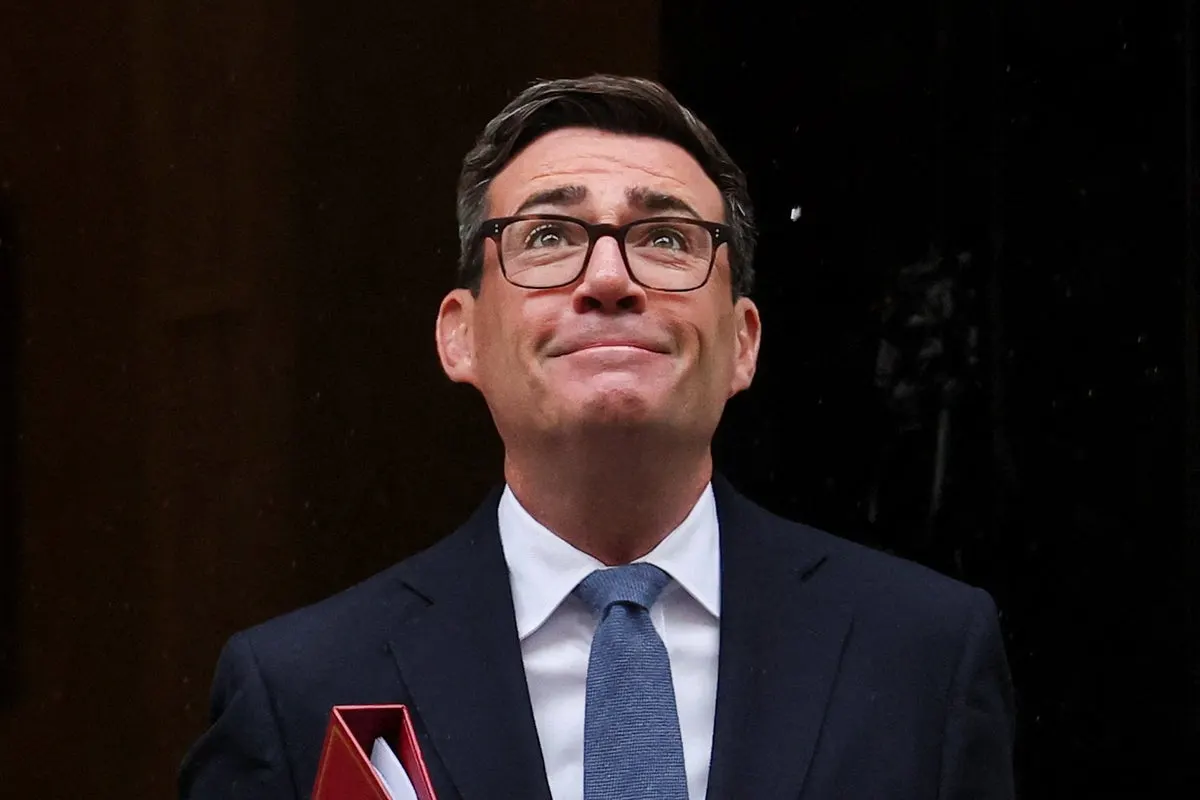
Andy Burnham faced his first Prime Minister's Questions as prime minister, coming under pressure from senior Labour backbencher Tan Dhesi to commit clearly to raising defence spending to 3 per cent of GDP by 2030, with Dhesi warning that "vibes alone" would not be enough to deter Vladimir Putin. The exchange took place just hours after the Russian president issued a fresh veiled threat against UK targets over Britain's support for Ukraine, underlining the heightened security stakes behind the debate, while Burnham also clashed with Conservative leader Kemi Badenoch over the state of the public finances.
Burnham told MPs he had "made that commitment very clear" on defence spending and stressed the need to tie military investment to rebuilding Britain's industrial resilience, though Downing Street later clarified this fell short of a firm pledge. The session also covered rising UK borrowing, which increased by £12billion after gilt markets pushed up the cost of government debt, with Badenoch pressing Burnham on the government's fiscal record. Burnham defended his appointment of John Healey as chancellor, citing his commitment to defence, following Healey's earlier resignation from Sir Keir Starmer's government over defence funding shortfalls.
- Sources
- 3
- Outlets
- 3
- Left · Centre · Right
- 2 · 0 · 1
- Votes
- 1
In short
- Burnham faced Badenoch for first time at PMQs as new PM
- Pressed on committing to 3% GDP defence spending by 2030
- Putin issued fresh threat as UK borrowing rose by £12bn
How this story developed
- 2 months ago Andy Burnham's first Prime Minister's Questions saw him raise fresh concerns over the EU's "Made In Europe" agenda, warning it "could pose significant problems for British steel" while insisting he wants a "closer relationship" with Brussels, with farming and steel deals topping his agenda for talks with the bloc.
- 2 months ago Andy Burnham faced his first Prime Minister's Questions as prime minister, coming under pressure from senior Labour backbencher Tan Dhesi to commit clearly to raising defence spending to 3 per cent of GDP by 2030, with Dhesi warning that "vibes alone" would not be enough to deter Vladimir Putin.
- 2 months ago Andy Burnham used his first Prime Minister's Questions to face fresh pressure on multiple fronts, refusing to rule out further tax rises in October's Budget while being warned that the pension triple lock is now unaffordable amid rising government borrowing costs.
- 2 months ago Andy Burnham faced Kemi Badenoch at Prime Minister's Questions for the first time since succeeding Sir Keir Starmer, with the exchange dominated by questions over tax rises, defence spending and Britain's rising borrowing costs.
- Daily Mail Kemi Badenoch roasts 'spendthrift people-pleaser' Burnham over refusal to curb benefits at first PMQs – as he faces mounting markets crisis
- The Guardian Andy Burnham clashes with Kemi Badenoch at his first PMQs – video
- The Independent Burnham’s first PMQs live: New PM faces Badenoch for first time as cost of UK borrowing rises – watch live
Full account
Andy Burnham faced Kemi Badenoch across the despatch box for the first time on Wednesday, in a Prime Minister's Questions dominated by concern over the rising cost of government borrowing. The Conservative leader accused the new prime minister of being a "people pleaser" and a "spendthrift", telling MPs that financial markets were unnerved by his approach to public spending. Mr Burnham would not rule out further tax increases in the Budget due on 28 October, saying he had already signalled an intention to cut taxes but that, like any prime minister, he would not set out Budget measures during the session.
Badenoch challenged Mr Burnham to identify a single spending demand from his own backbenchers that he had turned down, casting him as unwilling to say no to his party. He replied that he wanted to reduce the number of young people not in education, employment or training, and that he could not defend the current welfare bill, though he stopped short of detailing where savings might come from. The sparring took place against a backdrop of gilt yields climbing to multi-decade highs, with the former NatWest chairman Sir Howard Davies warning separately that the state pension triple lock was unaffordable and that the government needed to demonstrate a clearer fiscal direction to reassure markets.
Beyond the fiscal exchanges, Mr Burnham used the session to restate commitments to meet existing defence spending targets and to abandon the previous government's digital ID scheme. Pressed on tackling antisocial behaviour, including dangerous driving, he voiced support for a "broken window" style of policing, pointing to Greater Manchester's Operation Vulcan as a model that could be extended nationally and floating tighter regulation of fireworks. Liberal Democrat leader Sir Ed Davey raised the prolonged closure of a maternity unit in North Devon, blamed on staff shortages that have forced women to travel up to two hours to give birth; Mr Burnham acknowledged longstanding midwife shortages nationally and said the health secretary was reviewing the issue.
The appearance came as economists warned of a difficult backdrop for the new administration, with Chancellor John Healey reportedly needing to close a gap of up to £14 billion at the Budget through some combination of tax rises and spending restraint. Analysts pointed to a mix of pressures pushing up borrowing costs globally, including renewed fighting involving Iran, persistent inflation and jitters over a possible correction in AI-related markets, while suggesting the UK was particularly exposed. Commentary from figures such as former minister and economist Jim O'Neill added to the sense of scrutiny on the new prime minister's fiscal credibility as he settles into the role.
Where outlets differ
From the full account, which is AI-written from the sources:
The Independent leads with Burnham's direct quotes and gives more weight to policy substance raised at PMQs itself — his comments on antisocial behaviour/'broken window' policing, fireworks regulation, defence spending, digital ID, and the North Devon maternity unit exchange with Ed Davey.
The Daily Mail focuses more heavily on the political and market drama, framing Burnham's PMQs debut and preceding Commons statement as 'blustering' and criticised even by allies, and gives prominence to external criticism from economist Jim O'Neill and to gilt market movements.
The Mail provides more detail on the wider economic backdrop (Iran conflict, inflation, AI correction fears, the estimated £14bn fiscal gap facing Chancellor John Healey) and Badenoch's exact 'delightful'/'people pleaser' jibe, whereas the Independent emphasises Sir Howard Davies's separate warning on the pension triple lock and quotes Burnham's health-service comments in greater depth.
Left-leaning outlets 2
- Burnham’s first PMQs live: New PM faces Badenoch for first time as cost of UK borrowing rises – watch liveThe Independent
- Andy Burnham clashes with Kemi Badenoch at his first PMQs – videoThe Guardian
Only here: time, cost, borrowing, rises, andy
Right-leaning outlets 1
Only here: roasts, spendthrift, people, pleaser, refusal
Every side used: burnham, pmqs, faces, badenoch, kemi
Headline columns compared word for word; nothing in them is AI-written.
Steelman: both sides, in good faith
The strongest fair case each way — we don't pick a winner.
The case for
Those broadly sympathetic to Burnham's caution argue that a new government should not be bounced into rash commitments during its first weeks, and that keeping options open ahead of a proper Budget process is responsible governance rather than evasion. They contend that protections such as the pension triple lock exist precisely to shield pensioners from cost-of-living pressures and years of erosion, and that unpicking it, or ruling out revenue-raising measures before the fiscal facts are set out, would be reckless. On health and Europe, they would argue that acknowledging structural NHS staffing shortages honestly, and seeking closer, practical EU trade arrangements for hard-hit sectors like steel and farming, shows a willingness to address root causes rather than offer easy but hollow promises.
The case against
Critics who share Badenoch's and Davies' concerns argue that rising borrowing costs are a market verdict on fiscal credibility, and that a Prime Minister who will not rule out tax rises, nor address unsustainable commitments like the triple lock, risks confirming investors' worst fears and pushing costs higher still. They would say that clear, disciplined choices, even unpopular ones, are what markets and voters actually need from a new government, and that vague reassurances read as an unwillingness to make hard decisions. On the EU and NHS points, they might argue that structural excuses cannot indefinitely substitute for concrete fixes, and that re-litigating Brexit or single market access risks reopening a settled and divisive question rather than focusing on domestic delivery.
Explained simply
Andy Burnham became Prime Minister only weeks ago and this was his first appearance at Prime Minister's Questions, the weekly session in the House of Commons where MPs, especially the Leader of the Opposition, question the PM directly. Kemi Badenoch, who leads the Conservative Party, used the session to challenge him, while Sir Ed Davey, leader of the Liberal Democrats, also put questions to him. PMQs is closely watched as an early test of how a new leader handles pressure and defends their government's record.
The backdrop is a period of financial strain for the UK government. The cost of government borrowing has been rising, which makes it more expensive for the state to fund public spending and increases scrutiny of tax and spending decisions ahead of the Budget, the government's annual statement on tax and spending plans, due in October. Part of this debate concerns the pension "triple lock", a policy that guarantees the state pension rises each year in line with whichever is highest out of inflation, average wage growth, or 2.5%; some economists argue this is becoming too costly to maintain.
Also relevant is the long-running debate over Britain's departure from the European Union, known as Brexit, and its effect on economic growth, as well as ongoing pressures on the National Health Service, including shortages of midwives affecting maternity services in some areas. These issues, alongside fiscal policy, are shaping how Burnham is being judged in his early days as Prime Minister.
Coverage · 3 sources
Bias meters
From 3 rated sources.
- The IndependentLeftBurnham’s first PMQs live: New PM faces Badenoch for first time as cost of UK borrowing rises – watch live
- Daily MailRightKemi Badenoch roasts 'spendthrift people-pleaser' Burnham over refusal to curb benefits at first PMQs – as he faces mounting markets crisis
- The GuardianLeftAndy Burnham clashes with Kemi Badenoch at his first PMQs – video