World news and discussion on TalkFuse.
Lego Skylines Shifts City-Building Focus to Creativity and Aesthetics Over Simulation
Developed over time first seen 2 months ago
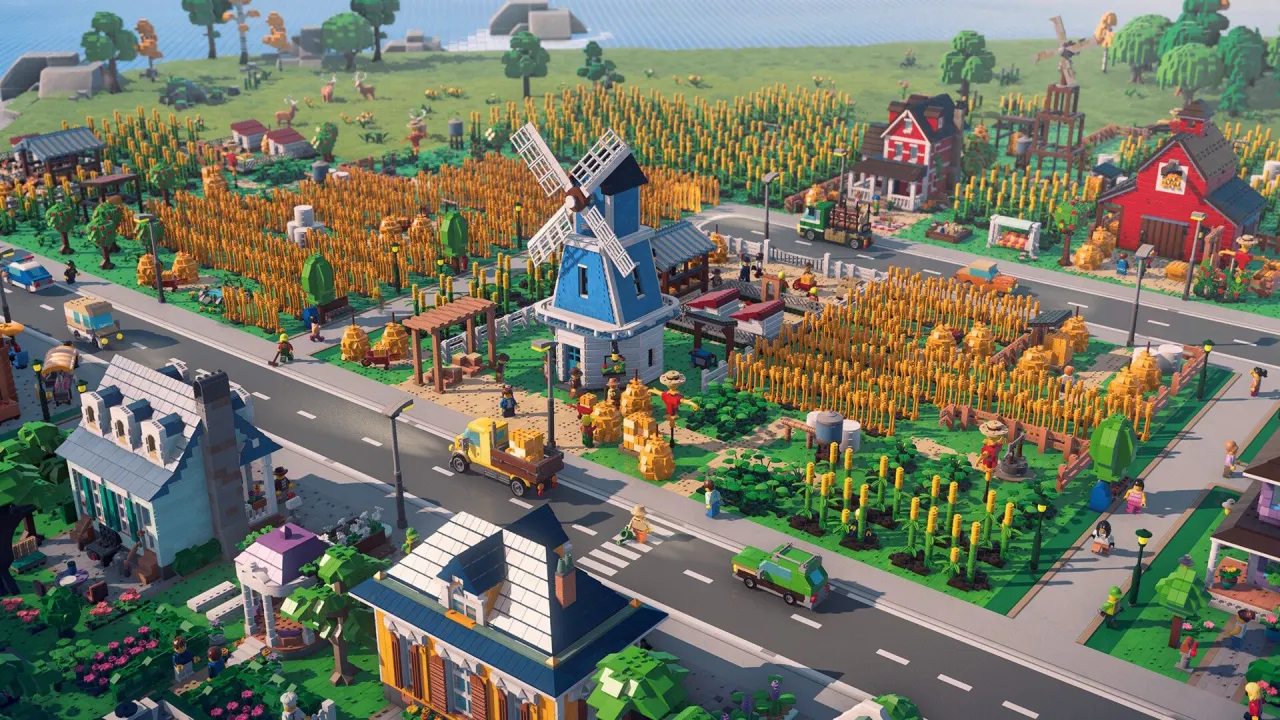
Lego Skylines, an upcoming city-building game from Paradox Interactive and Iceflake Studios, has settled into a clear identity that favours creative, decorative play over the traffic and infrastructure management typically associated with the genre. Hands-on previews indicate the title reworks the traditional city-builder formula around household-level design and personal aesthetic choices, offering a more relaxed alternative to the logistics-heavy simulations the format is usually known for. This matters for a genre often seen as intimidating to newcomers, since it signals a deliberate attempt by the developers to widen the audience for city-building games by lowering the barrier to entry.
Previewers who spent time with the game report that its emphasis falls squarely on decorating and personalising builds rather than juggling economic systems, utilities or transport networks, the mechanics that usually define the genre. By stripping back complex simulation elements, Lego Skylines appears aimed at players who want a toybox-style creative outlet built from Lego bricks rather than a demanding management challenge. Full details, including pricing and a release date, have not yet been confirmed.
- Sources
- 2
- Outlets
- 2
- Left · Centre · Right
- 0 · 0 · 0
In short
- Lego Skylines prioritises decoration and creativity over traffic simulation.
- Made by Paradox Interactive and Iceflake Studios.
- Aims to make city-building more accessible to casual players.
How this story developed
- 2 months ago Lego Skylines, an upcoming city-building game from Paradox Interactive and Iceflake Studios, is shaping up to favour creative, decorative play over the traffic and infrastructure management typically associated with the genre.
- 2 months ago Lego Skylines, an upcoming collaboration between Paradox Interactive and Iceflake Studios, reimagines the city-building formula by pivoting away from the original series' emphasis on large-scale urban infrastructure management.
- 2 months ago Lego Skylines, an upcoming city-building game from Paradox Interactive and Iceflake Studios, has settled into a clear identity that favours creative, decorative play over the traffic and infrastructure management typically associated with the genre.
Full account
Paradox Interactive and developer Iceflake Studios have unveiled Lego Skylines, a spin-off of the Cities: Skylines franchise that trades detailed municipal simulation for a more playful, decoration-led approach to city building. Following the reveal, Polygon was given several hours with a preview build covering both an early-game and a late-game scenario, offering an early sense of how the campaign, its simulation systems and its customisation tools fit together. The outlet's overall impression was positive, though it flagged some concerns about balance in the later stages of play.
The preview's opening scenario casts the player as a newly established "master builder" tasked with helping a family who have settled on an island expecting rural charm but finding barren land instead. Rather than zoning sprawling residential and commercial districts as in the mainline Cities: Skylines games, players work at the level of individual households, building homes, adding shops and workplaces, and responding to residents' evolving needs, such as employment, childcare and care for the elderly. According to Polygon's account, the campaign mode strings together requests from citizens and local figures of authority to give new towns a loose sense of direction, making for a gentler introduction than the mainline series, which the outlet described as throwing players in at the deep end.
The most notable departure from previous Skylines titles is a new "appeal" category of household need, met not through infrastructure but through decoration. Items are grouped into themes such as cosy, nature, formal and industrial, ranging from flower beds and ponds to garden ornaments, statues and benches. Polygon's reporter noted that placing decorations without much thought produced a visually incoherent neighbourhood, but that deliberately mixing and rotating pieces to build a consistent theme proved surprisingly effective, pointing to this system as the area of Lego Skylines with the most creative potential.
Despite reservations about how well the game's balance holds up once a city reaches a larger, late-game scale, Polygon judged the preview build a promising early sign for the spin-off, while also hoping that rough edges present in the build would be ironed out before launch. Coverage of the reveal varied in depth: Polygon's hands-on preview provided detailed, first-hand impressions of the campaign structure and decoration mechanics, whereas PC Gamer's reporting on the same preview event was framed primarily through its headline positioning — describing Lego Skylines as aimed at players more interested in decorating than in simulating traffic — with the outlet's full article content not available for direct comparison here. Both framings nonetheless agree on the game's central pitch: a shift away from deep systemic simulation towards a friendlier, aesthetics-focused take on city building.
Where outlets differ
From the full account, which is AI-written from the sources:
Polygon provided an extensive hands-on account (household mechanics, campaign structure, the new 'appeal'/decoration system, and specific balance concerns about late-game play), while the PC Gamer material available consisted only of site navigation and subscription boilerplate, with no retrievable article text beyond its headline framing.
PC Gamer's headline emphasises the game as being for players who 'care less about traffic jams and more about decorating,' a slightly more pointed framing than Polygon's more measured description of a 'deeper focus on decorating' alongside genuine, if lighter-touch, simulation systems.
Polygon is the only source offering a critical assessment, including reservations about late-game balance and a hope for a more polished launch build, which PC Gamer's available content does not address.
Steelman: both sides, in good faith
The strongest fair case each way — we don't pick a winner.
The case for
The design choice to prioritise creativity and aesthetics over complex simulation serves an underserved market and enriches the genre's diversity. City-building has long been gatekept by intimidating economic and infrastructure systems; this approach acknowledges that creative expression and personal aesthetic choices are just as valid as logistics optimisation. By offering a Lego-branded experience that captures the joy of building and decorating without demanding mastery of intricate systems, developers can welcome players who want imaginative play rather than management challenges, thereby genuinely expanding who enjoys city-building games.
The case against
The fundamental appeal of city-building games lies in the satisfying complexity of managing interconnected systems, and removing those mechanics risks creating something that isn't quite a city-builder at all. Players seeking creative building tools already have numerous options; those drawn specifically to the genre seek the intellectual challenge and emergent problem-solving that come from balancing traffic, economics and utilities. Rather than expanding the audience for city-building, this approach risks creating confusion by marketing a creative sandbox as a city-builder, potentially disappointing consumers expecting the genre's core appeal whilst failing to convert players genuinely seeking something different.
Explained simply
Lego Skylines is a forthcoming city-building video game developed by Iceflake Studios and published by Paradox Interactive, both established names in the strategy and simulation gaming space. Unlike traditional entries in the genre, which typically require players to manage traffic flow, utilities and municipal budgets, this title is reportedly built around creative expression, letting players focus on designing and decorating individual buildings and neighbourhoods.
City-building games have long had a reputation for being complex and demanding, appealing mainly to players willing to grapple with detailed economic and infrastructure systems. Lego Skylines appears to be a deliberate departure from that model, aiming to attract a broader audience, including those who enjoy building and design but find the genre's usual management demands off-putting.
The game has not yet been released, and what is known so far comes from early hands-on previews rather than a finished product, so some details of how it will play remain unconfirmed.