Is that it? Burnham to plead with Macron for more help in stopping the boats after France offers just 45 officers to tackle new mega-dinghies
Developed over time first seen 2 months ago
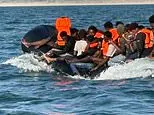
Andy Burnham was set to press Emmanuel Macron for greater French action against Channel crossings, after Paris offered just 45 extra officers to combat the rise of "mega-dinghies" carrying up to 230 migrants. Following talks with the French President in Downing Street, the Prime Minister argued that this summer's fall in crossings showed what UK-French cooperation could achieve, while also urging Macron to extend the "one in, one out" removals deal. The Conservatives dismissed the plans as a "joke", arguing that rough Channel weather, not policy, explained the drop in crossings, and that smuggling gangs had not been "smashed".
The new French "surge team" of 45 officers, funded by Britain, will target western beaches used for launching the oversized dinghies, taking the total French police assigned to the issue above 1,000 for the first time, including a new 75-strong specialist unit. The "one in, one out" deal has led to the removal of around 1,400 illegal migrants to France in its first year, matched by a similar number of asylum seekers allowed into the UK, a rate shadow home secretary Chris Philp branded a "joke" given that almost 20,000 migrants have crossed this year. Downing Street maintained the deal marked a "significant step in the right direction", while Burnham also planned to raise Ukraine, the Middle East and a closer UK-EU relationship ahead of an autumn summit.
- France pledged only 45 extra officers to tackle Channel "mega-dinghies"
- Burnham pushed Macron to extend the "one in, one out" deal
- Tories called the plan a "joke", citing weather-driven crossing falls
New here? Start with this
Andy Burnham is holding talks with French President Emmanuel Macron at Downing Street about how to reduce the number of migrants crossing the Channel in small boats. France has recently announced it will send 45 extra police officers to patrol beaches used for launching so-called "mega-dinghies", which can carry up to 230 people at once, far more than older, smaller boats.
Cooperation between Britain and France on this issue includes a "one in, one out" agreement, under which some migrants who arrive in the UK by boat can be returned to France, while an equivalent number of asylum seekers already in France with a legitimate claim are allowed to come to Britain legally. The scheme is meant to discourage people from paying smugglers to make the dangerous Channel crossing, and Britain has committed significant funding to support French policing efforts as part of the wider partnership.
Small boat crossings have been a long-running and politically sensitive issue in the UK, with successive governments under pressure to show they can control the numbers arriving. The opposition Conservative Party has been critical of the current government's approach, questioning whether the measures announced so far are enough to make a real difference.
Both sides, in good faith
The strongest fair case each way — we don't pick a winner.
The case for
Supporters of the government's approach argue that tackling Channel crossings requires patient, functioning cooperation with France rather than confrontation, since only French police can act on French beaches. They point to the summer fall in crossings, the doubling of French officers dedicated to the issue past 1,000, and the removals achieved under the one in, one out deal as evidence that sustained diplomatic engagement and shared funding are beginning to work and deserve time and reinforcement rather than being scrapped. On this view, pressing Macron for more resources while preserving the partnership is the more realistic route to durable results than unilateral gestures that could alienate a key ally.
The case against
Critics, including the Conservatives, argue that the results so far are far too modest to justify the scale of investment and rhetoric, noting that only around three per cent of arrivals have been returned under the one in, one out deal and that 45 additional officers is a token gesture against boats now carrying up to 230 people. They contend that the recent drop in crossings likely reflects poor weather rather than policy success, and that continuing to pay out under the £660 million agreement without French police intervening in shallow water, where boats could more easily be stopped, rewards inaction. For them, real accountability means tying payments to demonstrable results and demanding that France physically prevent launches, not merely expand headcount.
Full account
Prime Minister Andy Burnham is set to press French President Emmanuel Macron for greater action against Channel crossings, as officials confirmed that a newly announced 'surge team' of French police tasked with tackling so-called 'mega-dinghies' will number just 45 officers. The commitment forms part of a wider package agreed between London and Paris as Macron visits Britain, with the two leaders holding talks in Downing Street. The new unit will be deployed to beaches in western France, where smuggling gangs have increasingly turned to launching oversized, overcrowded dinghies capable of carrying more than 200 people at once.
The announcement builds on the UK's existing funding arrangement with France, under which Britain is providing roughly £660 million over three years to support policing of the northern French coastline, with a further portion of that sum reserved for new tactics such as intercepting 'taxi boats' that pick up migrants offshore. Officials said the additional officers would bring the overall number of French personnel dedicated to preventing launches to just over 1,000, with a specialist intelligence and judicial unit also being expanded to focus on dismantling the criminal networks organising crossings. The government pointed to a fall in crossing numbers this year and said French teams funded by the UK had prevented well over a hundred crossing attempts in recent months.
The scale of individual crossings has nonetheless been growing even as overall numbers fall, with a single dinghy carrying a record 230 migrants last month, described by French rescuers as visibly straining under the weight of its passengers, surpassing an earlier record set in July. Burnham said the progress made this summer showed what could be achieved through UK-French cooperation, while cautioning that smuggling gangs were continually adapting their methods and that both governments needed to stay ahead of them. Home Secretary Shabana Mahmood said the joint effort was 'bearing fruit' and that officer numbers were being raised to record levels to target both launches and the gangs behind them. Burnham is also expected to press Macron on extending the 'one in, one out' returns arrangement with France, a scheme that has so far seen a relatively small proportion of arrivals sent back in exchange for an equivalent number of asylum seekers being allowed to travel legally to the UK.
The Conservatives dismissed the new measures as inadequate, with shadow home secretary Chris Philp arguing that the fall in crossings owed more to poor weather in the Channel than to policing efforts, and pointing to footage he said showed French gendarmes declining to intervene as migrants boarded a dinghy in shallow water. He called for payments under the funding deal to be withheld until French authorities stopped all such embarkations, and criticised both the returns scheme and the broader response to people-smuggling networks as failing to make a meaningful dent in overall arrival numbers this year. Downing Street rejected the criticism, maintaining that the funding arrangement with France was making a genuine difference and describing the returns deal as a significant step in the right direction despite the modest numbers involved so far.
Where outlets differ
The Mail frames the story critically, with Burnham 'begging' Macron for more help and Conservative claims that the package is a 'joke', while the Independent presents the announcement in a more neutral, factual register with fewer political attacks.
The two reports differ on the day of the Downing Street talks: the Mail places them on Thursday (after a Wednesday-evening visit to a Bayeux Tapestry exhibition), while the Independent describes Macron and Burnham meeting on Wednesday.
Figures on the overall French police contingent differ slightly — the Mail says the total tops 1,000 with a new 75-strong specialist unit, whereas the Independent puts the total at nearly 1,050 and describes an existing specialist unit being expanded from 18 to 30 officers.
The Independent includes additional statistics not in the Mail's account, such as a 23% year-on-year fall in crossings, 185 crossings prevented by French teams between late April and early August, and the £160m earmarked specifically for new tactics like tackling 'taxi boats'.
The Mail gives much greater space to Conservative criticism from Chris Philp, including his claims about gendarmes failing to intervene and calls to suspend funding, whereas the Independent focuses more on government quotes, including from Home Secretary Shabana Mahmood, without featuring opposition reaction.