Thousands protest Sánchez’s response to Ceuta migrant crossing
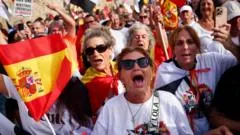
Thousands of people took to the streets in Madrid, Ceuta and other Spanish cities to protest against Prime Minister Pedro Sánchez's handling of a mass migrant crossing into the North African exclave of Ceuta. Opposition parties accuse Sánchez's government of abandoning Ceuta's residents, while officials say right-wing groups are exploiting the crisis for political gain, with the dispute intensifying after a police report suggested Moroccan security forces showed "total permissiveness" during the influx, contradicting Sánchez's earlier insistence that Morocco bore no responsibility.
At least 72,000 migrants crossed from Morocco into Ceuta on 30–31 July, with around 5,000 still living in makeshift camps or on the streets weeks later. Wednesday's rallies were organised by councils controlled by the conservative Partido Popular and far-right Vox, with more than 50,000 attending in Madrid according to government figures, and protesters calling for Sánchez's resignation. A National Police report reviewed by Spanish media indicated a reduced Moroccan police presence at the border during the crossings, though it stopped short of directly accusing Morocco's government, which denies any involvement; separately, Spanish fact-checkers say social media posts encouraged the crossing beforehand.
In short
- Mass protests across Spain over Ceuta migrant crisis handling
- Police report suggests Moroccan forces were "permissive" during crossings
- Opposition calls for PM Sánchez's resignation; Morocco denies involvement
Steelman: both sides, in good faith
The strongest fair case each way — we don't pick a winner.
The case for
Critics argue that the scale of the crossing and the migrants still stranded in makeshift camps show the government failed to protect Ceuta’s residents and manage the border crisis. The police report’s account of reduced Moroccan security at the border also gives them reason to question Sánchez’s earlier position that Morocco bore no responsibility and to demand clearer accountability.
The case against
Supporters of Sánchez’s response can argue that the police report does not directly implicate Morocco’s government, which denies involvement, and that social media posts may have helped prompt the crossing. They may also see the rallies, organised by conservative and far-right parties, as using a humanitarian and security crisis to attack the government, while stressing that responsibility for the influx remains uncertain.
Explained simply
Ceuta is a Spanish city on the North African coast, surrounded by Morocco and separated from mainland Spain by the Mediterranean. Its land border is a route into the European Union for people seeking to reach Spain.
Pedro Sánchez is Spain’s prime minister, and his government is responsible for the country’s response to arrivals at the border. Morocco is a neighbouring country whose security forces help manage the border; Spain and Morocco also have wider diplomatic ties.
The crossing raised questions about border management, the treatment and support of migrants, and relations between Spain and Morocco. Spain’s main conservative party, the Partido Popular, and the far-right Vox are among the government’s political opponents.
Art Culture Entertainment Europe Government Music Politics World
Read the full article at the source →
Originally published by BBC World as “Protests in Spain over government’s handling of Ceuta migrant crisis”.