‘Unsettling… then incredibly cool’: Self-driving taxis can now be booked in the UK, and we’ve had a first ride – this is what it was like (and why it’s not completely driverless)
Developed over time first seen 2 months ago
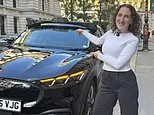
Uber and AI firm Wayve have launched "driverless" taxi rides in London, marking the first time such a service has been bookable in the UK, though a safety supervisor still sits behind the wheel with hands hovering nearby rather than the cars being fully autonomous. A Daily Mail reporter who took an early ride described watching the steering wheel move by itself as "unsettling" at first and then "incredibly cool", noting the drive was notably smooth and free of the stop-start jerkiness typical of London journeys, and even smoother than being driven by friends or family.
Riders can request an UberX, Uber Electric or Uber Comfort and opt to be matched with a Wayve vehicle at no extra cost, with the fare shown upfront and doors unlocked via a button in the app rather than by a driver. Wayve cars are all-electric Ford Mustang Mach-Es fitted with the Wayve AI Driver system and surround sensors, with an in-vehicle screen offering trip controls in 64 languages; the article does not specify a date for the removal of the human supervisor and a move to fully driverless operation.
- Uber and Wayve launch bookable "driverless" taxi rides in London
- Supervisor still sits behind wheel; not yet fully autonomous
- Uses electric Ford Mustang Mach-Es at no extra fare cost
New here? Start with this
Uber and the British AI company Wayve have launched a self-driving taxi service in London, letting people book a "driverless" ride through the Uber app for the first time in the UK. Passengers requesting an UberX, Uber Electric or Uber Comfort can be matched with one of the new vehicles at no extra cost, with the fare shown before the trip begins.
Despite being described as driverless, the cars still have a trained safety supervisor sitting in the driver's seat, ready to take control if needed, so the system is not yet fully autonomous. The vehicles are electric Ford Mustang Mach-Es fitted with Wayve's self-driving technology and sensors, recognisable by a camera unit on the roof, and include touchscreens for passengers to manage the route, temperature and music.
The launch matters because it represents one of the first real-world tests of self-driving taxis operating on UK roads, a technology that has already been trialled in other countries such as the United States. How the public reacts to riding in these vehicles could influence how quickly, and how widely, driverless taxis are rolled out more broadly.
Both sides, in good faith
The strongest fair case each way — we don't pick a winner.
The case for
Advocates of the rollout point out that human error causes the vast majority of road collisions, and that AI-driven systems, trained on vast amounts of driving data and free from fatigue, distraction or impatience, could ultimately make urban journeys safer and more consistent. They see Britain's willingness to host such trials as a sign of healthy technological ambition, positioning the country to shape the safety standards and regulatory frameworks that will govern this industry rather than simply importing them later. The retention of a supervisor for now, they would argue, shows a responsibly cautious, incremental approach rather than reckless haste, allowing real-world data to be gathered before full autonomy is granted.
The case against
Sceptics would argue that placing any self-driving vehicle on complex, unpredictable city streets is premature until the technology has a long, transparent safety record, and that a supervisor with hands merely hovering near the wheel offers a thinner safety margin than genuine human control in a sudden emergency. They may also raise legitimate concerns about accountability when something goes wrong, about the erosion of professional driving jobs as automation expands, and about whether passengers have been given enough clear information to make a genuinely informed choice about riding in an experimental vehicle. For this side, caution and robust independent oversight should take precedence over the commercial pressure to be first to market.
Full account
Self-driving taxis have become bookable in the UK for the first time, after Uber and the British artificial intelligence company Wayve added autonomous rides to the Uber app in London. The launch, which took place this week, allows customers requesting an UberX, Uber Electric or Uber Comfort to opt in to being matched with one of Wayve's vehicles at no extra cost, with the fare quoted upfront as normal. Although the service is being described as 'driverless', a trained safety operator currently remains in the driving seat throughout every journey, ready to intervene if required.
Riders matched with a Wayve car travel in a modified all-electric Ford Mustang Mach-E, fitted with a distinctive camera bar on the roof, additional sensors around the vehicle, and Wayve branding on the bodywork. Passengers unlock the car via the Uber app rather than a driver's greeting, and are shown the vehicle's planned route and given control of cabin features such as temperature on an in-car touchscreen that supports 64 languages. Transport for London has licensed the vehicles as private hire cars on the basis that a supervising driver remains present, since separate approval for fully driverless operation without anyone behind the wheel rests with the Driver and Vehicle Standards Agency and is not expected to be granted this year.
The rollout remains small in scale: only around 15 Wayve vehicles have so far been licensed, compared with more than 100,000 private hire cars already operating in London, and a broadly similar number of Uber customers who have registered interest in trying an autonomous ride. Even so, the move is being seen as significant for Uber's position in a crowded field, with Google's Waymo and China's Baidu both separately trialling robotaxi technology on London's streets. Wayve's chief executive, Alex Kendall, has said the company's AI-based driving system – which relies on machine learning rather than the detailed pre-mapping used by some competitors – is 'still maturing', and that the firm is simultaneously working towards mass-produced vehicles, in the form of forthcoming Nissan Leaf-based robotaxis, alongside the safety validation and regulatory sign-off needed before human safety drivers can be removed altogether.
Journalists given early rides described the experience as disconcerting at first, largely because of the sight of the steering wheel turning unprompted, but said this novelty quickly gave way to enjoyment as the car handled acceleration, braking and traffic smoothly and predictably, in some cases producing a more comfortable ride than a typical London taxi journey. Passengers noted that safety drivers intervened little beyond an initial briefing, raising the prospect of quieter journeys without the expectation of conversation, while onlookers on the street appeared largely unfazed by the passing vehicles despite the technology's novelty.
Where outlets differ
The Daily Mail-style account is a first-person passenger experience piece, focusing on the sensory and emotional impact of riding in the car (the moving steering wheel, the smoothness of the drive, the reaction of onlookers) and on how the booking process feels from a customer's point of view.
The Guardian account is more focused on the business and regulatory context: it emphasises the small number of licensed vehicles (15) versus London's overall private hire fleet, the separate TfL and DVSA approval processes, and quotes Wayve chief executive Alex Kendall on the company's technology strategy, competitors (Waymo, Baidu) and timeline for removing safety drivers.
Only the Guardian source details Wayve's future plans to move to mass-produced Nissan Leaf-based vehicles and explains the AI-learning approach versus rivals' mapping-based systems; the first-person account does not address competitors or company strategy at all.