Channel smuggling gangs resort to ‘mega-dinghies’ as crackdown limits small boat supply
Developed over time first seen 2 months ago
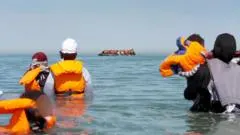
A BBC investigation has found that people-smuggling gangs on the French coast are switching to "mega-dinghies" as a shrinking supply of small boats and intensified French policing squeeze their usual crossing methods. Reporters who witnessed the operation at Gravelines beach were attacked with stones by gang members, who injured a BBC cameraman, reflecting growing frustration among smugglers as French officers now claim to intercept roughly two-thirds of small boats before they reach open water. The shift means rival criminal groups are increasingly cooperating to pack more migrants onto fewer, larger vessels, heightening the danger to life at sea, as illustrated by a 15-metre boat that carried a record 230 people to the UK and an incident on 4 August in which 170 people had to be rescued after their boat caught fire mid-Channel.
The BBC team observed migrants, some saying they were from Afghanistan, boarding a "taxi boat" that had travelled from as far as Belgium to avoid detection, with French police citing safety concerns for not intervening once vessels are in the water. Smugglers are now charging up to €2,000 (£1,700) per person in cash, up from around €1,300 a year ago. In response, the UK and France are increasing police numbers along the French coast, a move announced as Prime Minister Andy Burnham prepared to host French President Emmanuel Macron in Downing Street for the first time since taking office.
- Smugglers turn to "mega-dinghies" as small boat supply dwindles
- BBC crew attacked with stones; cameraman injured during filming
- UK and France to boost police numbers on French coast
New here? Start with this
Smugglers who arrange Channel crossings from northern France to the UK have traditionally used small inflatable dinghies, but tighter policing and a squeeze on boat supplies have pushed them towards packing far more people onto fewer, larger vessels, sometimes called "mega-dinghies". This matters because it changes the safety risks for those making the crossing and shapes how UK and French authorities respond.
The crossings are run by organised criminal gangs operating from the French coast, who charge migrants for passage and have grown more aggressive as the trade becomes harder to conduct. France and the UK work together on policing the coastline, though the two countries have sometimes differed over how forcefully French police can act once a boat has already launched into the water.
Small boat crossings have been a major and recurring issue in UK-France relations and domestic politics for several years, with successive governments under pressure to reduce numbers while campaigners raise concerns about the danger to life. The story sits within this ongoing debate about how to control unauthorised crossings without increasing the risk to the people attempting them.
Both sides, in good faith
The strongest fair case each way — we don't pick a winner.
The case for
Advocates of a more assertive, case-by-case intervention policy argue that allowing boats to launch unimpeded once they reach the water effectively cedes control to criminal gangs, who are now packing far more people onto fewer, larger and more dangerous vessels. They contend that police should be empowered to wade in and disable dinghies before they are fully loaded and underway, since early intervention disrupts the smugglers' business model, deters future crossings, and ultimately prevents the overcrowding and mid-Channel emergencies, such as the August boat fire, that put lives at greatest risk.
The case against
Defenders of the French policy of non-intervention once a boat is in the water argue that using force against a moving, overloaded dinghy risks capsizing it and causing exactly the mass-casualty drowning officers are trying to prevent, making restraint the more humane and responsible choice in the moment. They emphasise that policing should focus on disrupting supply chains and stopping boats before launch, rather than taking actions in the surf that could turn a policing operation into a fatal incident, particularly given how volatile and rehearsed these launches have become.
Full account
Smugglers running the Channel crossing routes are increasingly turning to oversized inflatable boats, dubbed 'mega-dinghies', after a sustained crackdown by French and British authorities left them short of the smaller vessels they traditionally used, according to a BBC investigation. The shift follows public alarm last month when a single dinghy roughly 15 metres long arrived on the English coast carrying an unprecedented 230 people, a load exceeding the typical passenger capacity of a Boeing 737 and far surpassing the previous record of 165, set only 17 days earlier. Images of the vastly overcrowded boat prompted sharp criticism of ministers, who were accused of having 'lost control' of illegal crossings, and renewed attacks on French police for not intervening as it launched.
Reporters who visited smuggling territory around Gravelines beach in northern France found evidence that the sheer scale of that crossing was less a show of confidence than a symptom of strain within the smuggling networks. With supplies of small boats and outboard motors reportedly disrupted by law enforcement action against equipment supply chains, criminal groups that would once have operated as rivals are said to be pooling resources, packing greater numbers of migrants onto fewer, larger boats simply because smaller ones are no longer readily available. Sources close to the gangs suggested further mega-dinghies were already being prepared, a development that has alarmed rescue services on both sides of the Channel given the heightened danger of forcing so many people onto a single vessel. That risk was underlined on 4 August, when 170 people needed rescuing after a dinghy caught fire mid-Channel.
French authorities say they are now intercepting around two-thirds of small boats before they reach open water, squeezing the number of crossing opportunities available and driving up what migrants are charged for a place on board. Reporters were told gangs are now quoting roughly €2,000 (about £1,700) per person, up from around €1,300 a year earlier, with payment now demanded in cash upfront to guarantee commitment. Journalists also described a change in the way launches are being organised: rather than the frantic, high-speed dashes into the surf associated with earlier crossings, one observed departure from Gravelines was calm and orderly, with a small group in distinctive orange life jackets waiting to be picked up by a 'taxi boat' that had set off from further along the coast, apparently to avoid detection, before travelling an even greater distance than before to collect its passengers.
The financial incentive behind the shift appears substantial: based on estimated costs of around £10,000 to mount a crossing and the going rate of roughly £2,000 a head, the 230-person mega-dinghy voyage could have generated in the region of £450,000 for those organising it. Some of the newer vessels reported to be in use are around 42 feet long, longer than a double-decker bus, and have been described as 'floating deathtraps'. David Neal, a former chief inspector of borders and immigration, said organised crime groups adapt quickly whenever enforcement closes off a route to boats or equipment, switching to new manufacturers or supply routes in what he called a 'constant game of cat-and-mouse'; he suggested the growing size of the boats may reflect both a shift to a new manufacturer producing larger dinghies to order and the knock-on effect of successful seizures of outboard motors. The developments come as the UK and France prepare to announce plans to boost police numbers along the French coast, ahead of a visit by President Emmanuel Macron to Downing Street to meet Prime Minister Andy Burnham.
Where outlets differ
The BBC's own account foregrounds its reporters' first-hand observation of a launch at Gravelines beach, including an attack on the camera crew with stones, and ties the story to the upcoming Macron-Burnham meeting and joint UK-France policing measures — details largely absent from the second account.
The second source (a tabloid-style write-up citing the BBC investigation) puts more emphasis on statistics and dramatic framing: comparing passenger numbers to a Boeing 737's capacity, giving a precise profit estimate (£450,000), describing the boats as 'floating deathtraps', and including an extended expert quote from David Neal that does not appear in the BBC's own piece.
Minor figures differ in presentation: the BBC gives the per-person price in euros with a sterling conversion (€2,000/£1,700) and notes a past price of €1,300, while the second source states the price simply as around £2,000 without the euro figure or year-on-year comparison.
Only the BBC account describes the calm, orderly nature of the observed launch and the 'taxi boat' method of collection; the second source does not include this scene-setting detail.