Guild Wars 3 targets flexible, skill-based MMO play
Developing story first seen 2 hours ago
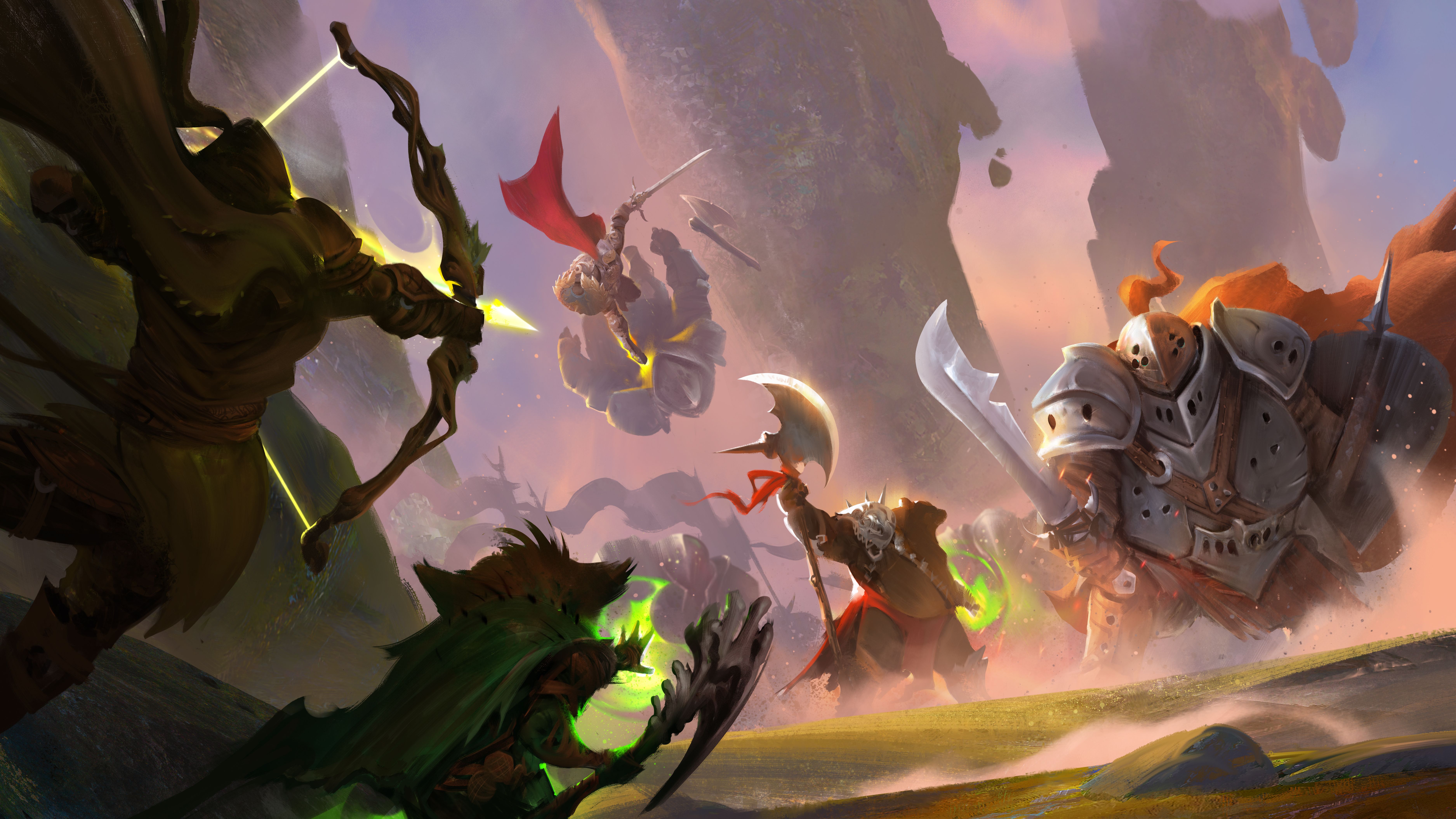
ArenaNet has unveiled new details of Guild Wars 3, revealing combat and movement systems the studio says are unlike anything previously seen in the MMO genre. The developer is deliberately moving away from two decades of static, time-intensive MMO conventions established by titles such as World of Warcraft and the original Guild Wars 2, arguing that these games demand an unsustainable level of commitment from players balancing real-world responsibilities. This marks a deliberate repositioning of the franchise towards more flexible, skill-based play.
Preview footage shows fluid traversal mechanics, including smooth transitions between gliding and wall-running, paired with a momentum-based combat system that prioritises player skill and positioning over traditional gear grinding and time-gated progression. Studio leadership has framed the redesign as part of the franchise's long-standing willingness to experiment, with one of its stated goals being to "try new things" with each new Guild Wars release.
- Guild Wars 3 overhauls combat and movement, departing from typical MMO design.
- ArenaNet aims to cut excessive time demands common in the genre.
- New system rewards skill and positioning over gear and grinding.
New here? Start with this
ArenaNet, the studio behind Guild Wars 2, is developing a third instalment in its long-running online role-playing game series. These massively multiplayer online games, or MMOs, let large numbers of players explore, fight and complete quests together in a shared virtual world, and the genre has traditionally rewarded players for putting in long, repetitive hours to build up their character.
Guild Wars 3 is being pitched as a departure from that model, with the studio saying it wants combat and movement to reward player skill and quick reactions rather than the amount of time spent grinding for gear or levels. This puts it in contrast with established genre leaders such as World of Warcraft, and even with ArenaNet's own earlier game, Guild Wars 2.
The distinction matters because MMOs are a major and lucrative part of the games industry, but are also known for demanding heavy time commitments that can be difficult for players with jobs, families or other responsibilities to sustain. How well ArenaNet can deliver a more flexible, skill-focused alternative, without losing the depth that keeps players engaged, is central to how the game will be judged.
Full account
ArenaNet has lifted the lid on Guild Wars 3, framing the long-awaited sequel as an attempt to shake up a massively multiplayer genre that studio director Colin Johanson believes has barely moved on in two decades. Briefing journalists over Discord, Johanson argued that the MMO space has produced strikingly few genuine newcomers in the past ten years, with players still gravitating towards veteran titles such as World of Warcraft, Star Wars: The Old Republic, Guild Wars 2, Final Fantasy 14 and The Elder Scrolls Online rather than anything more recent. His central complaint is that moment-to-moment play across the genre has calcified around familiar, action-bar-driven combat, and that Guild Wars 3 needs to break from that mould rather than simply refine it.
A recurring theme in ArenaNet's pitch is accessibility of a different kind: not simplifying the game itself, but cutting down the ritual that precedes actually playing it. Johanson was candid that MMOs have earned a reputation as time-consuming second jobs, weighed down by inventory sorting, quest bookkeeping and coordinating with other players before any fun begins. Guild Wars 3 is being designed so that a shorter session, of roughly half an hour, can still deliver meaningful progress. ArenaNet also signalled a deliberate move away from the subscription-driven design habits that keep players tethered to a single game, saying it wants Guild Wars 3 to support a healthier back-and-forth with other titles rather than demanding constant attention, continuing a philosophy the studio says it began exploring in Guild Wars 2.
On the technical side, the studio is placing heavy emphasis on fluidity of movement and combat, built using Unreal Engine 5 after roughly four years in development. Gliding, already familiar from Guild Wars 2, is being reworked to remove the clunky stop-start transitions of the earlier game, with new options such as wall-running added into the mix and a stamina meter to keep it in check. Momentum carries into combat too, with players able to use speed and weight to knock enemies into obstacles or off ledges, and suffer the same in return, an approach ArenaNet suggests MMOs have traditionally avoided because of the networking challenges involved in synchronising fast, physical movement across many players. The sequel's story is set before the events of both earlier games, meaning newcomers won't need any prior series knowledge, and it will mark the franchise's first appearance on console, releasing on PlayStation 5 alongside PC. ArenaNet says it intends to keep supporting Guild Wars and Guild Wars 2 rather than winding them down, pointing to the recent Guild Wars Reforged re-release, which added a mobile version, as evidence of that continued investment.
Coverage of the reveal varies in focus. Reporting built around ArenaNet's own briefing leans on Johanson's direct criticism of the wider MMO genre and the design philosophy behind the game's pacing and accessibility goals. A separate first-hand account, written from the perspective of a longstanding fan, gives more weight to nostalgia for the original games alongside concrete details such as the Unreal Engine 5 build, the PlayStation 5 announcement, and a beta window pencilled in for late 2027. A third outlet's coverage centres on the claim that the combat and movement systems feel unlike anything else in the MMO space, though the fuller detail of that account was not accessible for this summary. Notably, ArenaNet itself acknowledges some mechanical questions remain unresolved, including what happens to enemy loot when a foe is knocked off a cliff during combat.
Where outlets differ
The Polygon-style account foregrounds Colin Johanson's blunt criticism of MMO stagnation and the studio's philosophy on cutting down 'preparing to have fun' time and avoiding subscription-style lock-in, with extensive direct quotes.
The personal/fan-perspective account emphasises nostalgia for the original Guild Wars and Guild Wars 2, and supplies the more concrete production details: Unreal Engine 5, roughly four years in development, a PlayStation 5 console debut, and a beta targeted for late 2027.
The PC Gamer-attributed piece is framed around the claim that the combat and movement design is unlike anything else in the genre, but its full article text was behind a membership wall and not available beyond the headline and quote.
Only the fan-perspective source details ArenaNet's plan to keep supporting Guild Wars (via the Guild Wars Reforged re-release and mobile port) and Guild Wars 2 alongside the new game; the other sources do not mention this.
Coverage
- Polygon — Guild Wars 3 is the First MMO for Fans with ‘Real-Life Schedules’
- Wired — I Got a Brief Look at ‘Guild Wars 3,’ and I’m Excited
- PC Gamer — Guild Wars 3’s approach to combat and movement is like nothing I’ve ever seen in an MMO before: ‘One of our big goals when we make a new game in the Guild Wars franchise is to set out and try new things’