Machado challenges Trump’s oil deal with Venezuela’s unelected interim regime
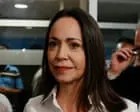
The Venezuelan opposition leader María Corina Machado has publicly questioned Donald Trump's oil deal with Venezuela's interim government, arguing that the country's natural resources do not belong to what she called "an illegitimate regime". Speaking for the first time since Trump announced the agreement last Friday, the Nobel peace prize winner tried to balance her criticism of the deal with an effort not to alienate the White House, insisting the US remains the partner Venezuela needs while denying the current Caracas administration any democratic mandate to negotiate over the nation's subsoil wealth. The intervention highlights her increasingly awkward position after being sidelined by Washington in favour of the un-elected interim president, Delcy Rodríguez.
Venezuela holds the world's largest proven crude reserves, estimated at 303bn barrels, with more than 65bn barrels covered by the new agreement struck with Rodríguez, who took power in January after Nicolás Maduro was removed by US special forces. Trump has framed the deal as securing "energy dominance" and excluding Chinese and Russian influence, while critics have branded it a predatory, colonial-style land grab; Machado's supporters fear it reduces pressure on Washington to push for fresh elections, despite her movement being widely believed to have won the 2024 vote by a landslide, with both Trump and Rodríguez declining to commit to a timeline for a new poll.
In short
- Machado says Venezuela's oil wealth doesn't belong to "illegitimate" interim regime
- Trump's deal covers over 65bn of Venezuela's 303bn barrels of reserves
- Critics fear deal reduces pressure for fresh Venezuelan elections
Steelman: both sides, in good faith
The strongest fair case each way — we don't pick a winner.
The case for
Supporters of the deal could argue that working with the interim administration offers a practical way to restore oil production, bring revenue to Venezuela and reduce Chinese and Russian influence, while the country faces uncertainty after Maduro’s removal. They may see engagement as a step towards stability, even if the interim government’s democratic mandate is disputed.
The case against
Critics could argue that an unelected administration lacks the authority to negotiate away Venezuela’s resource wealth, especially when the opposition is widely believed to have won the 2024 election. They may fear the deal benefits the United States and the interim government while weakening pressure for fresh elections and Venezuelans’ right to decide how their resources are used.
Explained simply
Venezuela has some of the world’s largest oil reserves, and control of its oil has long been tied to the country’s economy and politics. María Corina Machado leads the opposition movement, while Delcy Rodríguez heads an interim government that took power after Nicolás Maduro was removed in January.
The dispute centres on who has the authority to make decisions about Venezuela’s oil. Machado and her supporters say Rodríguez’s government lacks an electoral mandate; the interim government is dealing with the United States over the country’s resources. The question matters because oil agreements could shape Venezuela’s relations with other countries and the prospects for a new election.
Americas Business Government Politics World
Read the full article at the source →
Originally published by The Guardian as “Nobel laureate Machado: ‘Illegitimate’ Venezuela regime has no right to strike US oil deal”.