Nvidia PAIR: Free Software Pools Household PCs for Distributed AI Computing
Developed over time first seen 2 months ago
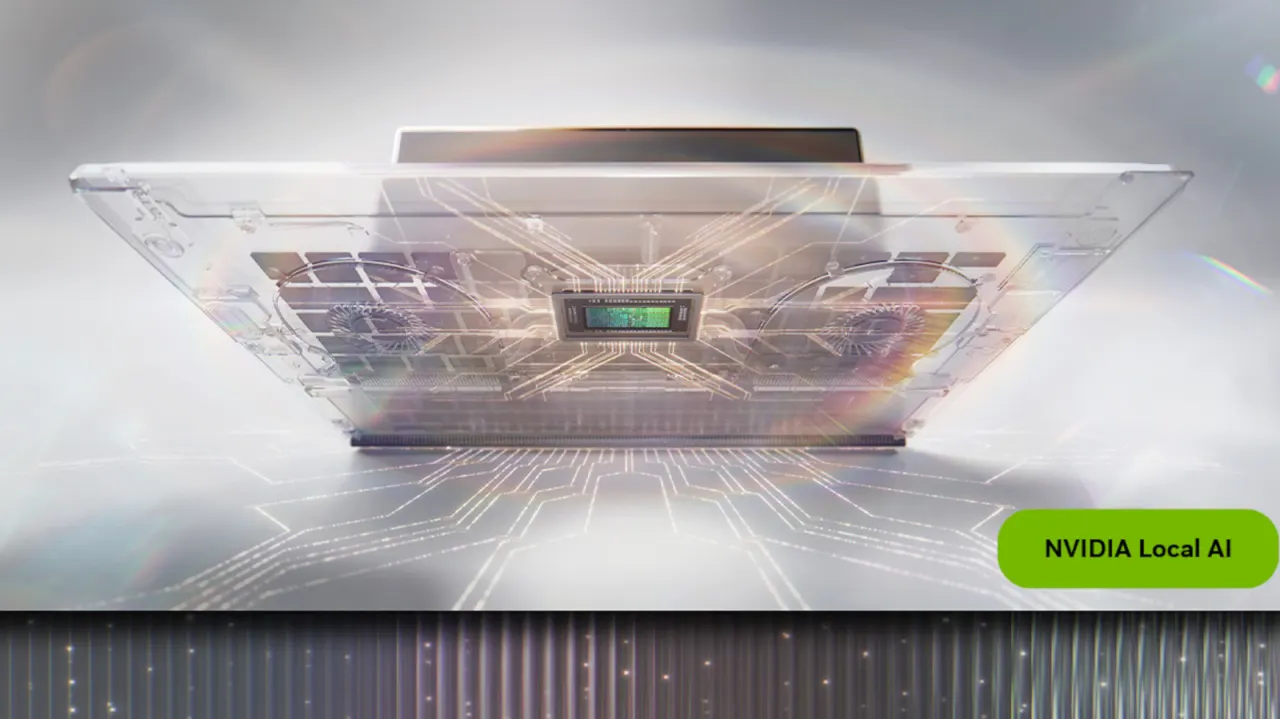
Nvidia has unveiled Personal AI Router (PAIR), a free and open-source tool announced at IFA 2026 that pools processing power across multiple household PCs to speed up local AI tasks. Nvidia notes that more than half of US households have two or more computers, which typically sit idle for much of the day; PAIR taps this spare capacity so AI agents no longer compete for a single machine's GPU, preventing slowdowns when complex tasks are broken into parallel subtasks.
The software scans a local network for idle, capable machines and routes AI workload requests to them accordingly, such as when an agent splits an inbox-sorting task across several subagents. This means the main computer's performance for gaming or other work remains unaffected while the AI processing runs elsewhere. PAIR is released in beta, working via graphical and terminal interfaces on Windows, macOS and Linux, and supports Nvidia GeForce RTX 20 Series GPUs and newer, RTX PRO workstation GPUs from Turing architecture onwards, Nvidia DGX Spark, and Apple M4 or newer chips.
- Sources
- 2
- Outlets
- 2
- Left · Centre · Right
- 0 · 0 · 0
In short
- Nvidia's free PAIR tool links home PCs to share AI processing power
- Idle household computers handle overflow AI tasks automatically
- Beta release supports Windows, macOS, Linux and recent GPUs/Apple chips
How this story developed
- 2 months ago Nvidia has unveiled Personal AI Router (PAIR), a free and open-source tool announced at IFA 2026 that pools processing power across multiple household PCs to speed up local AI tasks.
- 2 months ago Nvidia has released Personal AI Router (PAIR), a free and open-source software tool designed to link multiple household computers into a coordinated computing network. The software identifies compatible devices on a home network and consolidates their idle processing power to execute AI inference tasks locally.
- 2 months ago Nvidia has unveiled Personal AI Router (PAIR), a free and open-source tool announced at IFA 2026 that pools processing power across multiple household PCs to speed up local AI tasks.
Full account
Nvidia has introduced Personal AI Router (PAIR), a free, open-source tool that links the various computers in a household into a single pool of computing power for running artificial intelligence tasks locally. Despite its name, PAIR is not a physical networking device but software that scans a home network for compatible machines, connects them together, and prepares them to share the workload of local AI inference — the kind of processing used by applications such as Ollama and LM Studio, which let users run AI models on their own hardware rather than in the cloud.
Once installed, PAIR looks for other suitable devices nearby and, where possible, calls on their spare processing capacity rather than dedicating a single machine to the job. Because many modern AI "agents" split complex requests into a series of smaller sub-tasks, PAIR can spread that work across several computers simultaneously instead of forcing everything through one graphics card, which Nvidia says removes a common bottleneck. The system is designed to be responsive to what each machine is actually doing: it draws on a computer's unused capacity and steps back automatically if that device suddenly needs its resources for something else, such as a family member starting a game. Supported hardware centres heavily on Nvidia's own graphics chips — GeForce RTX cards from the 20-series onwards, RTX Pro workstation GPUs, and DGX Spark systems — though Apple silicon from the M4 chip onward is also compatible, and the tool runs across Windows, macOS and Linux.
To keep this pooled network secure, devices are paired using a six-digit code and then communicate over an encrypted, mutually authenticated connection (mTLS), so that machines trust one another in both directions. Nvidia has pitched the concept as a way of putting largely wasted household computing power to work: at a press briefing, product manager Seth Schneider sketched an example family with several capable machines between them — laptops, a gaming desktop and a MacBook — amounting to roughly 165 teraflops of spare capacity sitting unused, which he described as a "treasure trove of free tokens" available even after accounting for the electricity it would take to run. More broadly, Nvidia has pointed to research suggesting a majority of American households already own two or more PCs, most of which spend much of the day idle.
PAIR has launched in beta from today, and Nvidia says it expects the more typical setup to be modest — commonly just one laptop paired with one gaming PC, rather than the multi-device household used in its illustrative example. The announcement was made alongside news of several AI agent applications designed to work alongside the new router. Coverage of the launch varies in focus: reporting tied to the IFA 2026 technology show in Berlin leans on Nvidia's own household statistics and frames the benefit chiefly around everyday convenience, such as an AI agent sorting a cluttered inbox without slowing down the computer someone is actively using; other coverage draws more on direct comment from Nvidia's product team, offering the specific teraflop estimate, the security mechanism, and clearer detail on which apps and hardware are supported.
Where outlets differ
From the full account, which is AI-written from the sources:
Source 1 (The Verge) is built around a media briefing with Nvidia product manager Seth Schneider, giving a detailed illustrative household example (165 teraflops, specific devices per family member), the exact security mechanism (six-digit code plus mTLS), and notes companion AI agent app announcements; it frames the story mainly as a product feature.
Source 2 ties the announcement explicitly to the IFA 2026 trade show and leads with Nvidia's household PC-ownership statistic ("more than half of US households have two or more PCs"), and illustrates the benefit with a concrete inbox-sorting/subagent example, emphasising that the main user's own computer performance is not affected while an agent task runs elsewhere.
Source 1 explicitly clarifies PAIR is not a hardware router, a point Source 2 does not address.
Source 1 notes Nvidia's own framing of who realistically benefits (typically one laptop plus one gaming PC), which Source 2 omits.
Steelman: both sides, in good faith
The strongest fair case each way — we don't pick a winner.
The case for
Advocates argue this is a sensible use of computing resources that already exist: most households have several machines sitting idle for hours each day, and rather than pushing everyone to buy dedicated AI hardware or pay for cloud subscriptions, PAIR lets people harness capacity they already own. By keeping processing local rather than routing it through remote servers, it can also appeal to those who value data staying within their own home network, while avoiding the slowdowns that come from cramming parallel AI subtasks onto a single GPU. Framed this way, it is a pragmatic, low-cost step towards more efficient, accessible AI computing.
The case against
Sceptics of such tools tend to raise concerns about expanding the attack surface of a home network: software that actively scans for and routes workloads to other devices introduces new points where misconfiguration, vulnerabilities or unauthorised access could cause harm, particularly in households with less technical oversight. There is also a reasonable worry about scope creep and reliability, since coordinating tasks across multiple machines of varying age, operating system and hardware generation could introduce inconsistent performance, unexpected resource contention, or wear on secondary devices not designed for sustained AI workloads. Others may simply question whether the practical benefit, for most households, justifies the added complexity of managing a distributed system at home.
Explained simply
Nvidia Personal AI Router, known as PAIR, is a new tool from the chipmaker Nvidia that lets several computers on the same home network share the work of running artificial intelligence tasks. Rather than relying on a single PC's processing power, it detects other devices sitting idle nearby and hands some of the workload to them instead, so tasks finish faster without slowing down the machine someone is actively using.
The idea responds to a simple fact: many households now own more than one computer, and most of that hardware sits unused for large parts of the day. AI programs, sometimes called agents, often need substantial graphics processing power, particularly when a task is split into several smaller pieces handled at once. PAIR aims to make use of that spare capacity instead of letting it go to waste.
Nvidia makes the graphics chips that much AI software depends on, and PAIR is designed to work with a specific range of its own hardware, as well as recent Apple computer chips. The tool is free, and its underlying code is open for others to inspect or build on, though it remains in an early testing stage rather than a finished release.
Coverage · 2 sources
AI Americas Software Technology World