Ugreen’s new smart home ecosystem is built around local AI hubs
Developed over time first seen 2 months ago
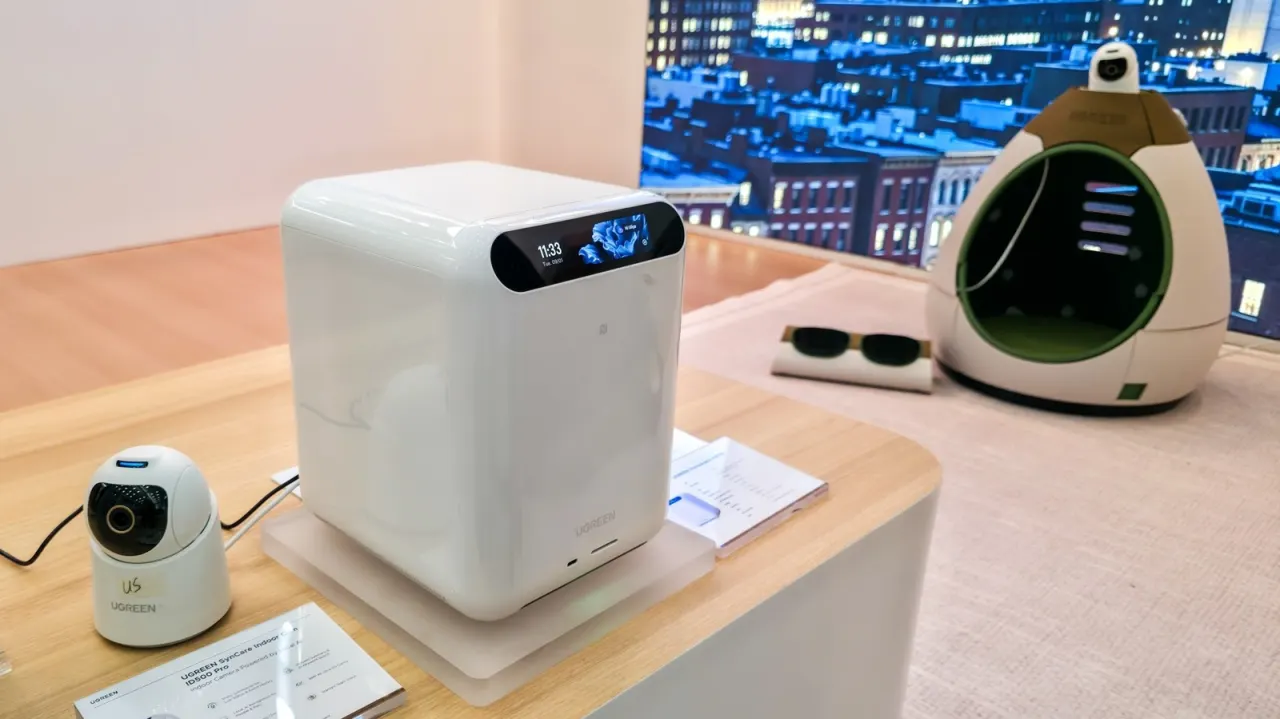
Ugreen has entered the local AI smart home market with a new "AIoT" product range, unveiled at a launch event at Gillette Stadium in Foxborough, Massachusetts. The lineup is built around three AI-powered hubs, HomeAgent (HA100 and HA100 Pro) and the flagship MasterAgent MA100, which process data on-device rather than in the cloud, positioning Ugreen — better known for chargers, cables and NAS devices — as a privacy-focused alternative to Amazon and Google's smart home systems.
The entry-level HA100 uses an RK3588 chip with 16GB of RAM and 26 TOPS of AI performance, priced at $1,799 ($899 early bird), while the HA100 Pro adds motion understanding and voice-created automation rules via a CIX-CP8180(P1) chip, 32GB of RAM and 205 TOPS, costing $5,999 ($2,999 early bird). The top-tier MasterAgent MA100 runs on Nvidia's Jetson Thor platform with 128GB of unified memory and up to 2,070 TOPS, retailing at $20,000 (50% off for early adopters). Ugreen also showed off security cameras, a smart picture frame and a smart speaker, and confirmed support for ONVIF, Matter, and eventually Zigbee and Thread, though none of the hubs currently offer official Home Assistant support — unlike rival Anker's AI hub, announced the same day, which does.
- Ugreen launches local AI smart home hubs, prioritising privacy over cloud processing
- Prices range from $1,799 up to a hefty $20,000 flagship model
- No Home Assistant support, unlike competitor Anker's rival hub
New here? Start with this
Ugreen is a Chinese consumer electronics brand best known for cables, chargers and storage devices, which is now branching into smart home technology. It has launched a new range of products, including central "hub" devices that use artificial intelligence to control other gadgets in the home, such as lights, curtains, cameras and sensors. The idea is that these hubs process data locally, on the device itself, rather than sending it to a company's remote servers, which is how most existing smart home systems from firms like Amazon and Google typically work.
The range includes several hub models at different price points and capability levels, alongside cameras, a digital picture frame and a smart speaker designed to work alongside them. Ugreen faces competition from other companies pursuing similar local-processing approaches, and from established platforms such as Home Assistant, a popular open-source system that many smart home enthusiasts use to control devices from various manufacturers in one place, and Apple's HomeKit.
This matters because it reflects a wider shift in the smart home industry towards devices that keep more data and processing on local hardware rather than relying on the internet and cloud services, which can appeal to buyers concerned about privacy, reliability or subscription costs. How well a new system works in practice, and which existing devices and standards it supports, often determines whether it gains a following among early adopters and reviewers.
Both sides, in good faith
The strongest fair case each way — we don't pick a winner.
The case for
Advocates of Ugreen's approach point to the genuine appeal of local-first smart home computing: processing data on-device rather than in the cloud addresses long-standing privacy and reliability concerns, and the inclusion of SATA bays, M.2 and SD slots for NAS-style storage gives enthusiasts flexibility that cloud-dependent rivals rarely offer. The substantial chip power on show, particularly the Jetson Thor-based flagship, signals serious investment in on-device AI capability rather than a token gesture, and broader Matter and ONVIF support out of the box shows an intent to work within open standards. For buyers wary of Amazon and Google's data practices, a well-resourced new entrant offering local control is a welcome addition to the market.
The case against
Sceptics can reasonably note that the launch raises more questions than it answers: the absence of official Home Assistant support is a significant omission for the enthusiast audience most likely to consider such expensive hardware, especially when a same-day rival offers exactly that alongside HomeKit. Demonstrating only a single working unit performing basic tasks, with headline features like voice-created automation left unshown, suggests the range may not be ready for the prices being asked, which run from steep to extraordinary at the top end. Promised but not yet delivered Zigbee and Thread support further underlines that early buyers are being asked to pay a premium now for functionality that may arrive later, if at all.