Cédric Kahn on Immersing Himself in an Adolescent Psychiatric Ward for His Venice Competition Film ‘A Place to Heal’ (EXCLUSIVE)
Developed over time first seen 2 months ago
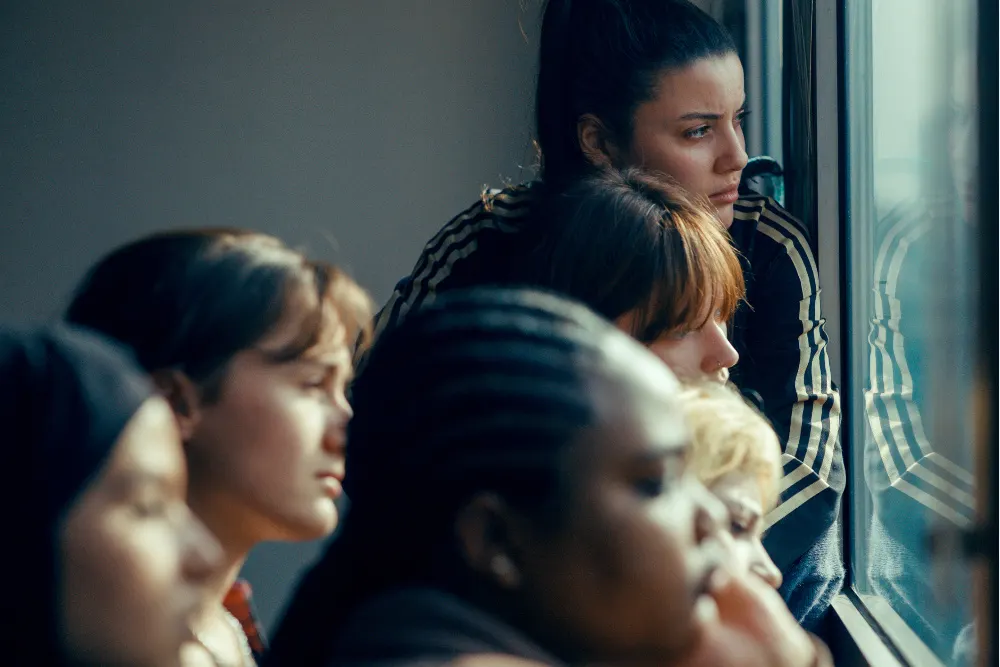
French actor-director Cédric Kahn spent several weeks embedded in an adolescent psychiatric ward, while his co-writer Kahina Le Querrec spent six months in another, to research his 12th feature "A Place to Heal", which premiered in competition at the Venice Film Festival. Rather than focusing on doctors and diagnoses, Kahn chose to centre the film on teenage patients and their resilience, tackling issues such as eating disorders, suicide attempts and bullying while deliberately avoiding a grim or pitying tone, aiming instead for something vital and visceral that reflects growing openness around youth mental health in France, the US and beyond.
The story follows 17-year-old Lucia, brought to a familiar psychiatric unit by police, where she reconnects with long-term patient Eloïse and other struggling teenagers before the arrival of new patient Enzo disrupts the ward. Kahn and Le Querrec drew on observations of 12 adolescent patients and 10 caregivers, blending and altering real stories so no individual could be identified, and found that patients often helped heal one another as a kind of found family. Kahn also plays Etienne, the ward's blunt but respectful chief psychiatrist, a role modelled on a real unit head he observed; the film is represented internationally by Charades, and Kahn, better known in France as a prolific character actor, said he was struck during casting by how openly today's teenagers discuss mental illness compared with his own youth.
- Cédric Kahn's "A Place to Heal" premiered in competition at Venice.
- He and co-writer researched real teen psychiatric wards for months.
- Film centres teenage patients' resilience, not doctors or diagnoses.
New here? Start with this
Cédric Kahn is a French actor and director, well known for character roles such as his cameo in "Call My Agent!", who has now made his 12th feature film. Called "A Place to Heal", it is set in an adolescent psychiatric ward and has premiered in the main competition at the Venice Film Festival, one of the world's most prestigious film events.
To prepare the film, Kahn spent several weeks living alongside patients and staff in a real psychiatric unit, while his co-writer Kahina Le Querrec spent six months in another. Their fictional story follows a 17-year-old girl named Lucia and the other young patients she meets, and touches on difficult subjects such as eating disorders, suicide attempts and bullying.
The film matters partly because it arrives amid growing public discussion of youth mental health in France, the US and elsewhere, and because of Kahn's unusual approach: rather than focusing on doctors or clinical detail, he chose to centre the story on the teenage patients themselves and how they support one another, avoiding a bleak or pitying portrayal.
Full account
French actor-director Cédric Kahn has brought a new drama, 'A Place to Heal,' to the Venice Film Festival, where it is competing for the Golden Lion. The film, Kahn's twelfth as director and sold internationally by Charades, is set inside an adolescent psychiatric ward and follows a group of teenage patients as they navigate eating disorders, suicide attempts, bullying and other forms of psychological distress. The story opens with 17-year-old Lucia, played by Malou Khebizi, being brought to the unit by police, where she reunites with Éloïse (Zoé Monpart), a long-term patient dealing with an eating disorder and depression. Other young patients include Marvin (Daoud Gary), admitted after a psychotic episode, and Enzo (Kenji Peyran), a new arrival whose troubled history unsettles the ward's fragile balance. Kahn himself appears on screen as Etienne, the outspoken psychiatrist heading the overstretched medical team.
Kahn has said he had wanted to make a film about psychiatry for a long time, describing it as something of an inevitability given how often mental fragility has featured in his earlier work. An initial attempt years ago took a different shape, centring on an adult psychiatric ward and told from the perspective of a psychiatrist protagonist; dissatisfied with that script, he abandoned it and shifted his focus to adolescents, a change he felt offered more hope and possibility. Rather than dwelling on clinical detail or despair, Kahn said he deliberately sought a film that felt vital and full of life, avoiding both grimness and any sense of pity towards its young characters, with humour and moments of joy woven throughout.
To prepare the screenplay, Kahn worked with co-writer Kahina Le Querrec, who spent six months embedded within a child and adolescent psychiatric unit, gathering accounts from young patients and conversations with medical staff. Kahn undertook his own period of observation in a separate unit in Paris, watching patients, carers and family meetings first-hand. The material they gathered was reshaped and combined to create the film's twelve adolescent characters and ten members of staff, deliberately altered so that no real patient could identify themselves in the finished story. Kahn has said that what struck him most during this immersion was the way patients supported and effectively helped heal one another, forming something like a family bound together at a moment of shared vulnerability, alongside the psychiatrist he shadowed, who became the model for his own character.
Kahn also pointed to the wider social backdrop against which the film arrives, with youth mental health now a pressing and widely discussed issue well beyond France. He noted that the young actors he auditioned spoke about psychiatric illness openly and without the stigma he recalled from his own adolescence, a shift he sees reflected in the greater acceptance of such conversations today. He has also spoken about the role parental relationships and family circumstances play in shaping the difficulties faced by the film's young characters. Kahn arrived on the Lido accompanied by the dozen young cast members for the world premiere, marking his latest appearance at a festival with which he has a long history, having debuted with Railway Bar in Venice's Critics' Week sidebar in 1992 and returned in 2023 with Making Of in the main selection.
Where outlets differ
Variety, drawing on its own interview, foregrounds Kahn's stated intent to avoid a 'deathly' or pitying tone and his observations from casting about teenagers' openness discussing mental illness compared with his own youth; it describes his immersion period in broad terms as 'several weeks.'
Deadline places more emphasis on the festival occasion itself — the red-carpet appearance with the young ensemble cast, Kahn's prior Venice history with Railway Bar and Making Of, and a fuller rundown of individual characters' backstories (Lucia, Éloïse, Marvin, Enzo) — and specifies Kahn's immersion as three weeks in a Paris unit, plus raises the theme of parental responsibility, a point not covered in the Variety excerpt.