Germany battles fresh suspected Russian sabotage of power infrastructure
Developed over time first seen 2 months ago
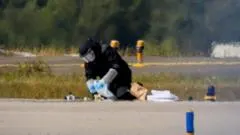
Germany experienced a fresh wave of suspected sabotage against its electricity grid, with two more attempted attacks reported overnight in addition to earlier incidents this week, deepening concerns over a sustained campaign of hybrid attacks that Berlin now formally attributes to Russia. Police said an attempt had been made to short-circuit a power grid installation in Dormagen, North Rhine-Westphalia, with a letter subsequently received claiming responsibility, while a transformer station in Ganderkesee, Lower Saxony, was cordoned off amid "suspicious circumstances", though officials said there was no danger to the public. The episode came just days after the government blamed Moscow directly for a drone incursion, marking a shift from its earlier, more cautious references to "foreign powers".
The overnight incidents followed sabotage earlier in the week at a substation in nearby Bergheim, which knocked five brown-coal power units with a combined capacity of 4,200 megawatts offline, and damage to power lines at a critical high-voltage node in Brandenburg. They also came against a backdrop of repeated drone sightings near sensitive sites, including explosive-laden drones found near Leipzig airport, a hub for military and Ukraine-related cargo, prompting Chancellor Friedrich Merz to say Germany had "increasingly found itself in the crosshairs of hybrid attackers". Denmark's intelligence service separately warned that Russia was attempting to recruit citizens to help plan sabotage against Danish defence firms tied to Ukraine, an allegation Russia's ambassador dismissed as unsubstantiated, underlining growing alarm across Europe over suspected Russian hybrid warfare.
- Sources
- 2
- Outlets
- 2
- Left · Centre · Right
- 0 · 1 · 1
In short
- Germany reports fresh sabotage attempts on power grid in Dormagen and Ganderkesee
- Follows earlier attacks on Bergheim substation and Brandenburg power lines
- Berlin now formally blames Russia amid wider European hybrid-attack fears
How this story developed
- 2 months ago Officials broadened their account of the wave to frame it as a coordinated, multi-vector campaign stretching back to early August, with the interior ministry's Leipzig attribution now cited as formal confirmation of Russian involvement and the recent grid attacks and a string of suspicious fires grouped as part of a strategy to destabilise NATO states alongside Moscow's offensive in Ukraine.
- 2 months ago Germany reported two fresh overnight sabotage attempts on its electricity grid, in Dormagen and Ganderkesee, prompting Interior Minister Alexander Dobrindt to formally blame Russia for hybrid attacks including the earlier Leipzig airport drone incident, as Denmark's PET also warned Russia was recruiting locals to sabotage defence firms.
Full account
Germany has been placed on heightened alert after a fresh spate of suspected sabotage targeting its electricity network, compounding concerns that Russia is broadening a campaign of hybrid attacks against the country and its European allies. The latest incidents follow weeks of mounting alarm after explosive-laden drones were discovered near Leipzig airport, a hub used to move military supplies to Ukraine, which Berlin has now formally attributed to Moscow.
Overnight, police in Dormagen, North Rhine-Westphalia, said someone had attempted to short-circuit a grid installation, and officers subsequently received a letter claiming responsibility for the act. Separately, a transformer station in Ganderkesee, Lower Saxony, was cordoned off after what police described only as a suspicious overnight discovery, though they stressed there was no risk to the public. These followed two other cases reported earlier in the week: vandalism at a substation in nearby Bergheim that forced five lignite-fired power units, with a combined output of 4,200 megawatts, temporarily offline, and the discovery of devices containing conductive material designed to damage power lines at a major high-voltage junction in Brandenburg.
The grid incidents come a month after drones carrying explosives were found close to a Ukrainian cargo aircraft at Leipzig airport, a site also used by the German military and NATO partners. Chancellor Friedrich Merz said Germany had increasingly become a target of hybrid attackers, and while officials initially spoke only of possible involvement by unnamed "foreign powers", Interior Minister Alexander Dobrindt has since stated explicitly that the Leipzig operation fitted a well-established pattern of Russian hybrid activity in Europe, adding that further attempts against Germany should be expected. The Kremlin has dismissed the accusations as absurd and, as is customary, demanded evidence.
The suspected German attacks sit within a wider run of incidents across the continent through August, mostly aimed at defence-related firms and infrastructure supporting Ukraine. Fires broke out at facilities in Bulgaria, Italy, Estonia, Slovakia and Poland, with some governments, including Estonia and Poland, openly pointing to possible Russian involvement, arresting suspects and, in Slovakia's case, foiling a planned arson attack on a drone manufacturer. Polish Prime Minister Donald Tusk described one attack on a domestic drone producer as a continuation of Russian escalation, while Denmark's intelligence service warned separately that Russia was attempting to recruit Danish citizens to help plan sabotage against defence companies with Ukrainian links. Polish Interior Minister Marcin Kierwiński said the pattern pointed to Russia intensifying sabotage and even terrorist activity across Europe, though officials caution that some incidents may ultimately be found accidental, precisely the ambiguity such covert operations are designed to exploit.
Where outlets differ
From the full account, which is AI-written from the sources:
Source 1 (a broadcaster-style account) frames the story primarily as a pan-European pattern, offering a country-by-country timeline of suspected sabotage fires in Bulgaria, Italy, Estonia, Slovakia and Poland through August, and leads on the Polish interior minister's warning about Russia intensifying terrorist and sabotage activity.
Source 2 focuses much more narrowly and specifically on the German electricity grid incidents (Dormagen, Ganderkesee, Bergheim, Brandenburg), giving operational detail such as the claim-of-responsibility letter and the megawatt capacity taken offline, detail absent from Source 1.
Source 1 states more baldly that Germany's interior minister has 'declared Russia responsible', while Source 2 gives more nuance on the shift in German government language, noting Berlin had previously referred only to 'foreign powers' before naming Russia on the Tuesday in question.
Only Source 2 mentions Denmark's PET intelligence warning about recruitment of Danish citizens for sabotage; only Source 1 details the Polish, Slovakian, Estonian, Italian and Bulgarian incidents and quotes the Polish interior minister.
Centre outlets 1
Only here: europe, spiralling, campaign, sabotage, russia
Right-leaning outlets 1
Only here: fears, putin, germany, suspected, attacks
Every side used: targeted
Headline columns compared word for word; nothing in them is AI-written.
Explained simply
Germany's electricity network has become the target of a string of incidents this week that officials suspect are deliberate sabotage. Attempts to disrupt substations and transformer stations have taken power units offline and damaged high-voltage infrastructure in several regions, though authorities say there has been no danger to the public. The pattern of attacks, rather than any single incident, is what has put the country on high alert.
The backdrop is a broader souring of relations between Germany and Russia since Russia's full-scale invasion of Ukraine in 2022, with Berlin now a major military and financial backer of Kyiv. German officials, including Chancellor Friedrich Merz and Interior Minister Alexander Dobrindt, have increasingly described the country as facing "hybrid" attacks – a term used for sabotage, cyber intrusions and other disruptive acts carried out below the threshold of open conflict. Russia denies any involvement in these incidents.
This is not seen as an isolated German concern: similar suspicions have surfaced elsewhere in Europe, including in Denmark, where the intelligence service has alleged attempts to recruit locals for sabotage against firms supplying Ukraine. The wider significance is that critical infrastructure – power grids, airports, transport links – across NATO and EU countries is increasingly seen as a potential arena for pressure linked to the war in Ukraine, even though attributing specific attacks with certainty remains difficult.
Coverage · 2 sources
Bias meters
From 2 rated sources.
Americas Elections Entertainment Europe Politics TV World