World news and discussion on TalkFuse.
Flock says its cameras make US safer – so why are they being sabotaged?
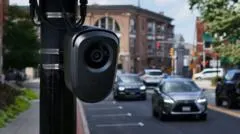
Flock Safety, one of the largest US makers of AI-powered automatic licence plate reader cameras, is facing a growing backlash that has included the sabotage of cameras in cities such as Houston, plus incidents in Minnesota, California and Georgia. While the company and law enforcement supporters say the roughly 100,000 cameras deployed across more than 7,000 US communities have improved safety and crime-solving rates, critics argue the system's vast interconnected database allows overly broad surveillance of ordinary people's movements, raising civil liberties concerns amid low public trust in institutions.
BBC-obtained records from Houston show how far camera-network searches have expanded: a typical licence plate lookup by one school district searched about 270 camera networks in April 2024, nearly doubling to 500 by April 2025, with 20% of searches spanning more than 6,000 networks by April 2026. Houston's METRO Transit Authority owns just 35 cameras but can access roughly 20,000 devices through Flock's shared network, reaching as far as New York state. Documented misuse cases have fuelled concern, including a Kentucky police officer charged after using Flock to track his ex-partner over 2,000 times, and worries that police may use the system to bypass the warrants normally required for property or phone searches.
In short
- Flock's AI licence-plate cameras are being vandalised amid US privacy backlash.
- Houston records show camera-network searches expanding hugely since 2024.
- Misuse cases, including police stalking a former partner, raise oversight concerns.
Steelman: both sides, in good faith
The strongest fair case each way — we don't pick a winner.
The case for
Supporters argue that automatic licence plate readers give police and communities a powerful, cost-effective tool to solve crimes, recover stolen vehicles and locate abducted children, often succeeding where traditional methods fail. They see the interconnected network as a natural extension of proven policing practice, allowing agencies with limited resources, such as small transit authorities or school districts, to draw on a much wider pool of cameras to follow a suspect's route across jurisdictions. From this perspective, isolated cases of misuse are a policy and accountability failure to be fixed through audits, training and sanctions, not a reason to abandon a system that demonstrably deters crime and reassures the public that offenders can be traced.
The case against
Critics contend that a nationwide, searchable database recording ordinary people's movements represents a qualitative shift in surveillance capability that most citizens never consented to, regardless of any individual camera's modest footprint. They point to documented abuses, such as an officer stalking an ex-partner thousands of times, as evidence that vast access with weak oversight will inevitably be exploited, and worry that agencies can effectively conduct warrantless tracking that would otherwise require judicial approval. For these advocates, civil liberties and the presumption of privacy in daily movement are foundational values that should not be traded away for incremental gains in crime-solving, especially when trust in institutions to police themselves is already low.
Explained simply
Automatic licence plate reader cameras photograph passing vehicles and record details such as number plates, locations and times. Flock Safety makes these cameras and links them through a shared network that police and other public bodies can search.
Supporters, including law enforcement agencies, say the system helps solve crimes and improve public safety. Critics are concerned that searches can reach far beyond the cameras owned by the agency making them, revealing people’s movements and raising questions about privacy and oversight.
Misuse cases, including an officer accused of tracking a former partner, have added to those concerns. The debate is about how to balance the cameras’ potential role in investigations with safeguards on who can search the data and for what reasons.