Mike Leigh’s warmly received feature at Telluride may be his last
Developed over time first seen 2 months ago
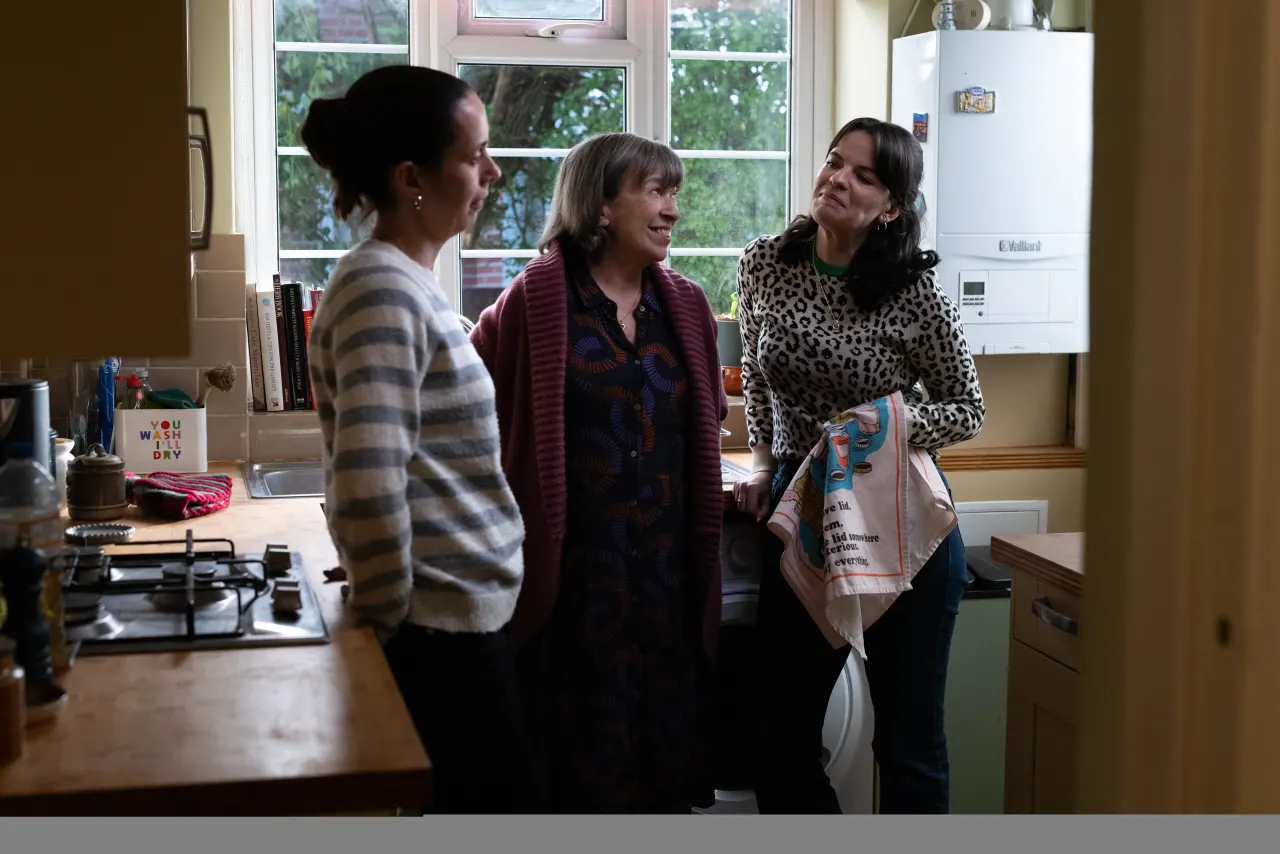
Veteran British director Mike Leigh has premiered a new film, *Tender Loving Care*, at the Telluride Film Festival, amid speculation that it could be his last feature. The film returns the seven-times Oscar nominee to the intimate, character-driven studies of ordinary British family life for which he is best known, following on from 2024's *Hard Knocks*, and has drawn divided but broadly warm reactions from critics for its gentle, humane approach.
The film follows Amy, a social worker played by Kate O'Flynn, and her ageing parents Birdie and Geoff (played by regular Leigh collaborators Marion Bailey and Paul Jesson), alongside her friend and flatmate Rosie, played by Bailey's real-life daughter Alice Bailey Johnson. Made using Leigh's trademark improvised workshopping process rather than a conventional script, the story has little plot in the traditional sense, instead observing the pair's work as social workers and their personal lives as they approach 40, while Geoff's declining health looms over the family. At 83, Leigh has made 22 feature films and 20 stage plays to date.
- Mike Leigh's new film *Tender Loving Care* premiered at Telluride, possibly his last
- Follows a social worker and her ageing parents in an intimate family drama
- Made via Leigh's trademark unscripted, improvised filmmaking method
New here? Start with this
Mike Leigh is a veteran British film director known for making intimate, character-driven dramas about ordinary life, often built through long improvisation with actors rather than a written script. Now 83, he has made 22 feature films and 20 stage plays over his career, and his new film, "Tender Loving Care", may be his last. It has just had its first public screening at the Telluride Film Festival in the United States, a launchpad event often used to build buzz ahead of awards season.
The film follows two flatmates who both work as social workers, Amy and Rosie, alongside Amy's ageing parents, whose health is starting to decline. Rather than a plot driven by twists, it is a slow, observational study of caring for others, both as a job and within a family, and of the two younger women's personal lives as they approach 40. It is played by a mix of Leigh regulars and one newcomer to his working method.
The film matters partly because of what it might represent: a possible capstone to a long and influential career, and part of a recent return by Leigh to smaller-scale stories of British life, following his 2024 film "Hard Knocks". Early reviews from critics have been broadly positive but split, with some praising it as a moving farewell and others considering its structure overly neat.
Both sides, in good faith
The strongest fair case each way — we don't pick a winner.
The case for
Admirers of the film argue that its unhurried, dialogue-light observation of ordinary caring – professional and familial – is precisely the humane, unshowy realism Mike Leigh has spent a career perfecting, and that at 83, working once again through his patient, improvised method with trusted collaborators, he earns the right to end on quiet emotional truth rather than incident. They see the ageing parents' storyline and the two social workers' faltering personal lives as a moving, lived-in portrait of how care is given and received, making it a fitting, dignified capstone to his body of work.
The case against
Sceptical critics contend that the film's structure feels schematic, with its parallel strands of professional and personal caregiving too neatly arranged to achieve the spontaneous, messy authenticity that made Leigh's earlier work distinctive. For them, the absence of dramatic incident tips from restraint into thinness, leaving the characters' arcs feeling like illustrations of a thesis about care rather than fully inhabited lives, so that even a well-intentioned late-career statement can read as a diminished echo of the director's stronger films.
Full account
Mike Leigh has unveiled 'Tender Loving Care', a new drama that premiered at the Telluride Film Festival and which the 83-year-old writer-director has suggested could be his last feature. Reports note that Leigh has made 22 films and around 20 stage plays across his career, and that this project follows his 2024 release 'Hard Knocks' in returning him to the intimate, character-driven studies of British family life for which he is best known. Rather than dwelling on drama or plot twists, the film is being described as a quieter, more reflective piece, concerned with ageing, the passage of time and the small joys and sorrows of ordinary domestic existence.
The story follows Amy, a social worker played by Kate O'Flynn, who is coping with the end of a relationship after her boyfriend returned to his wife and child. She moves back in with her childhood best friend and fellow social worker, Rosie (Alice Bailey Johnson), rekindling an old flatmate dynamic of gossip, wine and mutual support. Amy's elderly parents, Birdie and Geoff, played by Marion Bailey and Paul Jesson, worry gently about her romantic prospects and the absence of grandchildren, unaware of the recent break-up. Both Amy and Rosie are shown navigating demanding jobs in social care – Amy largely with children in the foster system, Rosie with elderly clients – work that leaves them emotionally drained even as they try to keep caring for one another. As is customary for Leigh, the cast built these characters from scratch through months of improvisation and rehearsal rather than working from a conventional script.
Coverage consistently frames the film as engaging with the strained state of Britain's social safety net, touching on funding cuts to social services, the legacy of Thatcher-era self-reliance, and, in one account, the further erosion of public provision linked to Brexit. Commentators note that Leigh's left-leaning politics run through the material, but that he lets these ideas emerge through believable, flawed characters rather than through overt messaging, distinguishing his approach from that of a filmmaker like Ken Loach. The film's title is described as carrying multiple meanings – referring at once to the professional care Amy and Rosie extend to service users who increasingly seem beyond reach, and to the more personal, everyday tenderness the two women, and the wider family, show one another.
Critical reaction is not uniform. One review is notably more reserved, praising the vividness and warmth of the performances and the naturalism typical of Leigh's ensemble work, but arguing that the film ultimately feels schematic rather than fully realised, and wishes it had probed its characters' inner lives – their private dreams and traumas – more deeply; this reviewer also singles out the title itself as somewhat unfocused, since it gestures at several themes without settling clearly on one. By contrast, other assessments are considerably warmer, describing the film as a moving, quietly powerful note to potentially end a career on, blending humour with real emotional weight, and praising its ability to make thematic ideas feel organic to the characters rather than imposed. A further account focuses less on evaluating the film's success and more on situating it within Leigh's body of work and working method, emphasising the loyalty of his long-standing collaborators and the fresh addition of O'Flynn to his acting company, while noting the poignancy of the film arriving amid speculation about his health and the possibility of retirement.
Where outlets differ
One reviewer (Source 1) is markedly more critical, arguing the film doesn't cohere as powerfully as Leigh's best work (citing 'Secrets & Lies', 'Topsy-Turvy' and 'Another Year' as comparisons) and finding the multiple meanings of the title a weakness rather than a strength.
Another outlet (Source 2) is far more admiring, calling it a 'lovely' film and a fitting, 'stealthily powerful' potential send-off, and gives more attention to the political and social commentary (Thatcherism, Brexit, comparison to Ken Loach).
The third outlet (Source 3) is more descriptive/industry-focused, emphasising Leigh's career statistics, his improvisation-based working method, the festival premiere at Telluride, and the returning ensemble of actors, while offering less direct critical judgement on the film's quality.
Sources vary slightly on framing of the 'final film' question: Source 2 states Leigh himself has indicated it may be his last, while Source 3 attributes this more to speculation ('talk in film circles') tied to his age and health rather than a direct statement from Leigh.
Coverage
- Variety — ‘Tender Loving Care’ Review: Mike Leigh’s Tale of Social Workers, Lonely Hearts and Dementia Should Have Been a Fuller Portrait
- The Hollywood Reporter — ‘Tender Loving Care’ Review: Kate O’Flynn Lights Up Mike Leigh’s Warm, Gently Wrenching Study of Solace and Solidarity
- Deadline — ‘Tender Loving Care’ Review: Kate O’Flynn Stars In What Could Be Mike Leigh’s Final Film, But It Happens To Be One Of His Best – Telluride Film Festival
Art Business Celebrity Cricket Culture Entertainment Film Markets Research Science Sport