Haigh brings Tóibín’s novella to screen as family unravels in remote Colorado
Developed over time first seen 2 months ago
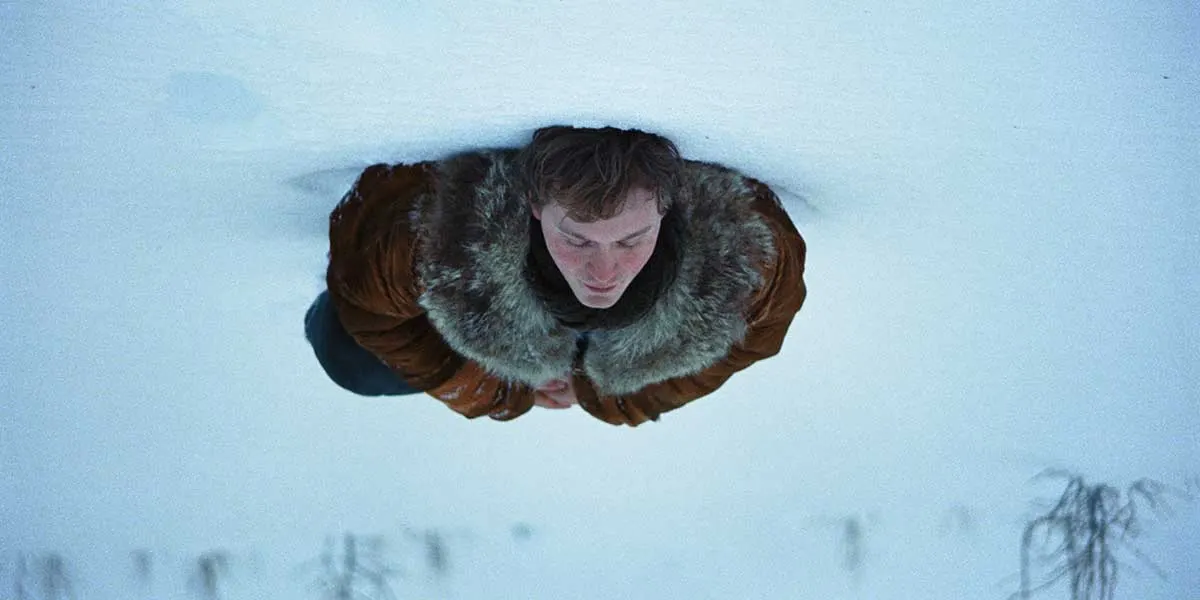
Andrew Haigh's film "A Long Winter" adapts Colm Tóibín's novella into a coming-of-age drama about a family unravelling in 1950s rural Colorado, relocating the story from its original Spanish Pyrenees setting. Fred Hechinger stars as Mike, a young man who returns home from a failed attempt at independence to find his mother Louise (Caitríona Balfe) struggling with alcoholism and depression, and his brother Tommy (Kit Connor) about to leave for the Korean War, leaving him increasingly isolated with his stern father Lester (Ebon Moss-Bachrach).
When Louise vanishes into a snowstorm, a search effort involving neighbours, state troopers and her brother Jack (Martin Freeman) unfolds against a harsh mountain backdrop, forcing Mike to confront grief while quietly discovering his own queer identity, including an unspoken attraction to a young police officer. The novella first appeared in Tóibín's 2006 collection Mothers and Sons before being published separately last year, and Haigh's adaptation echoes the geographic transposition he used in his 2023 film All of Us Strangers. Reviews highlight strong performances from Hechinger, Moss-Bachrach and D'Pharaoh Woon-A-Tai, alongside a deliberately restrained, slow-burn tone that some may find muted but others will find quietly rewarding.
- Andrew Haigh adapts Tóibín's novella into 1950s Colorado family drama
- Mother's disappearance in snowstorm triggers grief and search
- Explores son's quiet queer awakening amid family crisis
New here? Start with this
Louise, a wife and mother in 1950s rural Colorado, struggles with alcoholism and depression while her husband Lester keeps the family isolated on a remote farm. Their elder son Mike is quietly coming to terms with his own sexuality, while younger son Tommy has left home to fight in the Korean War. When Louise disappears in a snowstorm, a search brings in family friends, police and her brother Jack, and the fallout forces Mike to confront both grief and his own emerging identity.
The story comes from "A Long Winter," a film by director Andrew Haigh based on a novella by the Irish writer Colm Tóibín, which was first published in 2006 and reissued on its own last year. Haigh has moved the setting from the Pyrenees mountains in Spain to the Rocky Mountains in the United States, a similar approach to how he relocated a Japanese novel to London for his earlier film "All of Us Strangers."
The film features a notable cast, including Fred Hechinger, Caitríona Balfe, Ebon Moss-Bachrach, Kit Connor and Martin Freeman, alongside actors such as Manuel Garcia-Rulfo and Anthony Timpano. It has been generating attention ahead of release for its understated style and performances, making it one of the more closely watched literary adaptations coming to screen this year.
Full account
Andrew Haigh has returned to cinemas with A Long Winter, his first feature since the acclaimed All of Us Strangers, this time adapting a novella by the Irish writer Colm Tóibín. Where Tóibín's story was originally set in the Spanish Pyrenees, Haigh has transplanted the tale to a remote farmstead high in Colorado's Rocky Mountains in the early 1950s, a shift one reviewer likens to the director's earlier reworking of a Japanese source novel into a London setting for All of Us Strangers. Reviewers single out the film's visual craft, shot by cinematographer André Turpin, describing landscapes of steep peaks, pine forest and frost-covered ridges rendered with a stillness that draws viewers into the story rather than simply showcasing scenery.
At the centre of the story are two adult brothers, Mikey (Fred Hechinger) and Tom, also referred to as Tommy (Kit Connor), who share a bedroom in their family's ageing farmhouse and enjoy an unusually close, undemonstrative bond. Their contentment with an isolated, old-fashioned way of life is not evenly shared: Tom is restless and has enlisted for Army service that will soon take him to Korea, while Mikey, who once tried living away from home on a farm in another state, was drawn back by homesickness and insists he is happy tending chickens and rabbits with his parents. That fragile domestic calm, presided over by their reserved father Lester (Ebon Moss-Bachrach) and their mother Louise (Caitríona Balfe), is shown to be built on tensions that surface once Tom's departure looms.
The unravelling centres on Louise, whose drinking Mikey gradually realises she has been concealing from the family, including through a lie told after an afternoon drink on a supply trip to a fading nearby town. According to one account, Louise also uses these trips to smuggle home copies of Cosmopolitan magazine as a private connection to a wider, more glamorous world her husband would disapprove of her indulging. Lester, whose own father and grandfather are said to have drunk themselves to death, has tolerated her drinking before but eventually resolves to confront it directly, pouring away her hidden supply and insisting she stop outright, a decision that causes her visible distress. One review situates this family drama within a broader thematic frame, describing the film as a coming-of-age story that also touches on grief, queer sexuality and self-discovery, elements attributed to a shared sensibility between Haigh and Tóibín as observers of intimate lives.
The crisis deepens when, while Lester and Mikey are occupied repairing the barn ahead of the season's first major storm, Louise disappears from the property, taking her winter coat and boots with her. As snow cuts off the roads and knocks out telephone and power lines, neighbours and state troopers mount a search party combing the surrounding wilderness. Critics broadly agree the film's slow, restrained approach — described variously as austere and muted — risks testing viewers' patience, but both accounts suggest that those who adjust to its pace are rewarded, citing praise for the performances of Hechinger, Moss-Bachrach and, per one review, D'Pharaoh Woon-A-Tai, alongside Balfe's turn as the unravelling Louise.
Where outlets differ
One outlet concentrates heavily on the film's visual style and cinematography, framing André Turpin's photography as central to the film's success, while the other says comparatively little about visual craft and instead foregrounds the story's themes — grief, queer sexuality and self-discovery — and the ensemble performances.
Only one account provides background on the novella's publication history (first appearing in Tóibín's 2006 collection Mothers and Sons before a standalone edition) and explicitly compares the Colorado relocation to Haigh's earlier transposition of a Japanese novel to London in All of Us Strangers.
The brother's name is rendered differently between accounts — 'Tom' in one and 'Tommy' in the other.
Only one source describes Louise's habit of smuggling home Cosmopolitan magazines and Lester's family history of alcoholism, giving more interior motivation for the parents' conflict.
Only one account continues the plot as far as Louise's disappearance during the barn repair and the ensuing search by neighbours and state troopers as a storm cuts off power and phone lines; the other stops at Lester discarding her hidden wine.
The two reviews differ slightly in tone: one frames the film's austerity as a risk that is offset by confident storytelling, while the other frames the muted tone as something some audiences will find underpowered, though both ultimately view the approach as rewarding for patient viewers.
Coverage
- Variety — ‘A Long Winter’ Review: Andrew Haigh’s Moody Drama, Set on a Farm in the Rockies in the Early ’50s, Is a Sweeping Act of Cinematic Storytelling
- The Hollywood Reporter — ‘A Long Winter’ Review: Fred Hechinger and Ebon Moss-Bachrach Shine as Family Thrust Into Uneasy Isolation in Andrew Haigh’s Fine-Grained Drama