US hits three Iranian oil tankers after saying its warships were targeted
Developed over time first seen 2 months ago
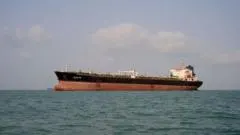
The US and Iran traded further blows at sea, escalating their six-month conflict after a week of renewed fighting following a month of relative calm. The US military said it "permanently disabled" two Iran-linked oil tankers and "completely destroyed" a third, while US Central Command said it acted after Iranian forces fired on an American aircraft carrier and guided-missile destroyer, both of which evaded the attacks unharmed with no US casualties. Iran retaliated by striking six vessels in total, according to state media, prompting Defence Secretary Pete Hegseth to warn that further Iranian attacks on US ships would be met with more tanker strikes.
Iranian outlet Irib reported no casualties from the US strike near Kharg Island, the terminal handling roughly 90% of Iran's crude exports, where onboard systems reportedly extinguished the resulting fire within an hour; crews from two further tankers hit in the Gulf of Oman were evacuated by lifeboat. Iran's Revolutionary Guard Corps said it hit three oil tankers in the Strait of Hormuz for using an "unauthorised" route, plus three vessels described as US-affiliated. The strait, vital to global oil and gas supplies, has been effectively closed since the war began, though President Trump insisted it remained "open" and downplayed the conflict as "small potatoes". Iran had already struck US-linked targets in the UAE, Bahrain, Kuwait and Jordan earlier in the week, while separate Iranian claims that a US strike killed civilians, including two children, at a wedding remain under investigation by Washington.
- Sources
- 4
- Outlets
- 4
- Left · Centre · Right
- 2 · 1 · 1
In short
- US and Iran exchanged tanker and warship strikes amid escalating six-month war
- US disabled/destroyed three Iran-linked tankers; no casualties reported
- Iran hit six vessels in response, including three near Strait of Hormuz
How this story developed
- 2 months ago Iranian state media has given further details on Tehran's retaliation after the US struck three Iran-linked oil tankers on Saturday, revealing that Iran's Revolutionary Guard Corps (IRGC) hit six vessels in total: three oil tankers in the Strait of Hormuz accused of using an "unauthorised" route, plus three ships described as US-affiliated.
- 2 months ago The US and Iran traded further blows at sea, escalating their six-month conflict after a week of renewed fighting following a month of relative calm.
- 2 months ago The US military says it struck three Iran-linked oil tankers on Saturday, hours after Iran's Islamic Revolutionary Guard Corps (IRGC) fired ballistic missiles at a US aircraft carrier and a guided-missile destroyer in the region.
- 2 months ago The US military says it destroyed or disabled three Iran-linked oil tankers on Saturday after Iran's Islamic Revolutionary Guard Corps launched ballistic missiles at a US aircraft carrier and a guided-missile destroyer in the region.
- 2 months ago The US military says it has struck three Iran-linked oil tankers after ballistic missiles were fired at two American warships in the Gulf region, marking a sharp escalation in the ongoing conflict between Washington and Tehran.
- Daily Mail US obliterates three Iranian oil carriers after their ballistic missiles targeted American warships
- NPR US military hits 3 Iranian oil tankers after saying Navy warships were targeted
- HuffPost U.S. Military Hits 3 Iranian Oil Tankers After Saying Navy Warships Were Targeted With Missiles
- BBC World US hits three Iranian oil tankers after saying its warships were targeted
Full account
The United States has struck three oil tankers linked to Iran after accusing Tehran's Islamic Revolutionary Guard Corps (IRGC) of firing ballistic missiles at two American warships in the Gulf region. US Central Command (Centcom) said the exchange took place on Saturday, when an aircraft carrier and a guided-missile destroyer came under repeated attack while patrolling regional waters but evaded every missile fired at them, with no American personnel hurt.
In retaliation, Centcom said it had "permanently disabled" one tanker close to Kharg Island and a second in the vicinity of the Strait of Hormuz, while a third vessel, unladen at the time, was "completely destroyed" in the Gulf of Oman after being struck until its crew abandoned ship. Centcom's commander, Admiral Brad Cooper, framed the response as a deliberate message to the IRGC, warning that any attack on US ships would be met with disproportionate damage to Iran's tanker fleet, which he described as limited and exposed.
Iranian state media confirmed that one of its oil tankers had come under fire near Kharg Island, the terminal through which the bulk of Iran's crude exports pass, though accounts of the strike's scale varied. The clash extends a conflict that has run intermittently for roughly six months, since the US and Israel launched extensive strikes on Iran on 28 February. Iran responded at the time by attacking Israel, American bases and Gulf allies, and by effectively shutting the Strait of Hormuz to shipping. The latest exchange came after roughly a month of comparative quiet was broken by renewed hostilities in the preceding week.
The strikes followed remarks by President Trump only a day earlier in which he sought to play down the severity of the confrontation, even as talks between the two sides have stalled and both have continued to pursue military and economic pressure against the other. Shipping through the Strait of Hormuz remains sharply reduced, with the US military reportedly assisting vessels through the waterway as Iran seeks to assert control and continues to target some ships passing through it.
Where outlets differ
From the full account, which is AI-written from the sources:
One outlet gives only a general location for the second disabled tanker ("near the Strait of Hormuz"), while the other specifies it was near Jask and names the destroyed vessel as the M/T Kylo, noting it was unladen and that its crew was ordered to abandon ship.
One report describes Iranian state media coverage only in general terms, whereas the other cites a more specific Iranian TV claim that four US missiles struck the tanker roughly six miles from Kharg Island.
Only one account mentions President Trump's prior description of the conflict as "small potatoes", the collapse of negotiations, and details about reduced Strait of Hormuz traffic and US assistance guiding ships through it — context absent from the other report, which instead emphasises the timeline of renewed attacks after a month of calm.
Left-leaning outlets 2
- US military hits 3 Iranian oil tankers after saying Navy warships were targetedNPR
- U.S. Military Hits 3 Iranian Oil Tankers After Saying Navy Warships Were Targeted With MissilesHuffPost
Only here: military, navy
Centre outlets 1
Right-leaning outlets 1
- US obliterates three Iranian oil carriers after their ballistic missiles targeted American warshipsDaily Mail
Only here: obliterates, carriers, ballistic, american
Every side used: iranian, warships, targeted
Headline columns compared word for word; nothing in them is AI-written.
Steelman: both sides, in good faith
The strongest fair case each way — we don't pick a winner.
The case for
Supporters of the US response argue that a sovereign nation's warships being targeted with ballistic missiles constitutes an act of war that cannot go unanswered, and that striking the tanker fleet funding the IRGC is a proportionate, calibrated way to impose costs while avoiding direct casualties. They contend that allowing such attacks to pass unpunished would invite further aggression, and that hitting the economic lifeline of a paramilitary organisation, rather than population centres, reflects restraint alongside resolve. From this view, deterrence requires visible consequences, and Centcom's warning of further action is a legitimate signal meant to prevent, not provoke, wider conflict.
The case against
Critics warn that this exchange marks a dangerous escalatory spiral at a moment when de-escalation was still possible, coming just days after a ceasefire lapsed and amid unresolved, contested allegations that earlier US strikes killed civilians, including children, at a wedding. They argue that targeting oil tankers risks destabilising energy markets and drawing in other regional and global actors, with consumers already bearing rising costs. Sceptics also note the coincidence of timing with domestic political pressure ahead of the midterms, questioning whether military escalation is being weighed against diplomatic alternatives, and cautioning that each side's competing, unverified claims about who struck first make an off-ramp harder to find.
Explained simply
Iran and the United States are meant to be observing a ceasefire after months of confrontation, but the truce has been fraying for a week and formally expired just days ago. The two countries have clashed over Iran's nuclear programme and wider regional tensions, with the US maintaining a large naval and military presence in the Gulf, an area through which much of the world's oil passes. Iran's Islamic Revolutionary Guard Corps, an elite branch of its military, controls significant firepower in the region, including missiles and a fleet of vessels.
The latest flare-up matters because it involves direct military contact between the two sides rather than proxy skirmishes, raising the risk of a wider war. It also touches oil supplies: the US says the tankers it targeted were shipping Iranian crude to fund the Revolutionary Guard, while Iran depends heavily on oil exports for its economy. Any disruption in the Gulf, particularly near the Strait of Hormuz, a narrow channel used for a large share of global oil shipments, could affect energy prices worldwide.
The dispute is unfolding against a backdrop of civilian casualties and domestic politics. Iran has accused the US of killing civilians, including children, in a strike on a wedding, a claim Washington says it is investigating, while President Trump faces pressure at home over the economic cost of the conflict ahead of the November midterm elections.
Coverage · 4 sources
Bias meters
From 4 rated sources.
- BBC WorldCentreUS hits three Iranian oil tankers after saying its warships were targeted
- Daily MailRightUS obliterates three Iranian oil carriers after their ballistic missiles targeted American warships
- NPRLeftUS military hits 3 Iranian oil tankers after saying Navy warships were targeted
- HuffPostFar leftU.S. Military Hits 3 Iranian Oil Tankers After Saying Navy Warships Were Targeted With Missiles