Cut the cameras: Flock surveillance cameras spur rare bipartisan backlash
Developed over time first seen 1 day ago
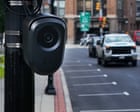
A rare cross-party backlash has emerged in the United States against Flock Safety's automated licence-plate reader cameras, with both left-wing and right-wing politicians, activists and privacy campaigners uniting against a single company's surveillance technology. The roughly 120,000 Flock cameras nationwide conduct about two billion scans a month, and controversy grew after reports that police officers had misused the network to stalk ex-partners and track people seeking abortions, while the data is also frequently accessed by US Immigration and Customs Enforcement. An ACLU analyst said he had never seen such a grassroots uprising against a surveillance technology in over 20 years, with left-wing opposition rooted in memories of state surveillance of activists and right-wing hostility driven by a "don't tread on me" resistance to government intrusion.
The backlash produced concrete political action: Texas's Republican governor Greg Abbott barred state agencies from buying Flock products, progressive senator Bernie Sanders pledged legislation restricting the cameras, Republican senator Josh Hawley opened an investigation into privacy abuses, and Democrat Ro Khanna and Republican Thomas Massie co-sponsored a bill to block federal funding for the devices. Polling found 46% of Americans opposed licence-plate readers in their community, up 13 points on the previous year, while grassroots activists filmed themselves destroying cameras and a movement called DeFlock tracked opposition. More than 100 US jurisdictions had cancelled their Flock contracts by the time the row peaked, though some simply switched to rival camera providers rather than ending surveillance altogether; Flock Safety did not respond to requests for comment.
- Flock's licence-plate cameras spark rare left-right US backlash.
- Abuse reports include police stalking and ICE tracking use.
- Over 100 jurisdictions have cancelled their Flock contracts.
New here? Start with this
Since 2018, Flock Safety has installed automated cameras across the United States that read vehicle number plates and log their movements, sharing that data with police forces. The company says the system helps solve crimes, but it has quietly become one of the largest licence-plate tracking networks in the country, with roughly 120,000 cameras recording around two billion scans a month.
Opposition has grown from both ends of the political spectrum, which is unusual in American politics. People on the left tend to worry about the technology being used to monitor activists and protesters, while many on the right see it as government overreach into private life. This shared unease has produced an odd mix of allies, including grassroots groups vandalising cameras and lawmakers from opposing parties working together to challenge the company.
At stake is a broader debate about how much surveillance is acceptable in public spaces, who gets to access that data, and how it might be used beyond its original purpose. The outcome could shape whether local authorities keep using these cameras at all, and could influence rules for similar surveillance tools in future.
Both sides, in good faith
The strongest fair case each way — we don't pick a winner.
The case for
Supporters of automated licence-plate readers argue that they are a proportionate and effective tool for solving and deterring crime, helping police recover stolen vehicles, locate missing persons and identify suspects far more quickly than manual patrols could. They contend that a number plate displayed on a public road carries no reasonable expectation of privacy, so photographing it is fundamentally different from covert surveillance of a person's body or home. Many, particularly in smaller or under-resourced police departments, see the technology as a cost-effective force multiplier that allows limited officers to cover far more ground, and argue that abandoning it wholesale would hand a practical advantage to criminals while sacrificing a demonstrably useful investigative resource over hypothetical misuse.
The case against
Critics from across the political spectrum argue that a nationwide network of some 120,000 cameras logging two billion scans a month amounts to a de facto mass-surveillance system built without meaningful public consent, legislative authorisation or judicial oversight. They warn that the data, however innocuous a single scan may seem, can be aggregated to reconstruct anyone's movements over time, creating a tool that could be turned against political activists, journalists, immigrants or people travelling for entirely lawful but sensitive purposes, and that such capability is dangerous regardless of who currently holds power or how the vendor intends it to be used. For many, the strength of feeling reflects a shared, cross-partisan instinct that pervasive government-enabled tracking of law-abiding citizens is an intrusion that outweighs its crime-fighting benefits, particularly when contracts and data-sharing arrangements with a private company are not transparent to the public footing the bill.
More coverage
Americas Art Business Companies Culture Government Politics Technology World