Glasner criticises VAR decision after Williams goal disallowed for handball
Developed over time first seen 2 months ago
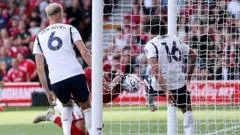
Nottingham Forest head coach Oliver Glasner criticised VAR after Neco Williams's goalline header was ruled out for handball in a goalless Premier League draw with Tottenham, accusing referee Peter Bankes of "guessing" rather than applying the high threshold required to overturn an on-field decision. Williams strongly denied any handball, insisting he headed the ball down between his arms, while Glasner argued that even the clearest replay angle left it unclear whether shirt movement was caused by the ball or by Sandro Tonali's attempted clearance. The row overshadowed an otherwise poor contest at the City Ground and left both sides still winless this season.
Williams stooped in on the goalline midway through the second half after Morgan Gibbs-White's deflected shot bobbled goalwards, but referee Craig Pawson overturned the goal following a VAR review, announcing that the ball had touched Williams's hand. Tottenham failed to score for a third straight league match, managing no shots on target, while Mykhailo Mudryk made his first competitive appearance in 645 days after a doping ban. Spurs boss Roberto De Zerbi admitted his side lacked composure and quality in the final third, and attention now turns to Tottenham's home game against Everton and Forest's trip to Aston Villa as both look for a first win of the campaign.
- Forest's Glasner slams VAR for disallowing Williams's goal vs Spurs
- Referee ruled Williams handled ball on the goalline; he denies it
- Game finished goalless; both Forest and Spurs remain winless
New here? Start with this
Nottingham Forest and Tottenham played out a goalless draw in the Premier League, a match that became notable for a disallowed goal rather than the football itself. Forest's Neco Williams appeared to head the ball in from close range, but the referee, guided by the video assistant referee (VAR), ruled it out for handball, denying Forest what would have been the game's only goal.
VAR is the video review system used in English football to check certain refereeing decisions, including potential handballs before a goal. It is only meant to overturn the referee's on-field call when there is clear and obvious evidence of an error. Forest's head coach, Oliver Glasner, has publicly questioned whether that standard was met in this case, while Williams has denied handling the ball at all.
The incident matters beyond one match because both Forest and Tottenham are still without a win this season, adding pressure to their upcoming fixtures. It also feeds into a wider, ongoing debate in English football about how VAR is used and whether its handball decisions are consistent and fair.
Both sides, in good faith
The strongest fair case each way — we don't pick a winner.
The case for
Glasner's case rests on a reasonable interpretation of VAR protocol: the threshold for overturning an on-field decision must be 'clear and obvious', and the available replays appear ambiguous regarding whether the ball genuinely contacted Williams's hand or whether his shirt movement resulted from Tonali's attempted clearance. If the evidence is genuinely unclear even under close review, the original decision should stand, and this case appears to meet that standard of legitimate doubt.
The case against
The VAR officials' responsibility is to identify handball in goalscoring situations under football's regulations. Having reviewed the available angles, they determined sufficient evidence existed that the ball contacted Williams's hand, making the disallowance correct. The integrity of the sport requires consistent application of handball rules in goal-scoring moments, and VAR's intervention protected that standard rather than overstepping it.
Full account
Nottingham Forest and Tottenham Hotspur were both left waiting for a first Premier League win of the season after a goalless draw at the City Ground was overshadowed by a contentious VAR intervention. The game's only moment of real controversy came in the 67th minute, when Neco Williams appeared to have given Forest the lead only for the goal to be chalked off after a video review for handball, sparking a furious response from Forest head coach Oliver Glasner.
The goal stemmed from a scramble in the Tottenham box after Morgan Gibbs-White's deflected shot bounced awkwardly towards goal. As Sandro Tonali attempted to hack the ball clear on the line, Williams stooped in and appeared to head the ball home between his arms. Referee Craig Pawson initially allowed the goal to stand, but was called to the pitchside monitor by VAR Peter Bankes and, after a review, ruled that the ball had come off Williams's arm immediately before crossing the line, awarding Tottenham a free-kick instead. The Premier League's match centre later explained that Williams was judged to have handled the ball before scoring, a decision that under the laws of the game must be disallowed regardless of intent.
Glasner was scathing about the decision afterwards, arguing that none of the replay angles offered conclusive proof and accusing the officials of guessing. He said he had reviewed five or six camera angles and that while one shot showed his full-back's shirt move, it was impossible to tell whether this was caused by the ball or by Tonali's clearing attempt. The Forest manager pointed to a pre-season briefing in which officials were said to have been told to keep the bar for VAR intervention high and to back the referee's on-field call unless the evidence was unambiguous, arguing that overturning Pawson's original decision undermined that principle and, more broadly, weakened referees' authority. Williams himself was adamant that the ball never touched his arm, insisting he had headed it in and that slow-motion replays created a false impression, in comments made in the same week that he signed a new four-year contract at the club.
Beyond the flashpoint, both sides struggled going forward in a poor contest at the City Ground. Tottenham, managed by Roberto De Zerbi, failed to register a single shot on target and extended their run without a league goal to three matches, with a header from Dominic Solanke late on and a wayward effort from Omar Marmoush their only notable forward moments; Mykhailo Mudryk did come off the bench for his first competitive appearance in 645 days following a doping suspension. Forest's other chances were similarly scarce, limited to a tame effort from James McAtee. Reporting on the match differed slightly in focus: the BBC placed weight on the technical difficulty of proving whether the ball struck an arm rather than a head so close together, framing it as a factual rather than subjective VAR call, while the Guardian gave more attention to the wider context of Tottenham's goalless run, De Zerbi's rebuilding job and Mudryk's return from suspension.
Where outlets differ
The BBC's report leans into an analytical breakdown of why handball decisions are so hard to adjudicate, noting that VAR was making a 'factual' overturn (did the ball hit the arm?) rather than judging a subjective 'clear and obvious error', and stresses that Williams's own account (heading it between his arms) could never be verified by camera angles.
The Guardian gives more prominence to the wider Tottenham context — their barren run of three games without scoring or a shot on target, Mykhailo Mudryk's first appearance in 645 days after a doping ban, and manager Roberto De Zerbi's rebuilding job — framing the disallowed goal as the one notable moment in an otherwise flat contest.
The Guardian also includes the referee Craig Pawson's exact pitchside announcement ('After review, the ball touches the hand of Nottingham Forest's No. 3…'), which the BBC extract does not quote directly.
The BBC piece additionally notes Glasner said he told the referee after the game he felt the goal should have stood, a direct interaction not mentioned in the Guardian extract.
The Guardian frames Glasner's complaint partly around the idea that overturning such calls 'weakens' referees' authority and support for on-field officials, a framing not as explicit in the BBC account, which focuses more on the 'guessing' and evidential threshold argument.