AMB. GORDON SONDLAND: The Godfather Test — How Putin turns every attack into a mystery—and gets away with it
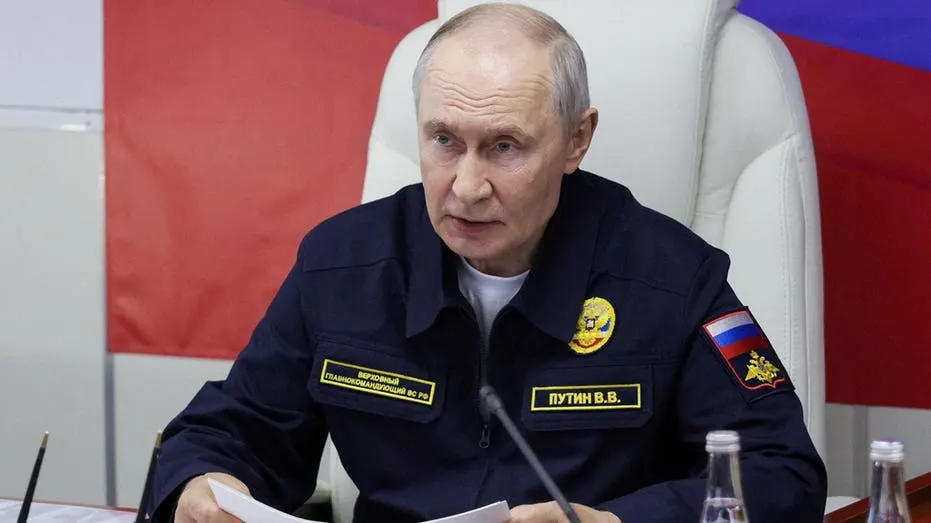
Fox News contributor Gordon Sondland, a former US ambassador to the EU, argues that NATO and the European Union should abandon the presumption of innocence when Russia is suspected of hybrid attacks, proposing what he calls a "Godfather Test". He contends that Vladimir Putin has forfeited any benefit of the doubt through years of invasions, cyberattacks, sabotage and disinformation campaigns, and that Western reluctance to act without publicly provable evidence allows Moscow to exploit democratic norms as a strategic weakness.
Sondland cites examples such as drones crossing into Eastern European territory, severed undersea power cables in the Baltic Sea, crippled government networks, exploded weapons factories and disrupted railway systems, arguing that in each case Russia should be presumed responsible unless it can prove otherwise. He references recent incidents, including Germany blaming Russia for an explosive-laden drone found near Ukrainian cargo planes at a major airport, and intelligence warnings that Russia is preparing hybrid attacks on NATO's eastern flank, to support his call for the West to reverse the burden of proof in dealing with Kremlin-linked "grey zone" activity.
In short
- Ex-envoy urges NATO/EU to presume Putin guilty of hybrid attacks
- Calls for reversing burden of proof on Russian sabotage, cyberattacks
- Cites drone incursions, cut cables, and Germany's drone-airport incident
Steelman: both sides, in good faith
The strongest fair case each way — we don't pick a winner.
The case for
Supporters could argue that repeated Russian aggression and the difficulty of proving covert operations make the usual evidential threshold too slow for deterring hybrid attacks. A rebuttable presumption of Russian responsibility, they say, could help NATO and the EU respond promptly and show that exploiting secrecy carries costs.
The case against
Critics could argue that abandoning the presumption of innocence risks blaming Russia for incidents before reliable evidence is available, escalating tensions or harming the wrong parties. They would say democracies protect their credibility and the rule of law by requiring evidence, while strengthening intelligence, resilience and carefully calibrated responses.
Explained simply
NATO is a military alliance, while the European Union is a political and economic union; many European countries belong to both. Russia’s war against Ukraine and other disputes have raised concern about actions that fall short of open warfare, such as cyberattacks, sabotage and disinformation. These are often called “hybrid” attacks because they can combine different methods and make it hard to identify who is responsible.
Gordon Sondland, a former US ambassador to the EU, argues that Western governments should presume Russia is behind suspicious incidents unless it shows otherwise. His proposal challenges the usual approach, in which responsibility must be established with evidence before governments make accusations or respond. The debate matters because changing that approach could affect how NATO and EU countries protect infrastructure and decide when to take action.
Cybersecurity Europe Geopolitics Paranormal Politics Technology Weird & Viral World