Iran warns of ‘faster, heavier, more painful response’ to US attacks
Iran's parliament speaker, Mohammad Bagher Ghalibaf, has threatened a "faster, heavier, and more painful response" against the US, warning that Washington must recognise "before it is too late" that the "rules of the game have changed". The comments mark a sharp escalation nearly a week into renewed fighting between the two countries, following a 60-day ceasefire that expired last month, and come amid rising global oil and diesel prices that are creating political pressure on President Donald Trump ahead of November's US midterm elections.
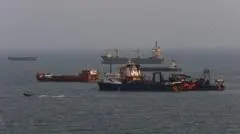
The latest exchange followed US strikes on Iranian oil tankers on Saturday, in retaliation for Iran attacking American warships, while Iranian state media separately claimed its navy had struck a US remote-controlled vessel near the Strait of Hormuz — a claim US Central Command dismissed as "a total lie". Fighting has spread across the region this week, hitting targets in the UAE, Bahrain, Kuwait and Jordan, while US Defence Secretary Pete Hegseth warned Iran that any attack on US ships would see its oil tankers "destroyed and sunk". The Strait of Hormuz, vital to global energy supplies, has remained effectively closed since the six-month conflict began in February, though US Energy Secretary Chris Wright said around nine million barrels of oil a day are still passing through, roughly two-thirds of pre-conflict levels, with US diesel prices up from $3.71 to $5.85 a gallon over the past year.
In short
- Iran threatens "heavier, more painful" retaliation as US-Iran conflict escalates
- US struck Iranian tankers; Iran denies attacking a US vessel
- Strait of Hormuz disruption is pushing up global fuel prices
Steelman: both sides, in good faith
The strongest fair case each way — we don't pick a winner.
The case for
Iran’s strongest case is that US strikes on its oil tankers and threats to sink more vessels impose serious costs and risk widening the conflict, so a credible, rapid response may be necessary to deter further attacks and protect its interests. From this perspective, Washington should recognise that military pressure will not go unanswered and that escalation threatens regional security and energy supplies.
The case against
The strongest case against Iran’s threat is that promising a heavier response after attacks on ships risks deepening a cycle of retaliation, spreading fighting to neighbouring countries and further disrupting a waterway vital to global energy supplies. A measured response and renewed diplomacy could better protect civilians and Iran’s long-term interests, while reducing economic costs that are already affecting people well beyond the region.
Explained simply
The United States and Iran have a long-running rivalry, with disputes over Iran’s nuclear programme, US sanctions and military influence in the Middle East. Their latest fighting follows the expiry of a 60-day ceasefire, and has involved attacks on ships as well as targets across the region.
Mohammad Bagher Ghalibaf is Iran’s parliament speaker and a senior political figure. The US government, led by President Donald Trump, says it is protecting American forces and shipping; Iran says it is responding to US attacks. The two sides have also made conflicting claims about strikes on vessels.
The fighting matters beyond the countries directly involved because the Strait of Hormuz is a key route for oil shipments. Its disruption has contributed to higher energy prices, including in the United States, where fuel costs are a political issue ahead of November’s midterm elections.