Business news and discussion on TalkFuse.
Public asked to have their say on proposed new renewable energy company
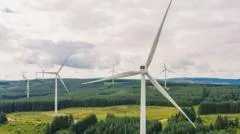
The Welsh government is consulting the public on proposals to create a new, government-owned renewable energy company that would develop and own wind and solar plants while helping local communities take an ownership stake. The Plaid Cymru-led administration says the aim is to reduce energy bills over time and ensure Wales benefits from its renewable resources, though the company would not directly set household electricity prices or replace existing energy suppliers. The plans have been criticised by the Welsh Conservatives.
The proposed company would combine the government's existing developer, Trydan Gwyrdd Cymru, with other schemes such as Ynni Cymru, and the consultation asks whether it should adopt either of these names. It could also take stakes in larger projects, including offshore wind, marine energy and nuclear, and the government is considering a Welsh Energy Wealth Fund to support vulnerable households and communities hosting projects. Enterprise Minister Adam Price said the goal was an energy system that is "clean, cheap and owned by us", drawing a parallel with Wales' coal industry during the Industrial Revolution, whose benefits he said were not retained locally. The new body would be separate from the UK government's Great British Energy.
In short
- Welsh government consults public on new state-owned renewable energy company
- Firm would develop wind/solar plants, aid community ownership, cut bills long-term
- Would merge existing bodies; Welsh Conservatives have criticised the plans
Steelman: both sides, in good faith
The strongest fair case each way — we don't pick a winner.
The case for
Supporters argue that public ownership allows Wales to capture the long-term economic value of its wind, solar and marine resources rather than seeing profits flow to private, often overseas, investors, echoing what they see as the missed opportunity of the coal era. They contend that a government-backed developer can pass savings to bill-payers over time, give communities a genuine financial stake in projects sited near them, and channel returns into a dedicated fund to protect vulnerable households and areas hosting infrastructure. For advocates, this represents a fairer, more accountable model of national development suited to the scale of the climate and cost-of-living challenges Wales faces.
The case against
Critics, including the Welsh Conservatives, argue that creating a new state-owned energy company risks exposing taxpayers to the financial and commercial risks of developing power projects, an area where government has limited track record compared with experienced private developers. They question whether public bodies can match the efficiency, expertise and investment capacity of the private sector, and worry that the venture could prove costly or slow to deliver without guaranteeing the promised bill reductions. Some also see potential duplication or confusion with the UK government's Great British Energy, and argue that public money would be better directed at proven measures such as energy efficiency or grid upgrades rather than a new corporate structure.
Explained simply
Wales gets much of its electricity from wind and solar farms, but the profits from these often go to private companies rather than staying in the country. The Welsh government, currently led by Plaid Cymru, wants to change this by setting up its own publicly owned renewable energy company, which would build and run wind and solar projects and let local communities buy a stake in them. Ministers say this would keep more of the financial benefit within Wales and, over time, help lower bills, though the company would not sell electricity directly to households.
The idea builds on an existing government-backed developer, Trydan Gwyrdd Cymru, and would bring in other related schemes, with the public now being asked for their views on how it should work and what it should be called. It could eventually also invest in bigger projects such as offshore wind, marine power and nuclear energy. This is a devolved Welsh initiative, distinct from the UK government's own state-owned energy company, Great British Energy, and it has already drawn criticism from the Welsh Conservatives.
Business Climate Companies Science