Festival Leaders Confront Growing Political Pressure at Lumiere Summit: ‘We Don’t Judge Artists by Their Passport’
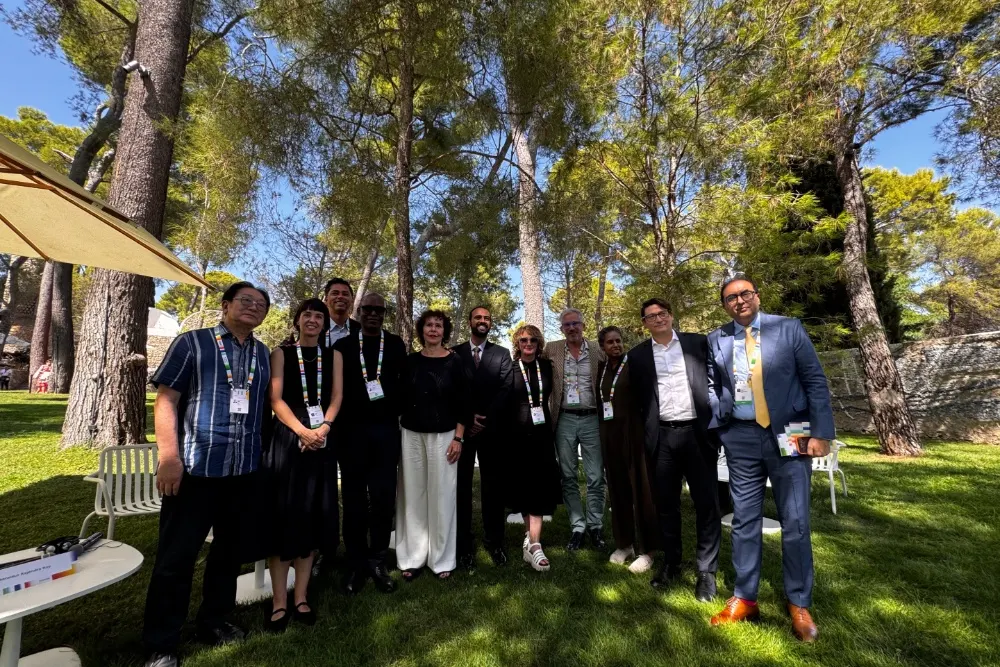
Festival directors from around the world gathered at the Lumière Summit in Saint-Paul-de-Vence, France, for a panel on Monday addressing mounting political pressure on their events. Séries Mania's Laurence Herszberg led calls for programming independence, insisting that artists should be judged by their work rather than their nationality, while other leaders echoed concerns that festivals are increasingly targeted by politicians and interest groups objecting to the inclusion of certain countries' talent.
The panel, "Easy to Criticize, Impossible to Replace: Rethinking the Festival," was moderated by MoMA's Rajendra Roy and featured chiefs from Berlin, Cannes, Toronto, San Sebastián, Annecy, Mumbai, Durban, the Red Sea and South by Southwest, covering audiences, media relations and economic and political strain. Toronto's Cameron Bailey backed the call for artistic neutrality and highlighted the festival's new market and 15-year-old youth programme; Berlin's Tricia Tuttle, whose festival drew 450,000 admissions last year amid political controversy, stressed audience development; Cannes' Iris Knobloch cited 40,000 accredited participants from 140 countries; and San Sebastián's Maialen Beloki warned of shrinking press coverage undermining thoughtful film criticism.
In short
- Festival leaders at Lumière Summit push back on political pressure over artists' nationalities
- Panel united Berlin, Cannes, Toronto, Red Sea and other festival chiefs
- Speakers also flagged shrinking press resources and audience-building priorities
Steelman: both sides, in good faith
The strongest fair case each way — we don't pick a winner.
The case for
Festivals can make a principled case for judging artists by their work rather than their nationality: excluding them because of their country risks collective punishment and can narrow cultural exchange. Keeping programming decisions independent of political pressure may also protect festivals’ ability to present challenging work and serve audiences across borders.
The case against
Festivals can also face a defensible case for considering the political context of who they platform, since participation may be seen as conferring legitimacy or normalising a state’s actions. Audiences, artists and sponsors may reasonably expect institutions to address those concerns, and a claim of neutrality can itself have consequences when people experience a festival’s choices as taking sides.
Explained simply
Film festivals bring together filmmakers, distributors, critics and audiences to show and discuss films. Their directors choose which works to programme, often from many countries, and festivals can also help films find buyers and reach wider audiences.
Festival leaders include the directors of events such as Cannes, Berlin, Toronto and Séries Mania. They make programming decisions while managing relationships with governments, sponsors, the press and audiences. Those choices can attract objections from people who oppose a country’s presence or a particular film.
The debate touches on how festivals balance artistic independence with political pressure and public scrutiny. It also comes as festivals seek to build audiences and secure media attention, both of which can affect how widely films and their makers are seen.
Art Culture Entertainment Europe Film Geopolitics Music Politics World