Eiffel Tower closes after female staff were ‘forced to hide’ when Hindu group visited
Developed over time first seen 2 months ago
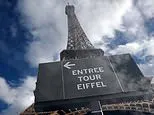
The Eiffel Tower shut its doors for a full day after female staff walked out in protest over being told to "make themselves invisible" during a private visit by around 100 members of a Hindu delegation on Saturday. Staff union representative Diane Davoine said women were asked to leave their workstations so male colleagues could take their place, prompting an angry meeting on Monday morning at which employees demanded dialogue with management and guarantees the practice would never recur. The tower reopened on Tuesday morning, with the closure officially attributed to "operational reasons"; the operator has since apologised and management held talks with staff to resolve the dispute.
The delegation was in France for celebrations linked to the inauguration of a Hindu temple near Paris and is thought to have asked for "interactions with women" to be limited. SETE, the company running the landmark, said the conditions "were not in line with SETE's values, nor the principles of equality between men and women", with its president Ariel Weil calling the practice unacceptable and pledging to accept any consequences. The episode drew condemnation from senior French figures, including Paris Mayor Emmanuel Gregoire, who promised an investigation, equality minister Aurore Berge, and presidential rivals Marine Le Pen and Gabriel Attal, all of whom insisted no religion or culture could dictate women's place in France.
- Sources
- 2
- Outlets
- 2
- Left · Centre · Right
- 0 · 1 · 1
In short
- Eiffel Tower closed a day after women staff were sidelined for Hindu group visit
- Staff struck in protest; tower reopened Tuesday after apology and talks
- French ministers and politicians across the spectrum condemned the incident
How this story developed
- 2 months ago The Eiffel Tower shut its doors on Monday evening after female staff refused to work following a weekend incident in which they were reportedly told to "make themselves invisible" during a private visit by around 100 members of a Hindu delegation.
- 2 months ago The Eiffel Tower shut its doors for a full day after female staff walked out in protest over being told to "make themselves invisible" during a private visit by around 100 members of a Hindu delegation on Saturday.
- 2 months ago The Eiffel Tower temporarily closed on the evening of 7 September 2026 after female staff said they were told to "make themselves invisible" during a private visit by around 100 members of a Hindu group over the weekend.
Full account
The Eiffel Tower was shut to visitors on Monday after staff staged a walkout in protest at how female colleagues had been treated during a private visit by a Hindu religious delegation two days earlier. A notice posted at the monument attributed the delay to 'operational reasons', but a staff union representative confirmed the closure followed a morning meeting at which employees demanded answers from management and assurances that women would not be sidelined in such a way again.
The row centres on a visit on Saturday by roughly 100 people connected to the Bochasanwasi Akshar Purushottam Swaminarayan Sanstha (BAPS), a Hindu organisation whose representatives were in the Paris region for the consecration of its first major French temple, held in the suburbs the following day. According to staff accounts, women working at the tower were told to leave their posts so that male colleagues could take their place while the group passed through, with some describing the request as leaving them feeling humiliated. The tower's operating company later acknowledged that the delegation had asked for the visit to be arranged in a way that limited 'interactions with women'.
Société d'Exploitation de la tour Eiffel (SETE), which runs the landmark, said such terms should never have been agreed to, stating they were at odds with both its own values and the broader principle of equality between men and women, and that it would face up to any consequences arising from the episode. Its president, Ariel Weil, called the arrangement plainly unacceptable and reaffirmed the site's commitment to republican and egalitarian values; staff were told management had since apologised. BAPS's Paris temple, for its part, said the visit had been coordinated with Eiffel Tower staff to take place at the start of normal opening hours so as to avoid inconveniencing others, and apologised for any distress caused, adding that it holds mutual respect as a core value.
The affair quickly drew political comment. Paris Mayor Emmanuel Grégoire said he recognised the legitimacy of staff anger and promised a prompt investigation, insisting equality between women and men must apply at every site across the city. Government figures and opposition politicians alike condemned the episode: France's equality minister said no religion could be permitted to override the principles of the Republic by asking women to make themselves invisible, while the far-right's Marine Le Pen and centrist figure Gabriel Attal both said women's presence and place in French society could not be dictated by outside beliefs or customs.
Where outlets differ
From the full account, which is AI-written from the sources:
Naming and identification: the BBC report names the delegation as BAPS (Bochasanwasi Akshar Purushottam Swaminarayan Sanstha) and gives background on the group, including its temples worldwide; the Mail account refers to it only generically as 'a Hindu group' or 'delegation' without naming BAPS.
BAPS's own response: only the BBC report includes a statement from the BAPS Paris temple explaining the visit's timing and offering an apology for any distress caused — this is absent from the Mail account.
Sourcing of quotes: the BBC attributes Diane Davoine's comments to an interview with Reuters and notes it had approached the CGT union for comment, giving a stronger sense of direct sourcing; the Mail presents similar quotes without the same attribution detail.
Range of political reaction: the Mail account includes reactions from French equality minister Aurore Berge and centrist figure Gabriel Attal, neither of whom appear in the BBC excerpt, which instead focuses more on the mayor's comments and cuts off before completing Marine Le Pen's quote.
Framing of the closure: the Mail frames the story around female staff being 'forced to hide', while the BBC frames it primarily as a staff strike over women being removed from their posts.
Centre outlets 1
Only here: shut, protest, women, moved, religious
Right-leaning outlets 1
Only here: closes, female, forced, hide, hindu
Every side used: eiffel, tower, staff
Headline columns compared word for word; nothing in them is AI-written.
Steelman: both sides, in good faith
The strongest fair case each way — we don't pick a winner.
The case for
Those more sympathetic to the tower's operators would argue this was a private, paid booking rather than a change to public policy, and that hospitality venues routinely adapt staffing and service arrangements to suit clients' cultural or religious preferences, from dietary requirements to gender-specific therapists or attendants elsewhere in the service industry. On this view, temporarily reassigning some staff for a single delegation's visit need not reflect any endorsement of gender inequality by the Eiffel Tower itself, but rather a commercial accommodation, poorly judged in hindsight, made to a group whose modesty norms are a genuine part of their religious practice. Advocates of this position would stress that the error lay in how the request was handled rather than in the principle of flexibility toward private clients' customs.
The case against
Critics would argue that no client, however significant, should be able to require an employer to sideline female staff on the basis of their sex, since this directly conflicts with French and European equality and anti-discrimination law and treats women as inherently less suitable for public-facing roles. They would emphasise that the Eiffel Tower is a state-linked national symbol, making it especially important that it uphold laïcité and gender equality rather than appear to subordinate these principles to a paying group's wishes. For this side, the staff's own accounts of humiliation, and the fact that management agreed to the arrangement at all, illustrate a troubling willingness to trade workers' dignity for commercial convenience, setting a precedent they insist must never be repeated.
Explained simply
Since the Eiffel Tower welcomes millions of visitors a year and is run by a Paris-city-owned company, questions about how one private group's request was handled touch on wider issues of gender equality law and public accountability in France. The row has drawn in senior political figures because it feeds into an ongoing French debate about the boundaries between religious or cultural customs and the country's legal commitment to treating men and women equally, particularly in workplaces and public institutions.
The temple whose inauguration brought the delegation to France is itself a significant new religious site near Paris, and the group's visit to the tower was arranged as part of the surrounding celebrations. The Eiffel Tower is operated by a company called SETE, which is owned by the City of Paris, meaning its staffing decisions and any request it grants from a visiting group can become a matter of public and political interest rather than a purely private business matter.
Coverage · 2 sources
Bias meters
From 2 rated sources.