Europe’s fighter jet plans are in disarray. What happens next?
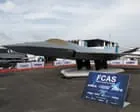
Europe's push to jointly develop next-generation fighter jets has stalled after France and Germany scrapped their Future Combat Air System collaboration in June, undermining hopes—championed by Mario Draghi—that European nations could pool resources on defence rather than duplicating costly programmes. The collapse leaves France pressing ahead alone via Dassault Aviation, while Germany faces uncertainty over whether it will build its own jet or become a secondary partner in the UK-Italy-Japan-led Global Combat Air Programme (Tempest), raising the prospect of Europe fragmenting into multiple rival, and potentially unaffordable, fighter projects.
The Franco-German deal broke down over disputes between Dassault and Airbus Defence and Space regarding programme leadership, plus disagreements over aircraft design given France's carrier requirements. The rupture was compounded last week when engine makers Safran and MTU Aero Engines ended their joint development effort. Dassault chief executive Éric Trappier wants a demonstrator flying by 2031, but industry figures warn that successful fighter programmes typically need order books of around 600 aircraft—far beyond what any single European nation can sustain—making a three-way split between France, Germany and the UK-led GCAP economically unrealistic.
In short
- France and Germany scrapped their joint fighter jet programme in June
- Germany may become secondary partner in UK-Italy-Japan's Tempest project instead
- Analysts warn three separate European fighter jets would be economically unviable
Steelman: both sides, in good faith
The strongest fair case each way — we don't pick a winner.
The case for
Supporters of separate national or smaller-partner programmes can argue that fighter aircraft are core to sovereignty: France needs carrier-capable jets and control over sensitive technology, while Germany may want a leading role rather than a subordinate one. Distinct projects could also preserve industrial expertise and let governments meet different operational needs without compromising on design or control.
The case against
Advocates of renewed European cooperation argue that next-generation fighters are so costly that pooling orders, research and production is essential to make them viable. A shared programme could spread financial risk, sustain a stronger European defence industry and reduce reliance on foreign suppliers, while competing projects risk duplicating spending and leaving each with too few orders.
Explained simply
The Future Combat Air System, or FCAS, was a plan for France, Germany and Spain to develop a new fighter aircraft and related technologies together. France’s Dassault Aviation and the European company Airbus Defence and Space were central to the project, but disagreed over who should lead it and how the aircraft should be designed. France also needs aircraft that can operate from its aircraft carriers.
The UK, Italy and Japan are developing a separate fighter programme called the Global Combat Air Programme, or GCAP, also known as Tempest. France is now pursuing its own aircraft, while Germany has yet to decide whether to develop one or join GCAP. Building a modern fighter is costly, and manufacturers generally need orders from several countries to spread the expense, so competing projects could be difficult to fund.
Americas Asia Business Europe Government Politics UK World