“20 players is the sweet spot”: Guild Wars 3’s action game combat is a first for MMOs, but it doesn’t work at traditional raid scale
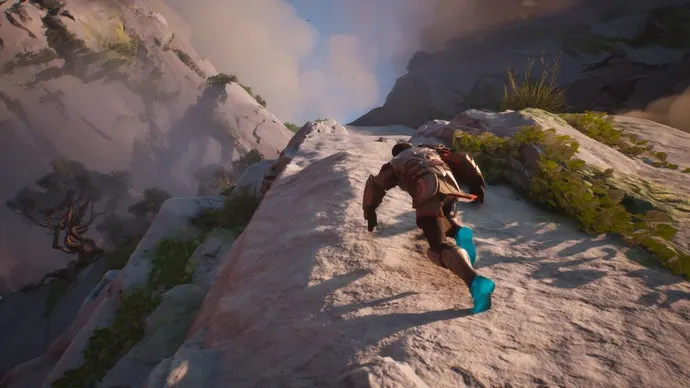
At Gamescom, Arenanet showed off Guild Wars 3, revealing that its signature action-combat system—featuring wall-running, gliding and momentum-based attacks—only works properly with groups of around 20 players, rather than the larger raid sizes typical of traditional MMOs. This matters because it marks a significant departure from genre conventions: rather than the taskbar-and-cooldown combat familiar from games like World of Warcraft, Guild Wars 3 borrows movement mechanics more associated with action titles such as Prince of Persia or Breath of the Wild, built from the ground up to support fluid, physical combat.
Combat designer Kevin Stocker demonstrated the system in the Ancient Orr region, sprinting up walls, gliding off cliffs and chaining momentum-based attacks such as diving strikes and kicks that send enemies into terrain for extra damage. Studio head Colin Johanson said the idea dates back to 2015, during development of Guild Wars 2's Heart of Thorns expansion, calling it "a very long journey." Much of the game remains under wraps, with Arenanet declining to discuss mounts, professions, dynamic world events, shops or the economy, and the sequel is set more than 1,200 years before the original Guild Wars.
In short
- Guild Wars 3's action combat only works well with about 20 players
- Combat features wall-running, gliding and momentum-based attacks
- Idea originated in 2015 during Guild Wars 2's Heart of Thorns development
Steelman: both sides, in good faith
The strongest fair case each way — we don't pick a winner.
The case for
Limiting encounters to around 20 players could let Guild Wars 3 preserve the readable, physical combat that sets it apart: wall-running, gliding and momentum-based attacks may lose their impact when too many players and effects crowd the action. A smaller group could also make coordination and each player’s contribution more meaningful, giving the game a distinct identity instead of following established MMO raid conventions.
The case against
Traditional large raids are a valued part of MMO play, bringing many players together for ambitious challenges and shared social experiences. If this combat system cannot support those groups, Guild Wars 3 may narrow the kinds of encounters and communities it can serve; the studio could instead seek ways to manage visual clutter and performance while retaining larger-scale content.
Explained simply
Massively multiplayer online role-playing games, or MMOs, let large numbers of people play together in a shared world. Many use raids, where groups fight powerful enemies, and combat built around selecting abilities and waiting for cooldowns; Guild Wars is a fantasy game series made by the US studio ArenaNet.
Guild Wars 3 is a planned sequel set in the series’ world, more than 1,200 years before the original game. Its combat is designed around movement: characters can run up walls, glide and use their momentum to attack, with the surroundings affecting how fights play out.
ArenaNet’s combat designer Kevin Stocker demonstrated these mechanics, while studio head Colin Johanson said the idea had been developing for years. The approach matters because it could change how players group and fight together, with the game’s combat designed for smaller teams than the large raids common in many MMOs.