Premier League clubs face losing lucrative sponsors if unlicensed gambling firms banned
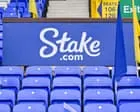
Half of Premier League clubs now hold sponsorship or advertising deals with gambling companies not licensed in the UK, putting tens of millions of pounds in revenue at risk if the government presses ahead with a proposed ban. An eight-week government consultation on the plans closes on Wednesday, pitting UK-licensed operators such as Ladbrokes and William Hill against the Premier League, which is lobbying against a ban on the grounds that these largely Asia-facing betting firms and online casinos are not technically available to UK customers, despite being easily accessible via a VPN.
Guardian analysis found the number of top-flight clubs with commercial ties to unlicensed operators has risen from six to ten over the summer, a shift likely driven by the league's own voluntary ban on front-of-shirt gambling sponsorship this season. Everton signed a three-year sleeve deal with crypto casino Stake.com, while Fulham shifted its SBOTOP sponsorship to training kit; eight further clubs, including Chelsea and Tottenham, have stadium or player-branding arrangements, with Curaçao-licensed 8XBet alone tied to five clubs. Unlicensed operators earned £379m from UK users in the first half of 2025, now holding 9% of Britain's £8.2bn online gaming market, up from 2% in 2022, and lack safeguards such as Gamstop self-exclusion and affordability checks. Entain, owner of Ladbrokes, has written to all ten affected clubs, notably invoking Everton fan and prime minister Andy Burnham, while gambling minister Vicky Foxcroft is said to be planning to introduce the ban next year despite pressure to let existing contracts run their course.
In short
- Ten Premier League clubs have deals with unlicensed gambling firms
- Government ban could cost clubs tens of millions of pounds
- Entain letter highlights PM Andy Burnham's ties to Everton
Steelman: both sides, in good faith
The strongest fair case each way — we don't pick a winner.
The case for
A ban could reduce harm by stopping unlicensed operators, which lack safeguards such as self-exclusion and affordability checks, from using prominent football partnerships to build visibility among UK audiences. Their growing share of UK gambling revenue suggests that, even if they target customers elsewhere, they are accessible to people in Britain; supporters may argue that clubs should not profit from deals that help normalise services with weaker protections.
The case against
The clubs and league can argue that these firms are not licensed to serve UK customers and that a broad sponsorship ban may penalise clubs for overseas-facing deals without directly preventing UK access to their websites. The agreements provide substantial revenue, and supporters of this position may prefer targeted enforcement against operators that accept UK customers, alongside stronger safeguards, over restricting commercial partnerships with firms whose intended markets are elsewhere.
Explained simply
Premier League clubs earn money through sponsorships, including deals with betting and online casino companies. Some of these firms are licensed abroad but not in the UK, where gambling operators must meet rules designed to protect customers.
The government is considering whether to ban UK sports clubs from promoting unlicensed gambling firms. UK-licensed bookmakers, such as Ladbrokes and William Hill, support tighter restrictions, while the Premier League argues that the firms in question target customers overseas.
The issue matters because clubs could lose sponsorship income, while customers using unlicensed sites may not have access to protections such as self-exclusion schemes and affordability checks. The debate therefore involves both football funding and how gambling risks are regulated.
Business Football Government Politics Sport