UK and 11 nations impose sanctions on Israeli settlements
Developed over time first seen 2 months ago
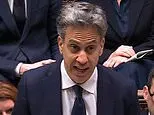
Foreign Secretary Ed Miliband confirmed UK sanctions on Israeli West Bank settlement activity, accusing figures involved of "ethnic cleansing" and branding those responsible "terrorists". The measures bar companies from helping to construct or sell properties in settlements deemed illegal under international law, and were coordinated with 11 other countries including France and Canada, marking a firm hardening of Britain's stance on settlement expansion.
Israel reacted angrily, announcing it would close the British consulate in East Jerusalem that had been accredited to the Palestinian Authority, a significant diplomatic escalation. The dispute drew wider attention when the Daily Mail ran a public poll asking readers whether they thought Labour was right to impose the sanctions, with results due in a subsequent newsletter; no further developments followed.
- Sources
- 3
- Outlets
- 3
- Left · Centre · Right
- 0 · 1 · 1
In short
- UK and 11 nations sanctioned Israeli West Bank settlement activity
- Miliband accused settlers of "ethnic cleansing"; called perpetrators "terrorists"
- Israel retaliated by shutting its East Jerusalem consulate
How this story developed
- 1 month ago Foreign Secretary Ed Miliband has announced UK sanctions targeting Israeli settlement activity in the West Bank, accusing figures there of carrying out "ethnic cleansing" and describing those responsible as "terrorists".
- 2 months ago Foreign Secretary Ed Miliband confirmed UK sanctions on Israeli West Bank settlement activity, accusing figures involved of "ethnic cleansing" and branding those responsible "terrorists".
- 2 months ago Foreign Secretary Ed Miliband has announced new UK sanctions on Israeli activity in the West Bank, accusing figures there of "ethnic cleansing" carried out by "terrorists" and unveiling plans to ban companies from helping build or sell properties in settlements considered illegal under international law.
- 2 months ago Foreign Secretary Ed Miliband has announced new UK sanctions targeting Israeli activity in the West Bank, accusing figures there of "ethnic cleansing" carried out by "terrorists" and unveiling plans to ban companies from helping build or sell properties in settlements deemed illegal under international law.
Full account
The UK government has announced a fresh package of sanctions targeting Israeli settlements in the occupied West Bank, in a coordinated move involving eleven other countries including France and Canada. Foreign Secretary Ed Miliband told MPs the measures represented the start of a different approach to the Israeli-Palestinian conflict, one that he said would match condemnation of the situation with concrete action rather than words alone.
Setting out the government's position, Miliband said ministers now judged that Palestinians in parts of the West Bank were being subjected to what he termed ethnic cleansing, carried out by settlers he described as terrorists, while accusing Israel's government of failing to act against this and, in some cases, of encouraging the removal of Palestinian communities. He linked this assessment to a 2024 advisory opinion from the International Court of Justice, arguing that Israel's continued control of the territory, coupled with its settlement expansion, rendered the occupation unlawful. The practical measures unveiled include a prohibition on UK companies helping to build, sell or market settlement properties, restrictions on goods produced in the settlements, action against firms and individuals supporting settlement growth, and a ban on advertising settlement developments within Britain. Miliband indicated that a wider and more detailed sanctions framework would follow within six to nine months, while stressing that the restrictions were aimed at the settlements rather than at Israel as a whole.
The announcement drew a swift and angry response from Israel. Foreign Minister Gideon Saar rejected the ethnic cleansing characterisation as a serious falsehood and announced retaliatory steps, most notably the closure of Britain's consulate in East Jerusalem, an office that has served as the UK's channel of engagement with the Palestinian Authority and its representation across Jerusalem, the West Bank and Gaza. British ministers sought to frame the move as constructive rather than punitive towards ordinary Israelis, with the measures presented as being in support of a future two-state settlement.
The decision comes against a backdrop of longstanding international consensus that the settlements breach international law, alongside reports of escalating settler violence against Palestinian communities in recent months. Britain, France and Canada issued a joint statement describing the coordinated sanctions as marking a further shift in their collective approach to safeguarding the prospect of a two-state solution, underlining that the action was intended to be part of a broader, multilateral diplomatic push rather than a unilateral British initiative.
Where outlets differ
From the full account, which is AI-written from the sources:
The tabloid-style report frames the story chiefly around domestic political controversy, describing the sanctions as 'controversial' and Miliband's language as having 'lashed out', and centres much of its piece around inviting readers to vote on whether the policy is right — a framing device largely absent from the broadcaster's more policy-focused account.
The broadcaster's report gives far more detail on the substance and mechanics of the policy, including the ICJ advisory opinion, the six-to-nine month timetable for a fuller sanctions regime, and direct quotations from Miliband, Saar and the Prime Minister, none of which appear in the tabloid account.
The tabloid report describes the closure of the consulate simply as a reaction to the sanctions, while the broadcaster provides more context on the consulate's specific role — noting it is accredited to the Palestinian Authority and covers Jerusalem, the West Bank and Gaza.
Only the broadcaster's account includes a comment from the Prime Minister stressing that the measures were not aimed at the Israeli public, giving a fuller picture of the government's attempt to manage the diplomatic fallout.
Centre outlets 1
Only here: announces, west, bank, prompting, furious
Right-leaning outlets 1
Only here: nations, impose
Every side used: sanctions, settlements, israeli
Headline columns compared word for word; nothing in them is AI-written.
Steelman: both sides, in good faith
The strongest fair case each way — we don't pick a winner.
The case for
Supporters argue that West Bank settlement expansion on occupied land is unlawful under international law and has accelerated to a point where it threatens the viability of a two-state solution, so concrete measures such as banning commercial dealings with settlements are a proportionate way to uphold that legal consensus without resorting to military or broader economic action. They contend that coordinated action with allies such as France and Canada lends the UK's stance greater weight and consistency, showing that London is willing to apply the same standards to a close partner as it does elsewhere, and that documented settler violence against Palestinian communities justifies robust language and targeted sanctions rather than silence.
The case against
Critics argue that singling out Israel for sanctions, and using loaded terms such as "ethnic cleansing" and "terrorists" from a government minister, is a one-sided intervention into a complex and long-running conflict that prejudges contested legal and historical questions rather than encouraging negotiation. They contend that such measures strain a valuable strategic and security partnership, risk emboldening groups hostile to Israel by legitimising harsh rhetoric, and that Britain's diplomatic energy would be better spent on quiet engagement than on public sanctions that provoke retaliation, such as the closure of the British consulate, without any clear mechanism for how they will actually alter Israeli policy on the ground.
Explained simply
Israel occupied the West Bank in 1967, and around 700,000 Israeli settlers now live there in communities that most of the world, including the UK, regards as illegal under international law, though Israel disputes this. Palestinians want the territory as part of a future state, and settlement growth is one of the most contested issues in the decades-long conflict between Israelis and Palestinians.
Ed Miliband is the UK's Foreign Secretary and a senior figure in the Labour government led by Prime Minister Keir Starmer. The UK has coordinated new measures targeting West Bank settlement activity alongside eleven other countries, including France and Canada, reflecting a broader shift among some Western governments towards tougher action on the issue.
Britain and Israel have long been close allies, with the UK maintaining diplomatic posts in Jerusalem to handle relations with both Israeli and Palestinian authorities. Any breakdown in that diplomatic arrangement would mark a notable shift in a relationship that has usually remained stable even during periods of disagreement over policy in the region.
Coverage · 3 sources
Bias meters
From 2 rated sources, 1 unrated.
Elections Geopolitics Middle East Politics World
Read the full article at the source →
Originally published by Daily Mail as “The Daily Debate: Are Labour right to place sanctions on Israel?”.