World news and discussion on TalkFuse.
Unravelling the mystery of the Devil’s Arrows: Study reveals how prehistoric builders hauled 25-tonne rocks 11 miles across Yorkshire to build the landmark 5,000 years ago
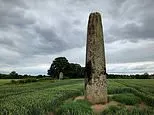
Researchers from the University of York and Curtin University believe they have solved the centuries-old mystery of how the Devil's Arrows, three enormous standing stones near Boroughbridge in Yorkshire, were transported to their site around 5,000 years ago. Mineral analysis of the 25-tonne stones indicates they were quarried at Brimham Rocks, some 11 miles (18km) away, rather than being carried by ice-age glaciers or sourced from the nearer Plumpton Rocks as previously suspected, showing they were deliberately hauled there by Neolithic communities.
The findings suggest the choice of stone was not simply about convenience but held symbolic or cultural significance for the people who moved them. The three surviving stones stand almost 23ft (seven metres) tall, taller than those at Stonehenge, and are arranged across 174 metres on the edge of Boroughbridge, dating to roughly 2500–2000 BC. Historical records indicate the site once contained at least five stones, with accounts describing a fourth stone going missing by the late 16th century and a fallen stone being broken up in 1687 to build a local bridge and repair a nearby manor.
In short
- Devil's Arrows stones were moved 11 miles from Brimham Rocks, study finds
- Mineral analysis rules out glacial transport, confirms human effort
- Yorkshire monument's stones are taller than those at Stonehenge
Explained simply
The Devil’s Arrows are three tall standing stones near Boroughbridge in North Yorkshire. They were set up around 5,000 years ago, during the Neolithic period, when farming communities across Britain built monuments from large stones.
The stones are made of a type of rock found at Brimham Rocks, about 11 miles away. Their size means moving them would have required careful planning and substantial effort, although the exact method is not known. Researchers have also considered whether glaciers carried the stones or whether they came from a nearer source.
The stones may have been chosen for cultural or symbolic reasons as well as for their practical qualities, but their builders left no written explanation. Historical accounts suggest the site once had more stones; one was reportedly broken up in the 17th century and used in local building work.
Americas Paranormal Research Science Weird & Viral World