Technology news and discussion on TalkFuse.
US claims Chinese AI companies’ core AI strategy is distilling American models
Developed over time first seen 2 months ago
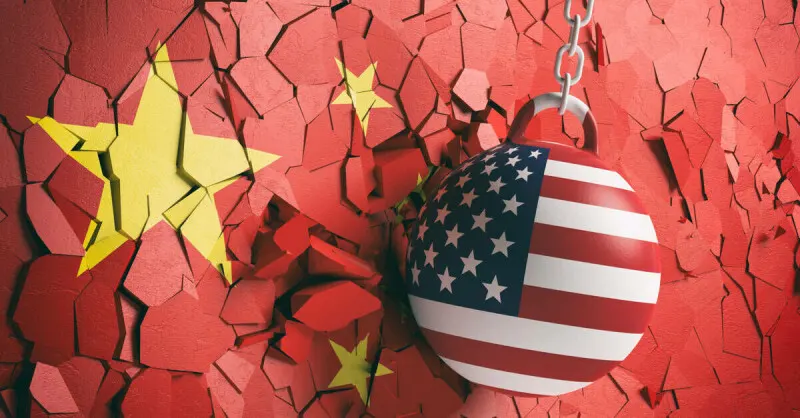
US intelligence agencies and the national cyber-defence body have accused Chinese AI firms of building their entire development strategy around large-scale, unauthorised distillation of American frontier models, rather than treating it as a minor shortcut. A joint advisory from the NSA, FBI and CISA named DeepSeek, Moonshot AI, Alibaba, MiniMax, StepFun and Z.AI, alleging Beijing is "likely" aware of these industrial-scale campaigns, which the agencies say breach US providers' terms of use and undermine the commercial value of models that took huge sums to train. Notably, the advisory went beyond claims of simple copying, alleging market-distorting deception: DeepSeek is accused of using distillation to generate synthetic training data, contradicting its widely publicised claim to have built its models cheaply with minimal computing power — a claim that had previously rattled investors worried that vast US AI infrastructure spending was unnecessary. Alibaba, meanwhile, is alleged to have used industrial-scale distillation to enhance its free, high-quality Qwen models, directly undercutting US rivals that charge for access while still operating at a loss.
The agencies say Chinese firms route requests through native APIs, cloud providers and third-party aggregators that obscure user metadata, alongside a "grey market" of proxy "transfer stations" that resell access to frontier models cheaply, bypassing geographic restrictions and safeguards. Recommended defences include watching for suspiciously high usage from new accounts, subtly altering responses to suspected distillers, and correlating activity across providers and platforms to expose distributed campaigns. This is one of several similar US accusations levelled at Chinese AI firms in recent months, and China has hit back with counter-claims that US firms distil Chinese models, alongside veiled threats of retaliation against any US bans stemming from the allegations. The Register said it had approached the named Chinese companies for comment but received no response, and no further developments have since emerged.
- Sources
- 2
- Outlets
- 2
- Left · Centre · Right
- 0 · 0 · 0
In short
- US agencies say Chinese AI firms rely on mass-scale distillation of US models
- DeepSeek accused of faking its low-cost training claims using distilled data
- Alibaba's free Qwen models allegedly built via industrial-scale distillation
How this story developed
- 2 months ago US intelligence and cybersecurity agencies have escalated their case against Chinese AI firms, alleging in a joint advisory that specific companies engaged in market-distorting deception rather than just unauthorised model copying.
- 2 months ago Three US government bodies – the NSA, FBI and cybersecurity agency CISA – have jointly accused Chinese AI firms of running "industrial-scale" distillation campaigns designed to extract proprietary capabilities from leading American AI models.
- 2 months ago US intelligence agencies and the national cyber-defence body have accused Chinese AI firms of building their entire development strategy around large-scale, unauthorised distillation of American frontier models, rather than treating it as a minor shortcut.
Steelman: both sides, in good faith
The strongest fair case each way — we don't pick a winner.
The case for
Advocates of the US agencies' position argue that safeguarding intellectual property and fair competition in AI is a legitimate national and economic security concern. If firms like DeepSeek or Alibaba are indeed using distillation to mimic the outputs of costly, painstakingly trained American models while publicly claiming independent low-cost breakthroughs, that constitutes both a deceptive practice that misleads investors and the public, and a form of free-riding that could undermine the incentive structure funding future AI innovation. From this perspective, exposing gray-market proxy networks and misrepresented training claims is simply about protecting transparency, honest competition, and the substantial capital investment that underpins genuine model development.
The case against
Sceptics of the advisory's framing would argue that distillation from publicly accessible model outputs is a widely used and largely legal technique across the AI industry, including by American firms themselves, and that labelling it a deceptive scheme risks conflating ordinary technical practice with wrongdoing for geopolitical ends. They would contend that cheaper, freely available models like Qwen benefit global users and developers, and that American companies' discomfort partly reflects competitive anxiety rather than genuine misconduct. There is also a concern that framing this dispute in security-agency terms, rather than through ordinary commercial or intellectual-property channels, serves to justify further restrictions and export controls under the guise of national security, in a broader climate of escalating tech rivalry between the US and China.
Explained simply
The row over AI "distillation" is part of the broader US-China rivalry over artificial intelligence, where American firms such as OpenAI and Google have invested vast sums building advanced AI models, while Chinese firms including DeepSeek and Alibaba have released rival systems that appeared surprisingly capable and cheap to produce. Distillation is a technique where one AI model is trained using outputs from a more advanced model, effectively letting a newer or cheaper system learn from an established one without the same level of investment. US officials have long suspected Chinese companies of using this method on American models, raising questions about fair competition and the true cost of building cutting-edge AI.
DeepSeek and Alibaba are among China's most prominent AI developers. DeepSeek gained global attention when it claimed to have built powerful models cheaply, a claim that briefly unsettled financial markets betting on continued heavy US spending on AI infrastructure. Alibaba, one of China's largest technology companies, produces the Qwen family of AI models, which it offers for free and which have been praised for their quality.
This matters because the accusations, made by US intelligence and cybersecurity agencies, go beyond simple copying and suggest deliberate practices designed to disadvantage US companies commercially while masking how the Chinese models were actually built. The dispute sits within a wider pattern of mutual accusations between the US and China over AI development, with implications for trade policy, technology restrictions and how much trust the wider industry places in claims made by AI developers on both sides.