Instacart now has its own AI assistant called Clementine
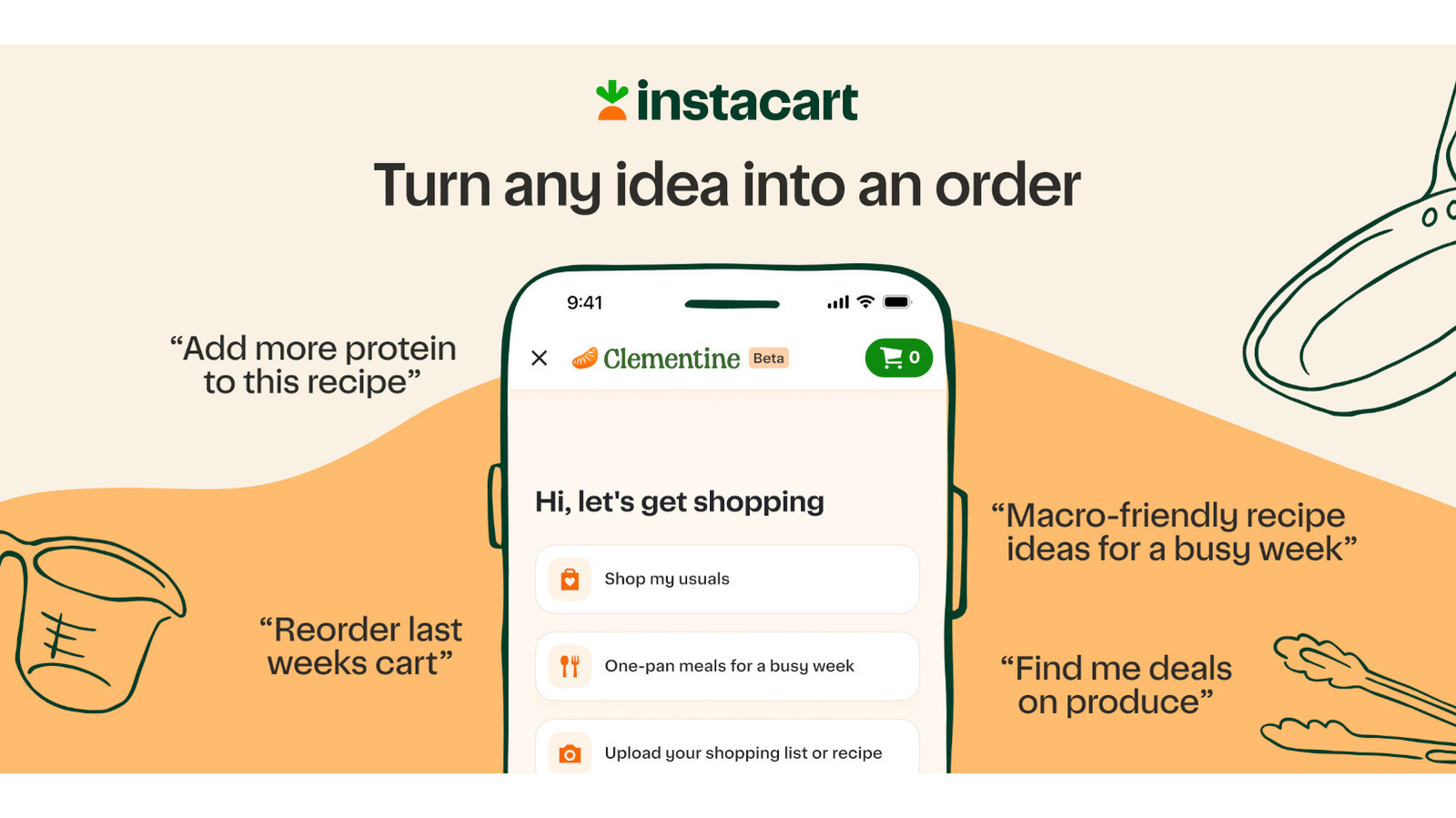
Instacart has launched Clementine, an AI shopping assistant designed to help users decide what to cook while sticking to a budget. Available now across North America on the Instacart Marketplace, the tool responds to natural-language requests, such as asking for a quick, high-protein dinner for two, by suggesting recipes with ingredient lists that can be added to a cart with a single tap.
Clementine tailors its suggestions to what is actually in stock at a shopper's chosen store, and can filter recommendations by dietary preferences such as nut-free, vegetarian or gluten-free. It can also generate restock lists based on past orders or convert a handwritten shopping list photo into items ready to add to cart. Instacart notes that orders placed via Clementine tend to exceed its typical $115 average basket size, and the assistant joins existing grocery integrations the company has built with ChatGPT, Claude, Gemini and Google's AI Mode.
- Instacart launches Clementine, its own AI shopping and recipe assistant
- It suggests recipes and restocks based on store availability and preferences
- Orders via Clementine tend to be pricier than the average basket
New here? Start with this
Instacart is a US and Canadian grocery delivery and pickup service that lets shoppers order from local supermarkets online and have items brought to their door, or collect them, often via gig workers who do the shopping. It has increasingly leaned on artificial intelligence to help customers plan meals and shop more efficiently, following a broader trend among tech and retail companies of adding AI-powered assistants to their platforms.
Clementine is Instacart's newly launched AI tool, built into its main app, which aims to help people decide what to eat and shop for based on things like budget, dietary needs and what is actually available at their chosen store. It fits into a wider push by Instacart to work with AI systems from other major companies, including OpenAI's ChatGPT, Anthropic's Claude and Google's Gemini, to help people turn everyday requests into grocery orders.
This matters because it reflects how retailers are trying to use AI not just for convenience, but to influence spending habits and average order sizes, at a time when grocery delivery firms are competing for customer loyalty and higher-value baskets.