Trump breaks silence over Israel sanctions – and doesn’t back Burnham
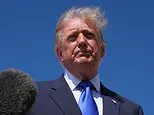
US President Donald Trump has signalled he does not fully back Britain's decision to ban imports from illegal Israeli settlements, a move announced by Foreign Secretary Ed Miliband as part of a "new approach" to the West Bank. Speaking to reporters, Trump said he intended to consult Israel before forming a view, questioning why the measure had been introduced now, just over a month before Israeli elections. The intervention adds pressure on the UK government, whose policy has already drawn strong criticism domestically and from Israel.
Miliband said the restrictions were necessary because of Israel's continued development of the E1 settlement scheme, which would sever the West Bank from East Jerusalem, and insisted Britain would not "stand by" as settlement expansion undermined a two-state solution. Critics, including the UK's chief rabbi, Ephraim Mirvis, warned the policy amounts to a "de facto boycott" of Israel and could endanger British Jews, while an Israeli government spokesman branded Miliband a "failed figure". In response, Israel closed its consulate in East Jerusalem and barred 11 British MPs from entering the country. The move won explicit backing from Saudi Arabia, Qatar, Egypt, Indonesia, Jordan, Pakistan, the UAE and Turkey, who urged other nations to follow suit, while Britain also joined ten other countries in a separate statement reaffirming support for a two-state solution.
In short
- Trump questions timing and rationale of UK's Israeli settlement import ban
- Miliband's policy sparks backlash from Israel and UK's chief rabbi
- Eight Arab and Islamic nations publicly back Britain's move
Steelman: both sides, in good faith
The strongest fair case each way — we don't pick a winner.
The case for
Supporters argue that restricting imports from settlements is a measured way for Britain to oppose expansion that could divide the West Bank from East Jerusalem and make a negotiated two-state solution harder to achieve. They see the policy as applying pressure over settlement activity while affirming that it should not be treated as part of Israel proper.
The case against
Critics argue that the restrictions risk singling out Israel and may be perceived as a boycott, worsening relations without changing Israeli policy. They also point to the timing before Israeli elections and warn that such measures could inflame tensions or heighten insecurity for British Jews.
Explained simply
The West Bank is a territory captured by Israel in 1967 and claimed by Palestinians as part of a future independent state, alongside East Jerusalem and Gaza. Israel has built settlements there, which most countries regard as illegal under international law; Israel disputes that view. The proposed E1 development is a settlement project near East Jerusalem that critics say could make a connected Palestinian state harder to achieve.
Ed Miliband is Britain’s foreign secretary, responsible for the country’s relations with other governments. Donald Trump is the US president, and his views matter because the United States is a close ally of both Britain and Israel. The debate over settlement trade is tied to wider efforts to reach a two-state solution: separate Israeli and Palestinian states living alongside one another.
Americas Geopolitics Government Middle East Politics UK World