Volvo drops electric EX40 from US market, updates XC40 hybrid
Developing story first seen 2 hours ago
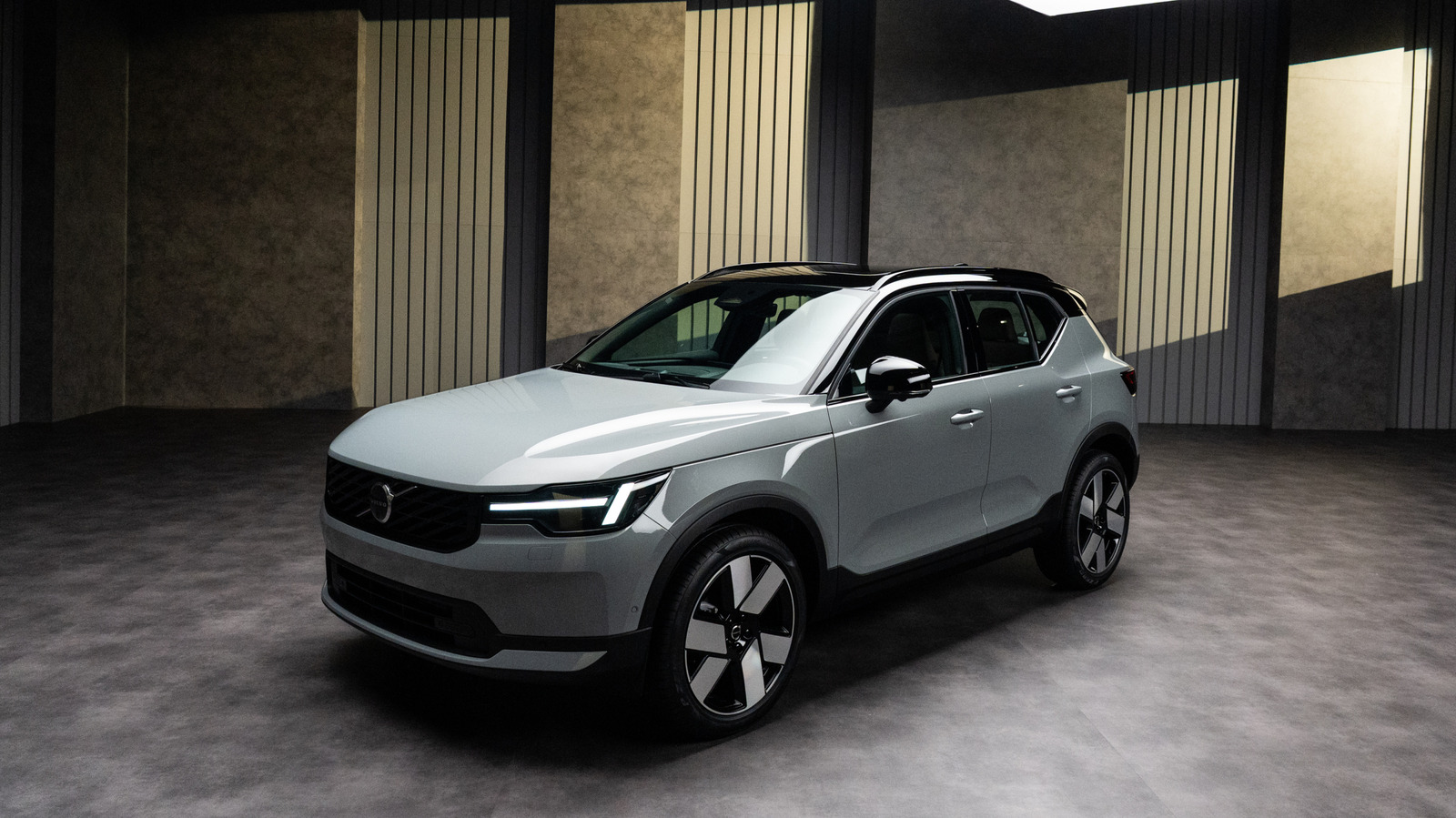
Volvo has confirmed that, from the 2028 model year, the plug-in hybrid XC40 will be sold in the US without its all-electric sibling, the EX40, which is being dropped from that market. The change accompanies a broader refresh of the compact SUV pairing, covering exterior styling, cabin technology and safety systems, and marks a notable shift given the XC40 is Volvo's third-best-selling model in America and second-best globally.
Both the XC40 and EX40 gain a simplified, more modern front end with revised headlights and reshaped bonnet and fenders, leaving the two nearly identical apart from grille detailing and badging. Inside, a larger 11.2-inch infotainment screen (up from 9 inches) sits atop the dashboard, running the latest Android Automotive software with Google's Gemini AI assistant, which can adjust vehicle settings, suggest scenic routes and find nearby restaurants with dietary details. The current XC40 generation dates to 2017, with the electric version launched in 2019 as the XC40 Recharge before being renamed EX40 in 2024 to align with Volvo's EX30, EX60 and EX90 electric range; Gemini itself was already rolled out across most Volvo models earlier this year.
- Volvo drops all-electric EX40 from the US market for 2028
- Refreshed XC40 keeps plug-in hybrid, gains new styling and tech
- Larger 11.2-inch screen adds Google's Gemini AI assistant
New here? Start with this
Volvo makes the XC40, a compact SUV first launched in 2017, in several versions: a petrol/hybrid model and a fully electric one, which was originally sold as the XC40 Recharge before being renamed EX40 in 2024. In the United States, Volvo has decided to stop selling the electric EX40 from the 2028 model year onwards, keeping only the plug-in hybrid XC40 on sale there, even though the XC40 line is one of the brand's best-selling models both in America and worldwide.
Volvo is a Swedish car maker, owned by China's Geely, that has been pushing to expand its electric vehicle range in recent years, including models like the EX30, EX60 and EX90. This move affects only the US market and comes alongside a wider update to the XC40 and EX40's styling, screens and software, so it sits within a broader refresh rather than being an isolated decision about electric cars.
Both sides, in good faith
The strongest fair case each way — we don't pick a winner.
The case for
Supporters of Volvo's decision see it as a sensible, data-led response to real market conditions rather than an ideological retreat: US demand for compact electric SUVs has softened, federal EV tax credits have been curtailed, and tariffs have made battery-electric models less cost-competitive to build and sell profitably. On this view, a manufacturer has a responsibility to its workers, dealers and shareholders to match supply to actual demand, and continuing to sell a plug-in hybrid that meets buyers where they currently are is a pragmatic bridge rather than an abandonment of electrification, especially since Volvo is simultaneously modernising the model's technology and safety features.
The case against
Critics who favour continued EV investment argue that pulling the EX40 from a major market undercuts the long-term push toward zero-emission transport at precisely the moment consistent policy and product signals are needed to build charging infrastructure and consumer confidence. From this perspective, retreating from electric options in response to short-term political and fiscal headwinds risks ceding ground to competitors more committed to the EV transition, disappoints buyers who specifically want a fully electric compact SUV, and represents a step backward for a brand that had built its EX naming strategy around a clear electric identity.
Full account
Volvo has confirmed a significant mid-cycle refresh for its compact XC40 SUV, but the update comes at the cost of the model's electric sibling: the EX40 is being withdrawn from the American market. The two vehicles share the same underlying platform and have, until now, been sold alongside each other as petrol-hybrid and fully electric variants of essentially the same car. Going forward in the US, buyers will be steered towards the hybrid XC40 alone, while the EX40 nameplate disappears from Volvo's domestic line-up.
The refreshed XC40 gains a reworked front end built around a new interpretation of Volvo's familiar 'Thor's Hammer' headlight signature, alongside revised grille, bumper, bonnet and front wings; the rear end has been similarly updated with new lighting, bumper and tailgate treatments, and buyers can choose from three diamond-cut alloy wheel designs spanning 18 to 20 inches. Inside, the changes are more substantial: a larger, higher-resolution 11.2-inch touchscreen replaces the previous nine-inch unit, running a redesigned interface intended to cut down on the number of taps needed for common tasks. Google's Gemini takes over as the voice assistant, handling route planning, navigation queries and message management, while the cabin also picks up a better wireless phone charger and reworked storage. Volvo has also flagged a new sensor-and-software safety platform for the model, in keeping with the brand's long-standing safety-first positioning, though full details of that system were not disclosed alongside the announcement.
The move follows a period of flux for Volvo's smallest SUV. A plug-in hybrid version of the XC40 was discontinued around three years ago, leaving only a mild-hybrid petrol variant and the electric EX40 (originally launched as the XC40 Recharge in 2019 and renamed in 2024 to align with Volvo's EX30/EX60/EX90 electric naming scheme) on sale. With this refresh, Volvo is understood to be reintroducing a plug-in hybrid option as a halfway step for customers not yet ready to commit to a fully electric vehicle — a move that also reflects Volvo's own retreat from its previous ambition to sell only electric cars by 2030. The XC40 remains an important model for the brand: it is Volvo's third best-selling nameplate in the US and its second-biggest seller globally, behind the larger XC60.
Notably, Volvo has not yet released powertrain specifics for the updated XC40 — engine options, electric motor output, battery capacity or electric-only range are all still unconfirmed, leaving open the question of how competitively it will be positioned against rival hybrids. The updated model is expected to reach US dealerships in early 2027, coinciding with what has been described as a 2028 model-year introduction. Coverage of the changes has focused on different aspects of the story: some reporting frames it primarily as the return of a plug-in hybrid option and a hedge against slowing EV demand, while other coverage has concentrated on how visually similar the outgoing EX40 and updated XC40 have become — differing mainly in grille design and badging — and has been more critical of the new dashboard screen's protruding, bolted-on appearance compared with the flush-fitting unit it replaces.
Where outlets differ
Source 1 (The Verge) frames the story mainly around the reintroduction of a plug-in hybrid XC40 as a 'bridge' for EV-hesitant buyers and links it explicitly to Volvo's retreat from its all-electric-by-2030 pledge; it does not mention the EX40's US discontinuation in the body text despite it being the headline detail.
Source 2 puts more weight on comparing the XC40 and EX40 side by side, noting they are now 'nigh indistinguishable' apart from grille and badging, and gives sales/market context (XC40 as Volvo's third-best US seller, second-best globally) that Source 1 omits.
Source 2 is notably more critical of the new infotainment screen, describing it as looking 'crudely grafted' onto the dashboard rather than flush-fitted as before — a criticism absent from Source 1's more positive framing of the same 11.2-inch display.
There is a slight timing discrepancy: Source 1 says the refreshed XC40 arrives at dealers 'early next year', while Source 2 refers to it as a 2028 model-year vehicle, though these are likely consistent given standard US model-year launch timing.
Neither source provides confirmed powertrain, range or battery details for the new XC40, which both flag as an open question.
Coverage
- The Verge — Volvo revives XC40 plug-in hybrid with Gemini AI
- Engadget — Refreshed Volvo XC40 removes electric option from US lineup