Apple’s iPhone Duo Foldable Launches With Software Focus, Conventional Hardware
Developing story first seen 2 hours ago
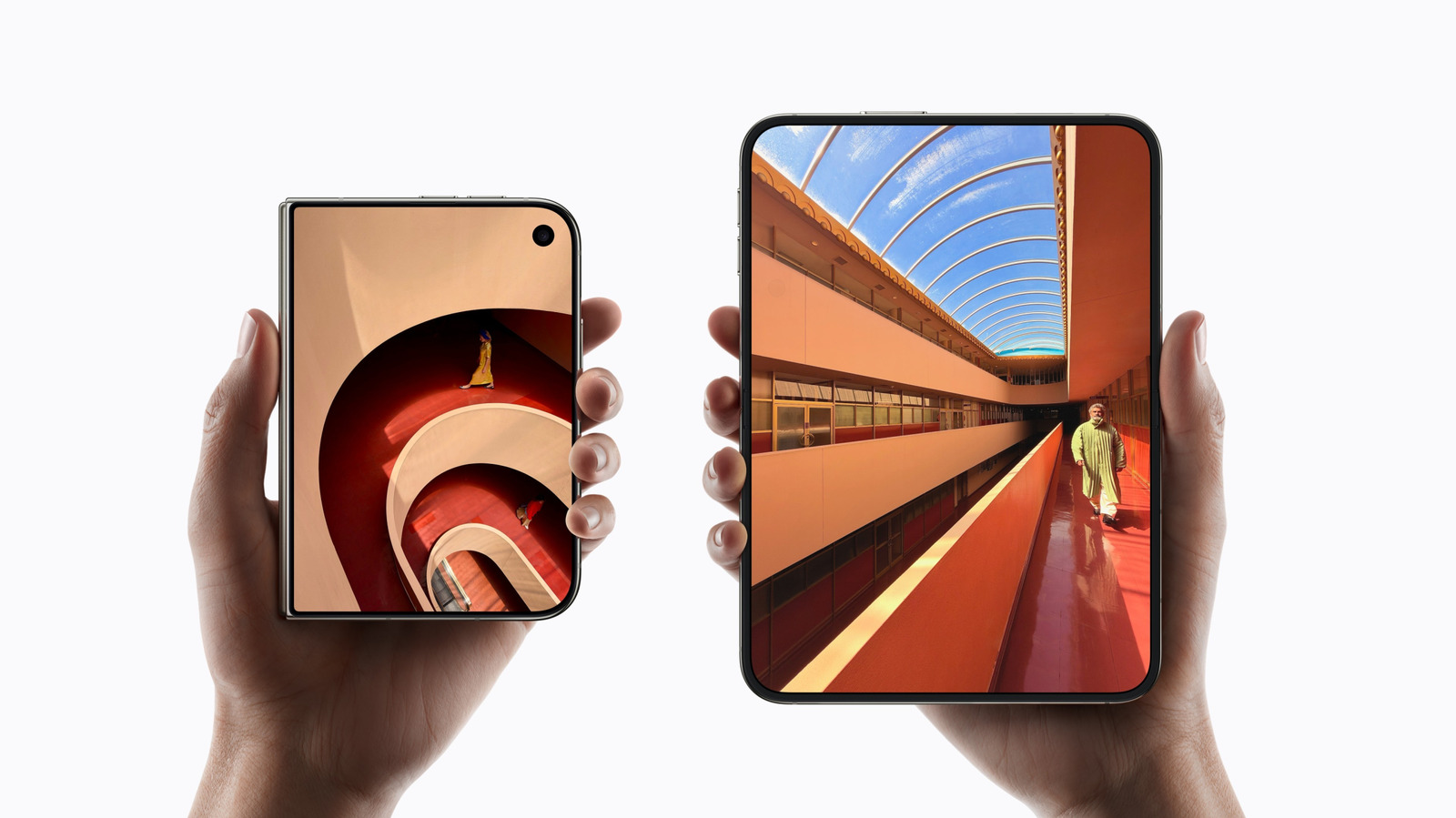
Apple has launched its first foldable iPhone, the iPhone Duo, priced at $2,000, positioning it between rival devices such as Google's Pixel 11 Pro Fold ($1,899) and Samsung's Galaxy Fold 8 Ultra ($2,100). After nearly a decade of speculation, reviewers say the device largely meets expectations by delivering the multitasking, large inner display and stylus support already established by Android foldables, but distinguishes itself chiefly through software polish rather than groundbreaking hardware, extending Apple's tablet expertise to a folding form factor for the first time.
The Duo features a 7.6-inch inner screen, multi-camera FaceTime calls, and first-ever Apple Pencil support on an iPhone, alongside design touches such as a side-mounted app dock and menus, fixed-position volume buttons, and a matte nano-coating that reduces glare and disguises the crease. Its front display has an asymmetric, book-like shape, and Touch ID replaces Face ID. Reviewers note some limitations compared with rivals, notably that the Duo supports only two simultaneous apps versus the Galaxy Z Fold 8's five, though this is seen as a deliberate design choice rather than a technical shortfall; Apple's pricing, higher than Samsung's original 2019 Galaxy Fold, was described as a surprise given expectations of an even steeper premium.
- Apple's first foldable, the iPhone Duo, launches at $2,000.
- Software polish, not hardware innovation, is its main strength.
- Offers Apple Pencil support but limits multitasking to two apps.
New here? Start with this
Apple has become the last major smartphone maker to release a folding phone, joining Samsung and Google in a category that has existed for several years but which Apple had avoided until now. The new device, called the iPhone Duo, opens like a small book to reveal a larger screen inside, similar to Samsung's Galaxy Fold and Google's Pixel Fold. It costs around $2,000, putting it at the pricier end of an already expensive market.
Foldable phones let people use a bigger screen for things like watching video or running two apps side by side, while still folding down to a more pocketable size when closed. Samsung and Google have spent years refining this design, so there was significant anticipation about what Apple, known for polishing existing ideas rather than being first to market, would bring to the category.
The launch matters because it signals whether foldable phones are becoming a mainstream part of Apple's lineup rather than a niche product for rivals. Apple's approach, and how it compares on price, features and design against established competitors, will likely influence how the wider foldable phone market develops from here.
Full account
Apple has unveiled the iPhone Duo, its long-rumoured first foldable handset, arriving nearly a decade after speculation about the device first began. The phone lands in an Android foldable market that is now well established, with Samsung, Google, Huawei, Xiaomi, Honor and Oppo all having released competing devices, several of them adopting the same squat, wide, book-like form factor Apple has chosen. Pricing was set at $2,000, positioning the Duo between the Google Pixel 11 Pro Fold ($1,899) and Samsung's Galaxy Fold8 Ultra ($2,100) — a figure one reviewer described as lower than expected given Apple's usual premium pricing and rising component costs.
On the hardware side, the Duo features a 7.6-inch inner display and a hinge Apple says comprises around 100 components, paired with custom adhesives intended to let the display layers move smoothly against one another. Combined with a matte, glare-reducing nano-coating, this is aimed at minimising the visible crease along the fold — a problem Apple appears to have addressed effectively, according to hands-on impressions, even if the fold can still be felt rather than seen. However, reviewers noted this is not a category first: Samsung had already made significant progress on crease reduction in its Z Fold8 and Fold8 Ultra using titanium display layers, while Oppo tackled the same issue on its Find N6 using 3D-printed hinge components. Other specifications also trail rivals in places — the Duo carries an IP68 water-resistance rating, a standard Google reached earlier and Honor has since exceeded with IP69, and at 5.2mm thick when unfolded it is reportedly the thickest of the current generation of wide-format foldables. The device also supports a stylus, via the Apple Pencil, and includes an under-display selfie camera, both features other manufacturers introduced previously, with Samsung having since dropped both from its own line-up.
The more distinctive element of the launch is software. Running iOS 27, the Duo adapts its interface for the unfolded display by moving the dock and menus to the side of the screen — an approach one outlet contrasted with Samsung's Edge Panel, which stays largely hidden and is used for shortcuts rather than core navigation. When the phone is opened, content from the cover screen shifts across to the main display with an animated transition, and the front screen itself has an asymmetric shape, with two rounded and two squared corners, giving it a notebook-like appearance. Other software features include enhanced multitasking, multi-camera FaceTime calls, and more interface elements made visible on the larger inner screen, all functions broadly expected of a modern foldable but which reviewers felt Apple had implemented with notable polish and visual coherence.
Coverage of the launch diverged in emphasis and tone. One outlet took a sceptical view of the hardware, arguing that almost none of the Duo's headline features are genuinely new to the market and that Apple's slower path to foldables allowed rivals to arrive first with similar dimensions, crease-reduction techniques and durability ratings, leaving software polish as the main point of distinction. A second outlet was notably more positive, framing Apple's foldable as significant precisely because the company already makes what it considers the leading tablet, and arguing that small design decisions — such as the side-mounted dock and the transition animation between screens — reflected a level of thoughtfulness competitors had not matched. Both accounts agreed that Xiaomi's 18 Fold technically reached the market a day earlier, though that device is not being sold globally, and both treated the pricing, at $2,000, as a mildly positive surprise given expectations of a higher cost.
Where outlets differ
The Verge framed the hardware as largely derivative of existing Android foldables (crease reduction, IP rating, stylus support, under-display camera), with software polish as the main redeeming feature, and highlighted that the Duo is thicker than rival wide foldables.
The second source took a more favourable overall view, emphasising Apple's tablet (iPad) expertise as a meaningful advantage for foldables, praising specific software/UI touches (side dock placement, screen-transition animation, asymmetric front-screen design) as thoughtful rather than derivative, and expressing surprise that pricing was not higher than $2,000.
Only the second source discusses Apple Pencil support as a first for the iPhone line and directly compares pricing to the Pixel 11 Pro Fold and Galaxy Fold8 Ultra.
Only the first source quotes a named reviewer (Nilay Patel) describing the crease as imperceptible visually but detectable by touch, and gives a specific thickness figure (5.2mm).
Coverage