Juror on Lindsay Clancy trial says ‘we let down Lindsay’ following mistrial
Developed over time first seen 2 months ago
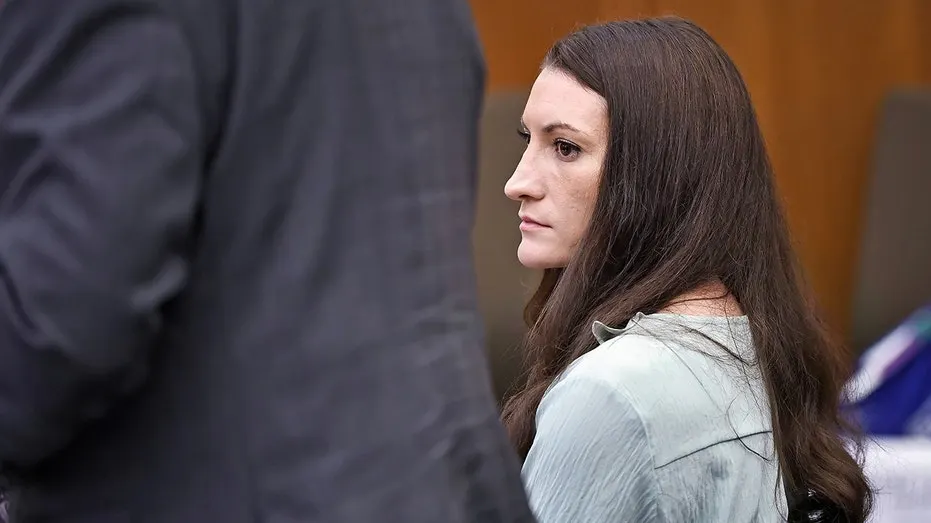
A juror who took part in Lindsay Clancy's Massachusetts murder trial has spoken out following the case's collapse into a mistrial, saying she believed the panel had "let down Lindsay" by failing to reach the unanimous verdict required. Clancy, from Massachusetts, was on trial for strangling her three young children in January 2023 while her then-husband, Patrick, was out collecting medication and takeout; two children died that night and a third died days later after being airlifted to hospital. Her defence did not dispute that she killed the children but argued she should be found not criminally responsible due to severe postpartum psychosis, a position eleven of the twelve jurors ultimately accepted, while one holdout favoured convicting her.
Paula, 65, one of the majority jurors, told local media that deliberations began far from unanimous, with an initial poll showing eight jurors leaning towards acquittal on mental health grounds, two believing Clancy guilty, and two undecided, before the majority coalesced into an 11-1 split. She described sifting through 297 pieces of evidence, including Patrick Clancy's harrowing 911 call, as emotionally gruelling, and said the majority felt the sole holdout was not properly applying the reasonable-doubt standard, prompting the foreperson to notify the judge the jury was deadlocked. Judge William Sullivan questioned each juror individually before declaring a mistrial, and Clancy's legal team has since said it plans to file a new motion to dismiss the case in light of the jurors' comments.
- Sources
- 4
- Outlets
- 2
- Left · Centre · Right
- 0 · 0 · 4
In short
- Juror says panel "let down Lindsay" after mistrial in her children's murder case.
- Jury split 11-1 for acquittal by reason of mental illness; one holdout blocked unanimity.
- Deliberations covered 297 pieces of evidence; defence now plans a dismissal motion.
How this story developed
- 1 month ago A juror from the Lindsay Clancy murder trial has spoken further about the deliberations that ended in a mistrial, revealing that the panel started deliberations far from unanimous before ending up split 11-1.
- 2 months ago A juror who took part in Lindsay Clancy's Massachusetts murder trial has spoken out following the case's collapse into a mistrial, saying she believed the panel had "let down Lindsay" by failing to reach the unanimous verdict required.
- 2 months ago A juror from the Lindsay Clancy murder trial has spoken further about the deliberations that ended in a mistrial, saying she feels the panel "let down Lindsay" by failing to reach a unanimous verdict.
- 2 months ago New details have emerged from inside the deliberations in the Lindsay Clancy murder trial, after juror Paula, 65, revealed that the panel began deliberations far more divided than its eventual 11-1 deadlock, with jurors initially split eight in favour of a lack-of-criminal-responsibility verdict, two favouring guilt and two undecided.
- 2 months ago A juror from the Lindsay Clancy murder trial in Massachusetts has spoken publicly after the case ended in a mistrial, saying she felt the panel "let down Lindsay" by failing to reach a unanimous verdict.
- Daily Mail Lindsay Clancy juror reveals how lone holdout made 'no sense' and lectured others about 'respect' while refusing to give reasons for decision
- Fox News Lindsay Clancy's attorney challenges Jonathan Turley over holdout juror criticism
- Fox News Lone holdout juror in Lindsay Clancy trial was only Black person on the jury, panelist reveals: report
- Fox News Juror on Lindsay Clancy trial says ‘we let down Lindsay’ following mistrial
Full account
A mistrial has been declared in the case of Lindsay Clancy, the Massachusetts woman accused of strangling her three young children in January 2023, after jurors were unable to reach a unanimous verdict. Clancy's defence did not dispute that she killed Cora, five, Dawson, three, and Callan, eight months old, but argued she should not be held criminally responsible because she was suffering from severe postpartum psychosis at the time. Prosecutors contended that, despite evidence of mental illness, she remained criminally responsible for her children's deaths. Eleven of the twelve jurors ultimately favoured finding Clancy not guilty by reason of lack of criminal responsibility, the state's equivalent of an insanity defence, but a single holdout juror prevented a unanimous decision, forcing the judge to declare a mistrial.
One of the jurors who sided with the majority, a 65-year-old woman named Paula (identified by the Daily Mail as Paula Devlin), has since spoken publicly about the deliberations. She said the panel began by polling themselves informally, with eight jurors initially favouring a finding of not guilty by reason of lack of criminal responsibility, two believing Clancy was guilty, and two undecided, before the group moved towards an 11-1 split. She described the process as gruelling, noting that jurors were asked to work through around 297 pieces of evidence, including an emotionally difficult 911 call made by Clancy's then-husband, Patrick, after he discovered the children unresponsive on returning home from an errand to collect medication and takeaway food.
Paula said the experience left her and other jurors feeling they had failed Clancy, describing the difficulty of separating sympathy for the children from the jury's legal task. She said the majority of the panel came to believe that Clancy had been let down by the healthcare system in the lead-up to the killings, and argued that greater awareness and support around postpartum mental health could help prevent similar tragedies within families. According to the Daily Mail's account, other jurors in the majority also expressed feelings of defeat and frustration once the mistrial was declared, having believed for much of the week-long deliberations that a unanimous verdict was within reach.
Much of the reporting on the lone dissenting juror comes from the Daily Mail's interview with Paula, in which she described him as a married man who kept largely to himself during the trial, spending breaks on his phone or speaking with his wife rather than socialising with fellow jurors. She said he was reluctant to explain his reasoning during deliberations, initially declining to set out his concerns on a whiteboard until another juror volunteered to write on his behalf, and that he instead spent considerable time urging the group to be more courteous when multiple jurors spoke over one another. Among the specific concerns eventually attributed to him was the amount of blood found at the family's home in Duxbury, near Boston. Fox News's account, drawn from a separate WCVB interview, focuses more heavily on Paula's emotional reaction and her comments on the healthcare system, giving fewer specifics about the holdout juror's demeanour or the exact location and nature of the evidence involved. Clancy's legal team has reportedly indicated it intends to file a new motion to dismiss the case following the mistrial.
Where outlets differ
From the full account, which is AI-written from the sources:
Fox News/WCVB centres the piece on Paula's emotional reflections — feeling the jury 'let down' Clancy and her comments on the healthcare system's failures — while the Daily Mail focuses more on the holdout juror's behaviour, including his reluctance to explain his vote, his focus on 'respect' during discussions, and his concern about blood evidence.
The Daily Mail gives the juror's full name as Paula Devlin and adds biographical detail (that she works for a government contractor); Fox News identifies her only as 'Paula, 65.'
The Daily Mail describes the majority jurors' emotions as 'defeat' and 'anger,' a stronger framing than Fox News's account, which emphasises feelings of having failed Clancy rather than anger.
There is a discrepancy in where the children were found: Fox News states the children were found unconscious in the basement, while the Daily Mail's account, in describing the holdout juror's concerns, references blood found in the bedroom of the home.
Only Fox News mentions that Clancy's lawyer plans to file a new motion to dismiss following the mistrial.
Steelman: both sides, in good faith
The strongest fair case each way — we don't pick a winner.
The case for
Those who favour finding Lindsay Clancy not criminally responsible argue that severe postpartum psychosis can so profoundly distort a person's grasp of reality that actions taken during an episode are not a genuine expression of moral agency, making criminal punishment inappropriate. They point to psychiatric evidence that psychosis can produce delusional beliefs convincing a mother she is protecting rather than harming her children, and note that the legal test for criminal responsibility exists precisely for such extreme cases. Many also stress that the healthcare system failed to recognise and act on clear warning signs beforehand, and argue that treating Clancy as a patient requiring supervised psychiatric care, rather than as a criminal, better serves both justice and public safety.
The case against
Those who favour a finding of criminal responsibility argue that the law must maintain a clear, consistently applied threshold for excusing lethal violence, and that juries should be cautious about a precedent in which profound psychological distress alone removes accountability for the deaths of three children. They emphasise that mental illness, however severe, does not automatically mean a person could not distinguish right from wrong at the relevant moment, and that this judgement deserves rigorous, evidence-based scrutiny rather than sympathy-driven leniency. Advocates for this position also worry that the children themselves, as the actual victims, can be overshadowed by focus on the defendant's suffering, and that accountability remains important for public confidence in the justice system, even where mental illness is acknowledged.
Explained simply
Postpartum psychosis is a rare but serious mental illness that can develop after childbirth, sometimes causing delusions, confusion or a break from reality. Lindsay Clancy, a mother from Massachusetts, was accused of strangling her three young children, Cora, Dawson and Callan, in January 2023. Her lawyers did not dispute that she caused their deaths, but argued she should not be held criminally responsible because she was suffering from severe postpartum psychosis at the time.
Under the law applied in this case, a person can be found not guilty by reason of lack of criminal responsibility if mental illness meant they could not understand or control their actions. For that outcome, the jury of twelve had to agree unanimously, either that Clancy met this threshold or that she did not; anything less than unanimous agreement results in a mistrial, meaning no verdict is reached and the case remains legally unresolved.
The case has attracted widespread attention both for the tragic circumstances of the children's deaths and for what it reveals about how the justice system deals with severe mental illness after childbirth. It has also fuelled broader public discussion about the availability and adequacy of mental health support for new mothers.
Coverage · 4 sources
Bias meters
From 4 rated sources.
- Fox NewsFar rightJuror on Lindsay Clancy trial says ‘we let down Lindsay’ following mistrial
- Daily MailRightLindsay Clancy juror reveals how lone holdout made 'no sense' and lectured others about 'respect' while refusing to give reasons for decision
- Fox NewsFar rightLindsay Clancy's attorney challenges Jonathan Turley over holdout juror criticism
- Fox NewsFar rightLone holdout juror in Lindsay Clancy trial was only Black person on the jury, panelist reveals: report
Americas Business Markets World