Bombshell CIA 9/11 files lay bare Bill Clinton’s horrific Bin Laden mistake…as ex-president grimly faces families at Ground Zero
Developed over time first seen 2 months ago
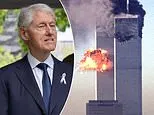
Newly declassified CIA files reveal that Bill Clinton's White House was warned in September 1998 that Osama bin Laden wanted to fly a bomb-laden plane into an American city, exactly three years before hijackers struck the Pentagon on 11 September 2001. The disclosure, reported by the Wall Street Journal, shows the warning formed part of Clinton's own top-secret daily intelligence briefings, and that bin Laden also featured in at least 18 editions of George W Bush's presidential daily brief in 2001, seven of them in the weeks before the attacks. The papers reignite scrutiny of how much successive administrations knew and failed to act upon, a debate that resurfaced as Clinton stood among bereaved families at Ground Zero for the 25th anniversary.
The 1998 memo, titled "Bin Laden's Location and Intentions", named no specific date or target but flagged Washington DC as a likely aim, while other documents show analysts warned in July 1998 that an attack was "plausible" and in October 2000 that bin Laden remained "committed" to striking the US despite being unable to pinpoint targets or timing. The CIA released 71 documents in total, calling it the largest-ever release of its 9/11 analysis; former acting director Michael Morell said they proved the agency gave "long and loud" warnings, though other insiders noted the underlying intelligence was often thin. At the same Ground Zero ceremony, 9/11 widow Terry Strada accused multiple administrations of shielding Saudi Arabia and pressed for unredacted files on the kingdom's alleged role, adding a fresh political dimension to the anniversary.
- Sources
- 2
- Outlets
- 2
- Left · Centre · Right
- 0 · 0 · 2
In short
- 1998 CIA memo warned Clinton's team of a bin Laden plane-bomb plot on a US city
- Bin Laden appeared in 18+ of Bush's 2001 daily briefs before 9/11
- CIA released 71 files; widow demands unredacted Saudi Arabia files
How this story developed
- 2 months ago Newly declassified CIA files show Bill Clinton's White House was warned in September 1998 that Osama bin Laden wanted to fly a bomb-laden plane into an American city, exactly three years before hijackers struck the Pentagon, according to fresh Wall Street Journal reporting on the documents.
- 2 months ago Newly declassified CIA files show Bill Clinton's White House was warned in September 1998 that Osama bin Laden wanted to fly a bomb-laden plane into an American city, a warning that came exactly three years before the 9/11 hijackers struck the Pentagon.
- 2 months ago Newly declassified CIA files reveal that Bill Clinton's White House was warned in September 1998 that Osama bin Laden wanted to fly a bomb-laden plane into an American city, exactly three years before hijackers struck the Pentagon on 11 September 2001.
Full account
Newly declassified CIA files, released to mark the 25th anniversary of the September 2001 attacks, show that Bill Clinton's administration was warned as early as 1998 that Osama bin Laden wanted to fly an explosive-laden aircraft into a target in Washington, DC — three years before al-Qaeda hijackers struck the World Trade Center and the Pentagon. The disclosure emerged as Clinton joined Bush, Obama and Biden at the Ground Zero ceremony, standing alongside relatives of the nearly 3,000 people killed in the attacks his own briefing papers had appeared to foreshadow.
At the centre of the release is a Presidential Daily Brief dated 10 September 1998, titled 'Bin Laden's Location and Intentions', which gave no specific date or target but made plain that bin Laden favoured striking the US capital, potentially by crashing a plane packed with explosives into an American city. A further briefing from December that year noted that figures linked to bin Laden's network had received hijack training and that operatives had reportedly slipped through security screening during a trial run at a New York airport, with plotters said to be seeking the release of jailed extremists, including Omar Abd al-Rahman and Ramzi Yousef, in exchange for hijacked aircraft. Other papers from the period described a bin Laden strike on US soil as 'plausible' in mid-1998 and noted in October 2000 that he remained 'committed' to attacking American targets, even though analysts admitted they could not identify precise timing or locations.
The warnings did not stop with the change of administration. Bin Laden featured in at least eighteen editions of George W. Bush's daily intelligence digest during 2001, seven of which reached his desk in the weeks before the attacks. An August 2001 brief told Bush that the FBI had detected patterns consistent with preparations for hijackings, including surveillance of federal buildings in New York, and that some al-Qaeda members with links to the US, including citizens, appeared to maintain a support network capable of aiding an attack. The bureau was said to be running around seventy related field investigations nationwide, while a memo from late July 2001 noted that an anticipated bin Laden operation had apparently been postponed, though officials cautioned other plots might still be underway.
The 71 documents, made public by the CIA as part of a wider declassification push under the Trump administration, have reignited debate over whether successive presidents did enough with the intelligence they were given. A former acting CIA director told the Wall Street Journal that the material shows the agency issued 'long and loud' strategic warnings that were not acted upon, but other agency figures countered that much of the underlying intelligence was thin, drawn from questionable sources, and too vague on timing or method to guide a specific response, while one analyst suggested counterterrorism simply was not treated as a presidential priority before 2001.
Where outlets differ
From the full account, which is AI-written from the sources:
Source 1 (drawing on the Wall Street Journal) centres the story on Bill Clinton personally, framing the 1998 memo as his administration's specific failure and dwelling on the symbolism of Clinton being confronted by victims' families at Ground Zero on the anniversary; it also gives more detail on the internal CIA debate over whether the warnings were acted upon.
Source 2 (a Fox News-style report) spreads responsibility across both the Clinton and Bush administrations, giving more weight to Bush-era warnings such as the August 2001 brief and the FBI's roughly 70 field investigations, and adds operational detail — the New York airport security test and hijackers' demand to free imprisoned extremists — not mentioned in Source 1.
Source 2 frames the release explicitly as part of a Trump administration transparency push and notes a related political angle about Barack Obama's record resurfacing at Ground Zero, an emphasis absent from Source 1, which instead stresses the Journal's access to internal CIA sourcing and quotes from a former acting director.
Steelman: both sides, in good faith
The strongest fair case each way — we don't pick a winner.
The case for
Advocates of holding the Clinton (and Bush) administrations to account argue that these were not vague rumours but specific, repeated warnings delivered directly into the president's own daily intelligence briefings, naming Washington DC as a likely target and describing bin Laden's stated intent to attack American soil years before 2001. They contend that when the nation's most senior intelligence official brands the warnings "long and loud", the reasonable conclusion is that political leadership had sufficient cause to prioritise counterterrorism far more aggressively than it did, and that grieving families are entitled to demand a fuller reckoning with decisions not taken.
The case against
Those defending the administrations' conduct argue that raw intelligence is not the same as actionable intelligence: the 1998 memo carried no date, method or confirmed target, and analysts themselves used hedged language such as "plausible" and "committed" rather than imminent or certain. They point out that presidents receive a constant stream of threat assessments, most of which do not materialise, and that judging decisions of the late 1990s against the clarity of hindsight risks unfairly blaming leaders for failing to foresee an unprecedented attack, when in fact both administrations did take some steps, within real legal, diplomatic and resource constraints, to track and disrupt bin Laden's network.
Explained simply
Newly declassified CIA files, released to mark the 25th anniversary of the 11 September 2001 attacks, show that US intelligence had been warning about Osama bin Laden's ambitions to attack America for years before hijackers flew planes into the World Trade Center and the Pentagon, killing nearly 3,000 people. The documents cover briefings given to both Bill Clinton and George W. Bush, the two presidents in office either side of the attacks, and have reopened questions about how much was known in advance and whether more could have been done.
Bill Clinton was president from 1993 to 2001, and George W. Bush succeeded him just months before 9/11. Both received regular top-secret intelligence updates, known as presidential daily briefs, which the newly released papers show repeatedly flagged bin Laden as a threat, including one 1998 memo warning of a plan to fly a bomb-laden plane into a US city. Michael Morell, a former acting CIA director, is among those commenting on what the warnings show, while other former officials caution that the intelligence at the time was often vague.
The story matters because it feeds into a long-running debate about accountability for 9/11, one of the deadliest attacks on US soil, and about the role of Saudi Arabia, whose alleged links to the hijackers remain a sensitive and disputed issue for victims' families. Clinton, Bush, and the two presidents who followed them, Barack Obama and Joe Biden, are all figures whose administrations have faced scrutiny over pre- and post-9/11 decisions, and the anniversary has brought them together publicly at Ground Zero, the site of the destroyed World Trade Center in New York.
Coverage · 2 sources
Bias meters
From 2 rated sources.
Business Government Markets Politics World