Video games news, releases, esports and culture — all the biggest gaming stories in one place.
2026’s Best Puzzle Game Is an Even Trippier Take On Portal
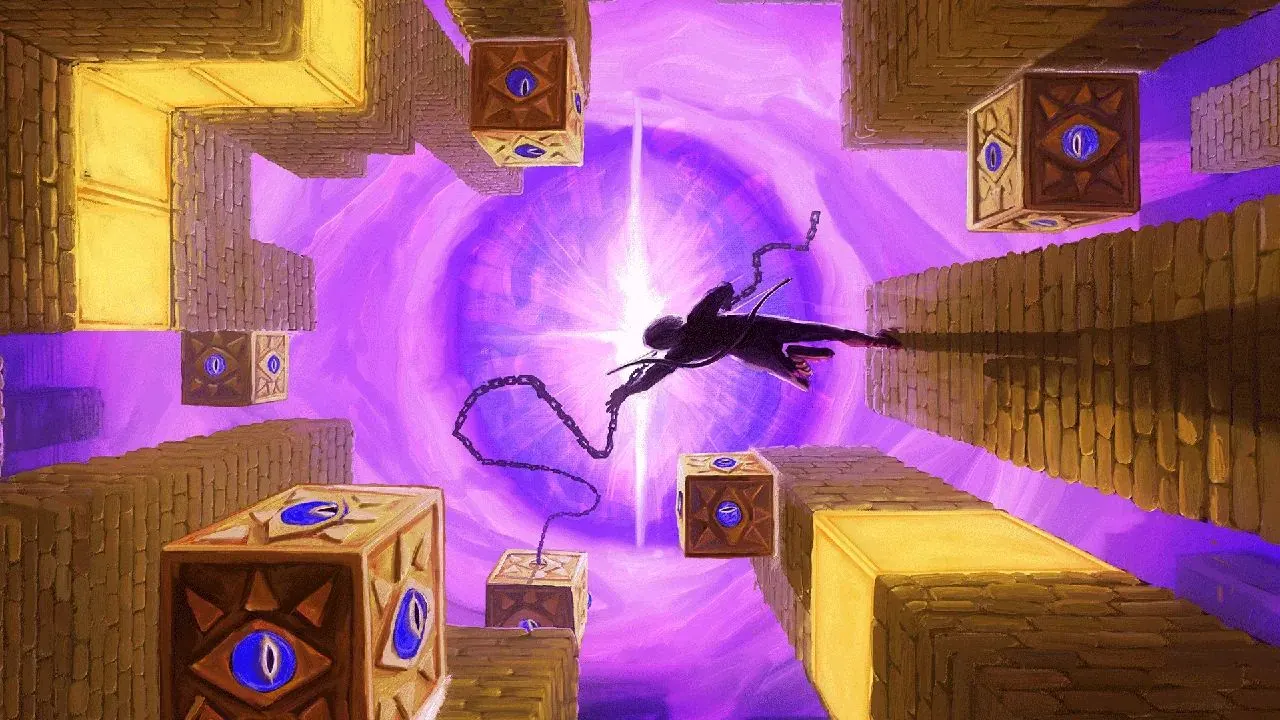
A lone developer has created "He Who Watches," a puzzle game that Polygon's writer describes as one of 2026's best, drawing favourable comparisons to the way Portal reshaped first-person puzzle design nearly two decades ago. Developed by Bobby Vanden and published by Draknek and Friends, the game reworks familiar box-pushing puzzle mechanics with a disorienting new twist, offering players an experience the reviewer calls inventive and, at times, genuinely nauseating.
Players control an archer navigating a mysterious structure, using arrows to grab and move boxes through puzzle chambers in a style likened to 3D Sokoban. The central mechanic allows players to walk on any wall or ceiling, with gravity reorienting accordingly, so an object dropped while upside down stays fixed to that surface rather than falling. The game builds in complexity through additional systems, such as beams that transport boxes, and includes an in-built hint system offering optional mini-puzzles that teach core concepts without giving away solutions.
In short
- Indie puzzle game "He Who Watches" praised as a standout 2026 release.
- Lets players walk on walls/ceilings, flipping gravity for box-based puzzles.
- Built-in hint rooms teach concepts without spoiling puzzle solutions.
Explained simply
He Who Watches is a first-person puzzle game made by solo developer Bobby Vanden and published by Draknek and Friends. It builds on box-moving puzzles, where players shift objects around a room to find a way forward.
The player is an archer who moves boxes with arrows and can walk on walls and ceilings as well as floors. Gravity changes with the surface, so a box can stay put where it is placed, adding a new layer to planning each puzzle.
The game’s design invites comparison with Portal, which helped popularise first-person puzzles built around unusual ways of interacting with space. Its optional hints introduce the rules gradually, while later puzzles add systems such as beams that transport boxes.