Cheap solar forces global shift away from centralised utilities
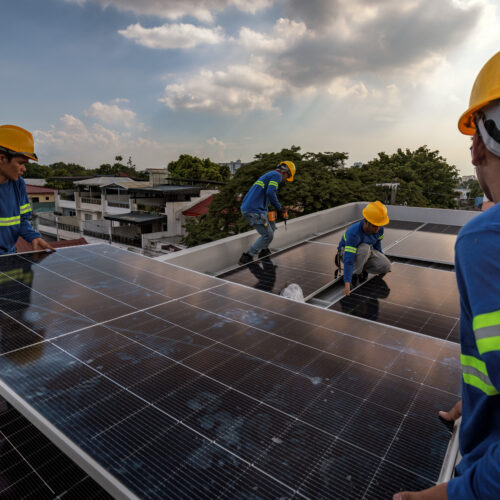
Cheap, Chinese-made solar panels are transforming energy systems worldwide, giving businesses and households the ability to generate their own power and undercutting the traditional model of centralised utilities. In Pakistan, cement maker Bestway is rapidly expanding rooftop solar capacity because, as one executive put it, "it's the only way we can compete," reflecting a broader shift seen across both developing and industrialised economies where cheap self-generation is cutting bills amid cost-of-living pressures linked partly to the Iran and Ukraine wars.
Global installed solar capacity reached almost 1.2 terawatts by the end of 2025, roughly three times the size of the world's nuclear fleet, according to the Energy Institute. However, this rapid, largely uncoordinated growth poses challenges: grids built for one-way power flow now need costly re-engineering to handle two-way traffic, and low-cost "plug and play" panels now approved in the UK and parts of the US risk adding unpredictability to demand forecasting. Experts, including Imperial College London's Professor Janusz Bialek, warn that power systems are changing in ways not yet fully understood, citing last year's Spain-Portugal blackout as a case where renewables growth outpaced grid adaptation, while utilities such as Pakistan's K-Electric describe solar as both a "curse and a blessing" for their business models.
- Cheap Chinese solar panels are reshaping global energy generation and consumption
- Global solar capacity hit almost 1.2 terawatts by end of 2025
- Grids struggle to adapt, raising blackout and revenue-model risks for utilities
Read the full article at the source →
Originally published by Ars Technica as ““Offensively cheap”: Solar power is looking up”.