Stanford researchers implant human brain organoid cells into mouse cortex
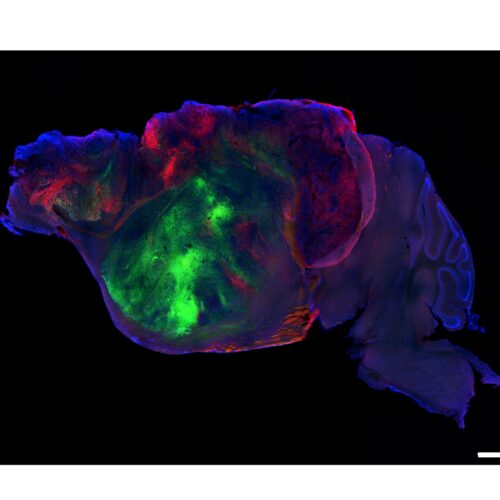
Researchers at Stanford have developed a technique that replaces most of a mouse's cortex with human brain organoid cells, offering a potential new way to study human brain diseases in a more realistic biological context. Brain organoids, small tissue structures grown from stem cells, have shown promise for modelling human disease but lack the connections to other brain structures needed to function normally, and previous attempts to insert human neurons into animal brains were limited because the transplanted cells remained surrounded by the host's own functioning neurons.
To overcome this, the team genetically deleted a gene needed for cell division in almost all cortical cells, wiping out most of the mouse cortex and halving the brain's volume, before replacing it with human organoid tissue. Remarkably, the mice largely survived this procedure, though it required intensive support, including reducing litter sizes so the affected pups received more nursing, extending nursing time and providing very high-calorie food. The mice were also immunocompromised to prevent rejection of the human cells. Despite the survival success, the article notes the results represent only a slight improvement over mice missing the brain structure entirely.
- Stanford scientists replaced most of a mouse's cortex with human brain organoid cells
- Mice survived despite losing much of their cortex, with intensive rearing support
- Outcomes were only marginally better than mice lacking the cortex altogether
Read the full article at the source →
Originally published by Ars Technica as “Researchers swap in human brain cells for a mouse’s cortex”.