World news and discussion on TalkFuse.
Mark Carney calls for ‘deep cooperation’ between Canada and EU in Strasbourg address
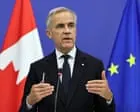
Canadian Prime Minister Mark Carney addressed the European Parliament in Strasbourg to welcome Canada becoming the EU's first associate member, calling for "deep cooperation" to secure their strategic autonomy. The proposal comes amid heightened trade tensions, as Donald Trump has threatened "very serious tariffs" on Europe if the plan proceeds, though Carney emphasised that Canadians are united in their right to forge independent international agreements.
In his speech, Carney outlined cooperation areas including critical minerals, energy security, artificial intelligence, defence industrial capacity, space and digital payments, whilst proposing a youth exchange programme and Canadian membership of the EU's Erasmus+ education scheme. The associate membership category does not currently exist in EU treaties, making this unprecedented; whilst EU member states broadly support closer Canada-EU ties, some have expressed reservations about the formal designation, though Carney maintained that the substance of the relationship matters more than nomenclature.
In short
- Canada seeks first-ever EU associate membership to strengthen strategic autonomy
- Trump's tariff threats fail to deter Canada-EU cooperation plans
- Carney proposes cooperation spanning critical minerals, energy, AI and education
Steelman: both sides, in good faith
The strongest fair case each way — we don't pick a winner.
The case for
Supporters argue that closer Canada-EU cooperation could strengthen both partners’ ability to secure energy, critical minerals, technology and defence supplies, while expanding educational and commercial ties. In a period of trade uncertainty, an ambitious partnership may help like-minded democracies protect their independence and pursue shared interests.
The case against
Sceptics may question whether a new associate-member category can be created under existing EU treaties and whether its practical benefits justify the legal and diplomatic complexity. They may also worry that advancing the proposal amid tariff threats could deepen trade tensions, and argue that cooperation should proceed through established arrangements instead.
Explained simply
Canada and the European Union are separate political and economic partners. The EU is a group of European countries that co-operate on trade and other policies, while Canada has its own government and makes agreements with countries and groups around the world.
The proposed associate membership would be a new kind of formal relationship: EU treaties do not currently define that category. The idea builds on existing Canada-EU ties, including a trade agreement, and would create closer links without making Canada an EU member.
The two sides have discussed working together on areas such as energy, critical minerals, technology and defence. Their plans are also unfolding amid trade tensions, which can affect businesses and jobs on both sides of the Atlantic.
Americas Business Elections Europe Football Government Politics Sport World