Science news and discussion on TalkFuse.
As Paramount Settlement Talks With States Progress, Some AGs Are Pushing for Stronger Restrictions
Developed over time first seen 2 months ago
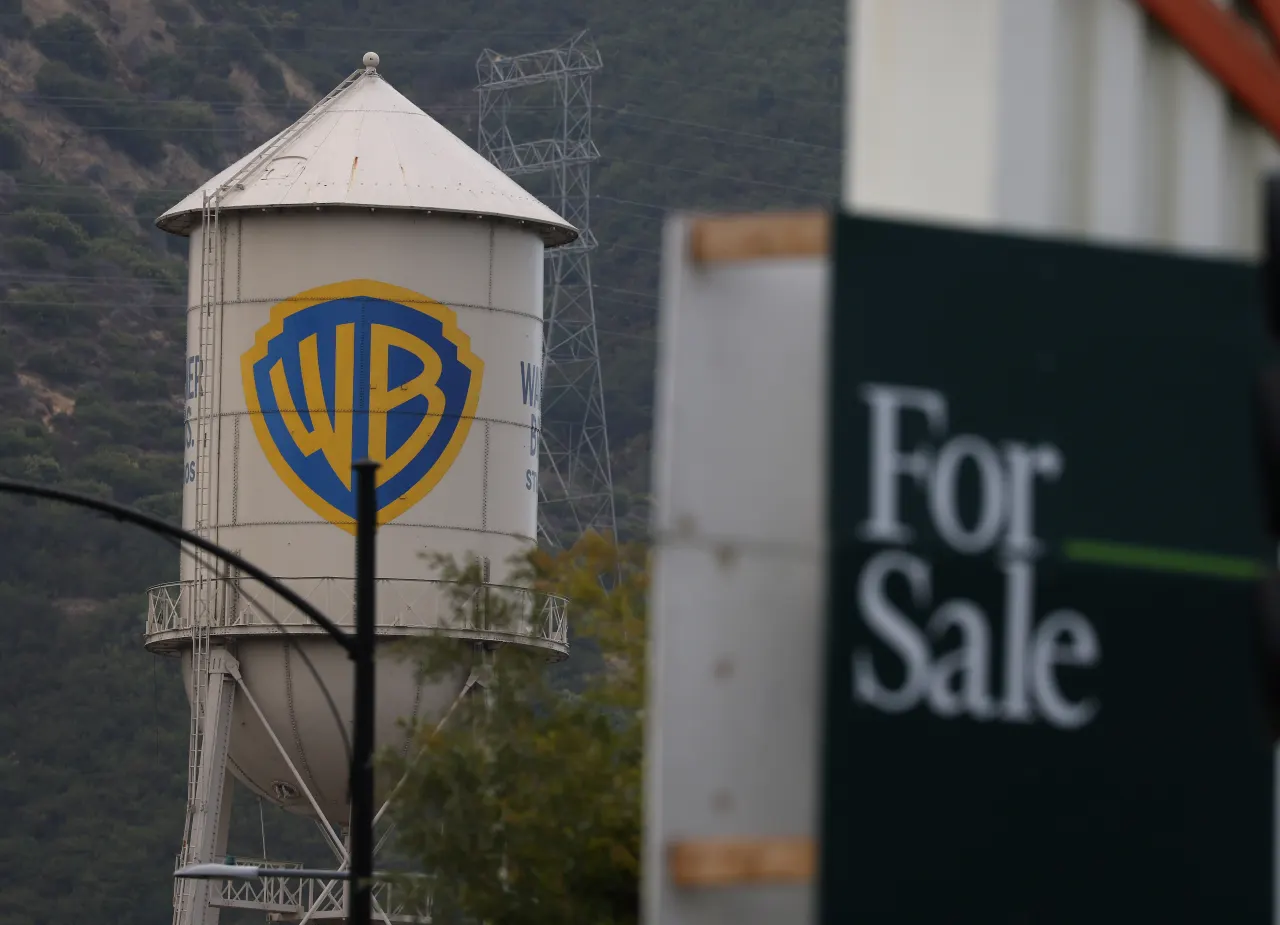
Settlement talks between Paramount and 12 state attorneys general over its proposed Warner Bros. Discovery acquisition have advanced but remain unresolved. California’s attorney general may accept certain conditions, while New York and Connecticut are seeking stronger safeguards, particularly over jobs and the editorial independence of CNN and CBS News.
Possible terms include keeping Warner Bros.’ studio operations separate temporarily, releasing at least 30 films theatrically each year with financial penalties for falling short, appointing an independent editorial adviser, and keeping Paramount’s California operations in place. Paramount could also be required to invest $1.5 billion in California productions, while the company’s projected $6 billion in cost savings could lead to thousands of job losses; the deal has already been approved by federal regulators without remedies and remains blocked by the states’ lawsuit and a separate Writers Guild case.
- Sources
- 2
- Outlets
- 2
- Left · Centre · Right
- 0 · 0 · 0
In short
- Paramount’s takeover talks with states remain unresolved.
- New York and Connecticut want stronger protections.
- CNN independence and potential job losses are central concerns.
How this story developed
- 2 months ago Settlement negotiations between Paramount and twelve state attorneys general over the $110 billion acquisition of Warner Bros. Discovery continue to progress, but divisions have emerged among the states themselves.
- 2 months ago Settlement talks between Paramount and 12 state attorneys general over its proposed Warner Bros. Discovery acquisition have advanced but remain unresolved.
- 2 months ago Settlement talks between Paramount and 12 state attorneys general over its proposed $110 billion acquisition of Warner Bros. Discovery have made progress but ended without agreement.
Full account
Settlement negotiations between Paramount and a coalition of twelve state attorneys general continued over the weekend, though no final agreement was reached. California's Rob Bonta, who is coordinating the legal challenge to Paramount's acquisition of Warner Bros. Discovery, has signalled openness to accepting a framework of conditions. Yet his stance diverges markedly from several fellow officials who are insisting on considerably more stringent restrictions before lending their approval to any accord.
The discussions have ranged across a spectrum of potential remedies. These encompass a requirement to operate Warner Bros.' production operations as a separate entity for a defined period, a commitment to release a minimum of 30 theatrical films annually with financial consequences for shortfalls, and the appointment of an independent editorial monitor overseeing CNN and CBS News. Parallel proposals address relocation concerns, with Paramount pledging to maintain its California base whilst investing $1.5 billion in state-based production activity.
New York's attorney general Letitia James has advocated for explicit safeguards for employees facing redundancy, particularly given Paramount's projections of $6 billion in cost reductions through consolidation. Connecticut's William Tong has mounted a more fundamental objection, contending that the proposed external monitor for news operations would lack sufficient autonomy to shield editorial decisions from ownership interference. A group of four states—appearing to include officials from Minnesota, New York, Connecticut, and Washington—has voiced concern that the settlement framework is insufficiently protective of public interests.
The talks proceed against mounting pressure from multiple directions. A federal trial has been scheduled for March 2027, whilst a substantial daily financial obligation owed to Warner Bros. Discovery shareholders arrives on 1 October. The absence of conditions from federal regulators in their approval of the transaction has potentially expedited settlement discussions. However, the apparent divisions amongst state enforcement officials suggest a comprehensive agreement remains uncertain. Negotiations have temporarily paused to observe the Yom Kippur holiday.
Where outlets differ
From the full account, which is AI-written from the sources:
Scope of opposition: Source 1 refers to 'at least 2 other AGs'; Source 2 identifies '4 of 12' with specific names (Keith Ellison of Minnesota, Letitia James, William Tong, Nick Brown)
Political framing: Source 2 emphasises Paramount leadership's Trump connections and Democratic activist opposition; Source 1 mentions this tangentially
Financial specificity: Source 2 provides deal value ($111 billion), daily fee ($7 million), and October deadline; Source 1 omits these figures
Characterisation of news oversight: Source 2 describes proposed mechanism as lacking 'teeth' and as 'window dressing'; Source 1 presents it more neutrally
Pressure on lead negotiator: Source 2 explicitly frames Bonta as seeking an 'off-ramp' under pressure; Source 1 describes him simply as 'open to considering' terms
Industry involvement: Source 2 references Writers Guild alignment and activist campaigns; Source 1 omits this context
Relocation as leverage: Source 1 notes Ellison's stated California relocation threats; Source 2 frames these as tactics being resisted by negotiators
Steelman: both sides, in good faith
The strongest fair case each way — we don't pick a winner.
The case for
Media consolidation threatens editorial independence of news operations—critical for democratic discourse—and strong restrictions should protect journalists' autonomy, secure employment, and maintain cultural investment through theatrical releases. Robust state oversight ensures the merger serves public interest, particularly regarding labour displacement and the concentration of news outlets that shape public information.
The case against
Excessive state conditions risk destabilising a federally-approved deal and creating regulatory inconsistency; existing market competition, including from streaming platforms, adequately constrains harmful consolidation. Allowing the merger to proceed with moderate terms enables innovation and consumer benefits through efficiency gains, whilst states imposing divergent requirements undermines federal regulatory authority and threatens deal viability.
Explained simply
Paramount is seeking to acquire Warner Bros. Discovery in a $110 billion transaction that would combine two major American media companies. Such large mergers in media raise concerns because they reduce competition and concentrate control over film, television and news production in fewer hands, which is why state authorities review them alongside federal regulators.
Twelve state attorneys general are negotiating conditions with Paramount to approve the deal, but they disagree on how strict those conditions should be. California's lead negotiator is willing to accept a compromise package, whilst New York and Connecticut are pushing for substantially stronger protections before they will sign off.
The states are seeking guarantees about jobs, the number of films released theatrically, investments in local production, and editorial independence at CNN and CBS News, which would become part of the combined company. New York is particularly concerned about job losses from the merger's promised cost savings, whilst Connecticut is focused on ensuring that news operations remain editorially independent from commercial pressures.