Entertainment news and discussion on TalkFuse.
Townfall recaptures Silent Hill’s emotional depth through a Scottish tragedy
Developed over time first seen 2 months ago
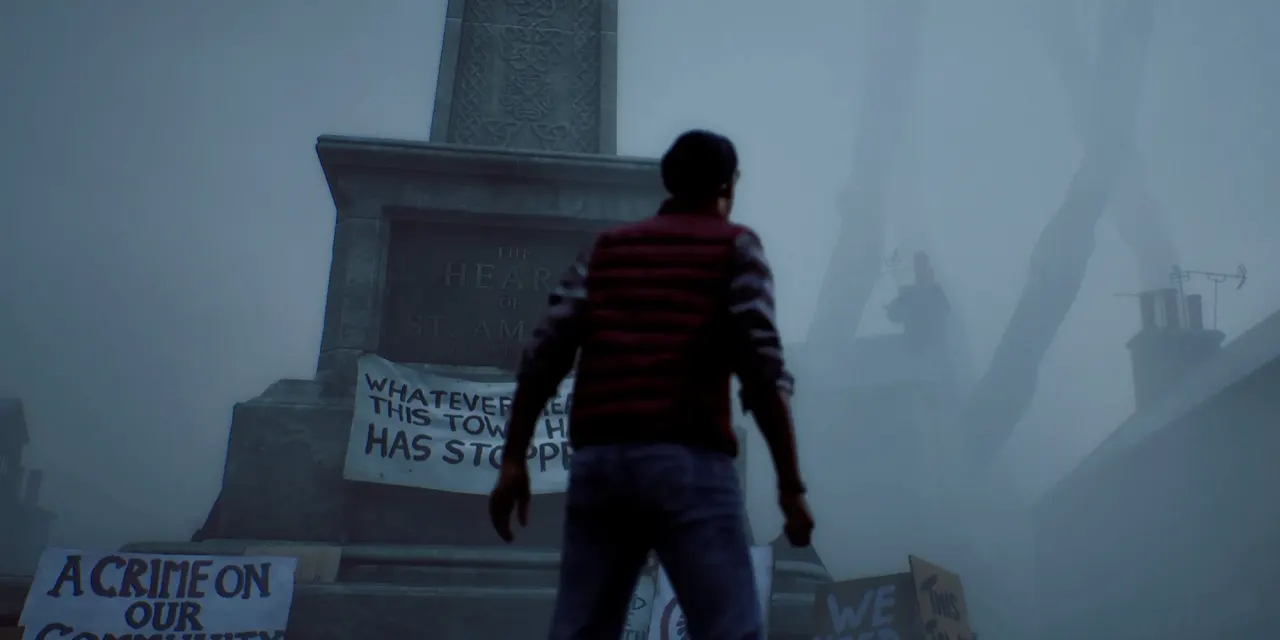
Silent Hill: Townfall, a new first-person horror game developed by Screen Burn Interactive, is set in the fictional Scottish island town of St. Amelia, where players control protagonists Simon and Zoe as they uncover the mysteries surrounding a community in collapse. The game has been praised by reviewers for successfully capturing the essence of what makes the Silent Hill franchise compelling—not merely recreating its imagery of fog and disturbing creatures, but embedding genuine psychological horror and deeply personal tragedy into its narrative. The reviewer believes Townfall comes closer to matching the critically acclaimed Silent Hill 2 and 3 than anything else in the franchise, including the recent Silent Hill f.
St. Amelia itself functions as the game's central character, with the town's physical deterioration—weathered buildings, abandoned spaces, and signs of economic decline—reflecting the story's themes of isolation, guilt, and failed communication. Players are encouraged to explore meticulously, as details reward careful inspection and reveal information about both the community and its tragic past. The game features seamless transitions between its two playable characters and utilises fog particularly effectively along the waterfront to create atmosphere whilst cutting off the island from the wider world. The reviewer was unable to complete the game during her review period but expressed strong engagement with the experience and eagerness to return to it.
- Sources
- 2
- Outlets
- 2
- Left · Centre · Right
- 0 · 0 · 0
In short
- First-person Silent Hill game successfully captures the franchise's psychological horror essence
- Scottish island town setting is haunting and rewards careful exploration for narrative details
- Dual protagonists and atmospheric storytelling deliver substantial horror experience
How this story developed
- 2 months ago The critic clarifies that protagonist Simon's search for Zoe whilst investigating the community's societal breakdown and supernatural origins provides the game's central narrative drive, with Zoe judged substantially more compelling than the serviceable Simon despite the reviewer's incomplete playthrough.
- 2 months ago A review of *Silent Hill: Townfall* from developer Screen Burn Interactive praises the game for foregrounding psychological depth and emotional storytelling over franchise iconography, with the deteriorating Scottish island of St. Amelia serving as an essential character within the narrative.
Full account
Silent Hill: Townfall marks a significant departure in Konami's strategy of licensing the franchise to international developers, relocating the series from its mythical American origins to the Scottish island community of St. Amelia. The game represents an experiment in allowing studios to harness the franchise's conceptual framework—its exploration of personal tragedy through horror mechanics—whilst applying it to distinct cultural contexts. Developer Screen Burn Interactive has created a first-person experience that distinguishes itself by prioritising the psychological and emotional substrata that underpin the franchise, rather than superficially reproducing its aesthetic markers.
The narrative follows Simon, an American arriving on the island's pier, as he becomes entangled with local residents including Zoe, an English nurse, and receives mysterious communications from a distant contact called Richard. St. Amelia itself has endured some unspecified catastrophe in the late 1990s: roads are blockaded, shops emptied, and the town has become isolated from the mainland. Visual evidence of collective trauma saturates the environment—memorial walls bearing photographs of the missing, handwritten signs proclaiming 'our grief is their failure', and concrete barriers cutting through residential streets. The game structures its mysteries around three intersecting perspectives, gradually revealing what transpired to transform this once-functioning community.
Environmental design functions as both world-building mechanism and thematic vehicle. Weathered stone architecture, abandoned shopfronts, and economic decay communicate the town's decline before explicit exposition arrives. The creatures inhabiting St. Amelia—designated as 'Others' within the game's mechanics—embody the horror aesthetic through visceral, ungainly physicality rather than conventional design. Critical reception has emphasised how this approach captures something essential about Silent Hill's legacy, prioritising the franchise's capacity to excavate local histories and personal regrets over merely replicating its established visual language.
Assessments of Townfall diverge on several points. Whilst one critical perspective lauds it as the closest approximation to the franchise's most celebrated entries since their original release, another observer expresses reservations about its reliance on stealth-based mechanics and questions whether it represents developer Screen Burn's strongest work overall. The broader question of whether Konami's licensing programme constitutes an inspired expansion of the franchise or a more extractive approach to international game development remains contested. Nevertheless, both evaluations acknowledge that Townfall has successfully internalised the franchise's thematic concerns rather than becoming imprisoned by its surface conventions.
Where outlets differ
From the full account, which is AI-written from the sources:
Source 1 delivers largely unreserved praise, whilst Source 2 adopts a more measured tone and criticises stealth mechanics as repetitive
Source 1 emphasises world design and exploration rewards; Source 2 examines the licensing model's cultural and creative implications
Source 1 explicitly ranks Townfall amongst the franchise's finest; Source 2 questions whether it represents Screen Burn's best work
Source 2 provides detailed character descriptions and environmental specifics absent from Source 1's discussion
Source 1 focuses on what the game achieves thematically; Source 2 balances appreciation with structural criticism
Explained simply
Silent Hill is a long-running video game horror series known for exploring psychological trauma and guilt through atmospheric storytelling. Townfall is a new entry developed by Screen Burn Interactive that has drawn critical attention for its approach to the franchise's themes, with reviewers suggesting it recaptures what made the series distinctive at its best.
The game is set on St. Amelia, a remote and deteriorating Scottish island whose weathered buildings and economic decline form part of the narrative itself. Through first-person exploration in fog-shrouded environments, players uncover the town's history of isolation, failed relationships and unresolved guilt through environmental details and clues. The experience alternates between two protagonists as you piece together the island's darker stories.
Critics have praised Townfall for focusing on emotional storytelling and personal tragedy rather than relying on franchise conventions like iconic monsters or established lore. The approach suggests the game understands that the series' lasting power comes from exploring how guilt and loss shape people and places, a quality that had become less central to recent Silent Hill titles.
Coverage · 2 sources
Read the full article at the source →
Originally published by Collider as “‘Silent Hill: Townfall’ Is ‘Silent Hill’ Like You’ve Never Experienced It Before | Review”.