Entertainment news and discussion on TalkFuse.
Zach Cregger’s quirky Resident Evil film proves skeptics wrong with series-best opening weekend
Developed over time first seen 2 months ago
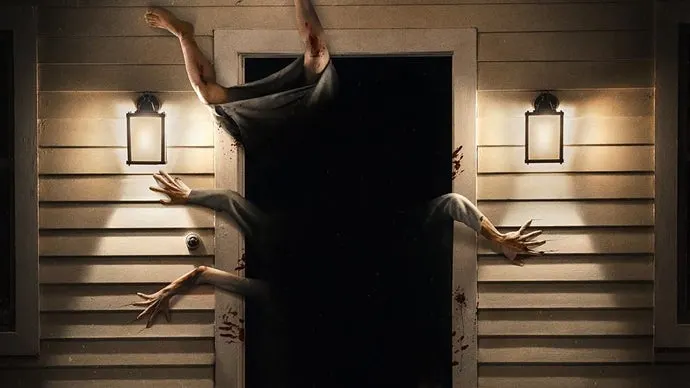
Zach Cregger’s Resident Evil film has delivered the franchise’s strongest opening weekend, overcoming scepticism about its unconventional comedic direction. The success suggests audiences have responded positively to the film’s decision to combine absurd humour with unsettling horror and a more grounded story.
The film earned $108.3 million (£93 million) worldwide, including $60 million in the United States and $48.3 million internationally. That surpassed Cregger’s previous hit Weapons, exceeded the original 2002 Resident Evil film’s lifetime gross of $102.9 million, and reportedly became the year’s second-biggest horror opening behind Backrooms. Rather than focusing on established characters such as Leon S. Kennedy or the Redfields, it follows medical delivery driver Bryan as he struggles through a disastrous day.
- Sources
- 2
- Outlets
- 2
- Left · Centre · Right
- 0 · 0 · 0
In short
- Resident Evil achieved the franchise’s biggest opening weekend.
- The film earned $108.3 million worldwide.
- Its comedic, grounded approach overcame pre-release scepticism.
How this story developed
- 2 months ago New figures confirm Zach Cregger’s Resident Evil film achieved the franchise’s best-ever opening weekend, easing doubts about its unconventional comedic direction. It earned $108.3 million (£93 million) worldwide, signalling strong early audience interest in the series’ fresh approach.
- 2 months ago Zach Cregger’s new Resident Evil film has achieved the franchise’s strongest opening weekend, challenging doubts about its unconventional comedic approach. It earned $108.3 million globally, making it a major commercial success and signalling strong audience interest in a fresh direction for the series.
- 2 months ago Zach Cregger’s Resident Evil film has delivered the franchise’s strongest opening weekend, overcoming scepticism about its unconventional comedic direction. The success suggests audiences have responded positively to the film’s decision to combine absurd humour with unsettling horror and a more grounded story.
Full account
Director Zach Cregger's unconventional approach to the Resident Evil franchise has delivered a significant commercial triumph, achieving the strongest opening weekend in the series' history. The film accumulated $108.3 million globally during its inaugural weekend, comprising $60 million domestically within the United States and $48.3 million from international territories. This performance surpasses Cregger's previous horror venture Weapons, which earned $70 million, and substantially outpaces all preceding Resident Evil films. The release represents the second-highest opening for a horror title this year, trailing only the phenomenon of Backrooms, which garnered $118 million. Notably, the film has already eclipsed the total lifetime earnings of the original 2002 Resident Evil picture, which accumulated $102.9 million across its entire theatrical run.
Cregger's deliberate decision to eschew the franchise's established iconography forms the creative cornerstone of the venture. Rather than centring the narrative around Leon S. Kennedy or the Redfield family—beloved characters from the source material—the director crafted a story centred on Bryan, an ordinary medical courier portrayed by Austin Abrams who becomes catastrophically unprepared for the calamities unfolding around him. Abrams' deliberate refusal to undergo physical conditioning for the role underscores Cregger's thematic intent: positioning an unremarkable, physically unimposing protagonist against escalating peril creates both comedic and genuinely unsettling effects. Cregger articulated this philosophy in describing his preference for witnessing an out-of-shape, gun-inexperienced protagonist navigating a series of escalating threats, suggesting that the unexpected combination of absurd humour and authentic horror generates unpredictability.
The critical and audience response has validated Cregger's gambit. The film achieved a 95 per cent rating from professional critics and 91 per cent from audiences on Rotten Tomatoes, suggesting broad approval across demographic groups. These approval metrics accompany the commercial success, positioning the film as a rare instance where unconventional creative vision produces both critical credibility and financial returns. Sources have indicated that a sequel appears probable, though Cregger has signalled reluctance towards helming subsequent instalments in the series.
Beyond its immediate success, the film's reception offers broader implications for the video game adaptation industry. The critical discourse has positioned Bryan's buffoonish characterisation as a conduit for audience identification—a contrasting device that elevates the viewing experience by providing a relatable everyman figure navigating impossible circumstances. This narrative strategy proves particularly compelling when juxtaposed against traditional game-adaptation approaches that privilege heroic protagonists. The concurrent September 2026 release of Paramount Plus's Golden Axe series, which similarly introduces an incompetent character (Hampton Squib, played by Danny Pudi) alongside established warrior archetypes, suggests this methodology may represent emerging industry best practice for video game intellectual property.
Where outlets differ
From the full account, which is AI-written from the sources:
Source 1 emphasises box office comparisons and historical context, including previous Resident Evil films' earnings and Capcom's upcoming Code: Veronica remake; Source 2 prioritises critical reception metrics (Rotten Tomatoes scores) and broader industry analysis regarding video game adaptations.
Source 1 includes personal review commentary from the outlet; Source 2 maintains analytical distance and focuses on directorial intent through interview quotations.
Source 2 provides specific Rotten Tomatoes percentages and discusses sequel likelihood; Source 1 omits critical scores but contextualises performance against other 2026 horror releases.
Source 2 significantly extends discussion to concurrent Golden Axe adaptation as industry trend; Source 1 restricts focus to the Resident Evil film itself.
Steelman: both sides, in good faith
The strongest fair case each way — we don't pick a winner.
The case for
The film's exceptional box office performance—achieving the franchise's strongest opening weekend and surpassing the original film's lifetime gross in a single weekend—demonstrates clear audience validation of Cregger's unconventional choice to blend absurdist humour with horror and character-driven storytelling. That audiences responded so enthusiastically suggests the franchise needed precisely this kind of bold reinvention to remain culturally relevant and commercially viable in a crowded market.
The case against
Box office success does not inherently validate artistic direction, particularly for an established franchise with years of accumulated brand equity. A film can succeed commercially for numerous reasons—IP recognition, marketing reach, novelty appeal—without its creative choices being sound for the franchise's identity or the integrity of the horror genre. Blending absurdist comedy with horror risks diluting the atmospheric tension that distinguished the original whilst alienating longtime fans. That general audiences embraced the film does not address whether it represented faithful stewardship of Resident Evil or merely commercial exploitation of established IP.
Explained simply
Resident Evil is a video game franchise centred on survival horror in a world infested with biological threats and monsters. The series has been adapted into films multiple times since an original 2002 film, with each version offering its own interpretation of the material. These adaptations have built an ongoing audience interested in how the games are translated to screen.
Director Zach Cregger's recent Resident Evil film takes a distinctly different creative path by incorporating comedy alongside the horror elements, rather than focusing primarily on scares as previous films did. It also introduces an entirely new protagonist, a medical delivery driver named Bryan, rather than drawing on established characters from the games such as Leon S. Kennedy or the Redfield family. This departure from both the franchise's traditional tone and its familiar cast represents a significant reimagining of the source material.
The underlying question the film addresses is whether audiences will accept such a substantial change to an established franchise. Previous Resident Evil adaptations have generally adhered to the horror genre and featured characters recognisable to fans of the games, forming expectations about what a Resident Evil film should be. Cregger's version challenges those expectations, making its reception meaningful for how the franchise might evolve and how studios approach adapting well-known properties.
Coverage · 2 sources
Celebrity Entertainment Film Gaming Horror TV