Sport news and discussion on TalkFuse.
Why is Monaco staging a sprint race? F1 Q&A
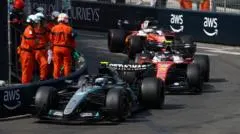
Formula 1 will hold a sprint weekend in Monaco in 2027, despite the circuit being notorious for making overtaking extremely difficult. The decision is intended to create a more unpredictable and demanding weekend through two qualifying sessions, different grid orders and greater pressure on drivers, even if the sprint race itself is likely to be processional.
Monaco’s narrow, challenging layout means drivers usually build up their confidence gradually, so qualifying after only one practice session could lead to more mistakes and incidents. The article also discusses ongoing debate about the virtual safety car, with no agreement yet on changes such as preventing drivers from pitting during VSC periods; supporters cite fairness, while critics note that altering the system could create new problems.
In short
- Monaco will host a controversial F1 sprint weekend in 2027.
- The format aims to increase unpredictability and driver errors.
- No agreement has been reached on changing virtual safety car rules.
Steelman: both sides, in good faith
The strongest fair case each way — we don't pick a winner.
The case for
A sprint weekend could make Monaco more compelling by adding a second qualifying session, changing grid orders and putting drivers under pressure sooner. Supporters may argue that this creates uncertainty and tests adaptability at a circuit where the race itself often offers few passing opportunities; the added challenge could also produce more mistakes and incidents, though that risk is part of the format’s demanding nature.
The case against
Monaco’s tight layout makes overtaking exceptionally difficult, so a sprint may add little meaningful racing and could become processional. Critics may also argue that reducing practice time leaves drivers less opportunity to build confidence on a circuit where mistakes can have serious consequences, making the extra pressure a poor trade for limited on-track action.
Explained simply
Monaco is a small principality on the French Riviera, best known in Formula 1 for its tight street circuit. The track runs between buildings and barriers, leaving little room to pass, so a driver’s place in qualifying often has a strong influence on the race result.
Formula 1 weekends normally include practice, qualifying and a grand prix. At a sprint weekend, drivers also take part in a shorter race, with its own qualifying session and starting order; the format adds another competitive session and can affect how teams prepare.
The virtual safety car is a set of rules used to slow all cars when officials need to manage an incident without stopping the race. Drivers must keep to a set speed, and teams may use that period to make a pit stop, which can change how much time they lose.