Business news and discussion on TalkFuse.
Mamdani condemns Paramount–Warner Bros merger as threat to media independence
Developed over time first seen 2 months ago
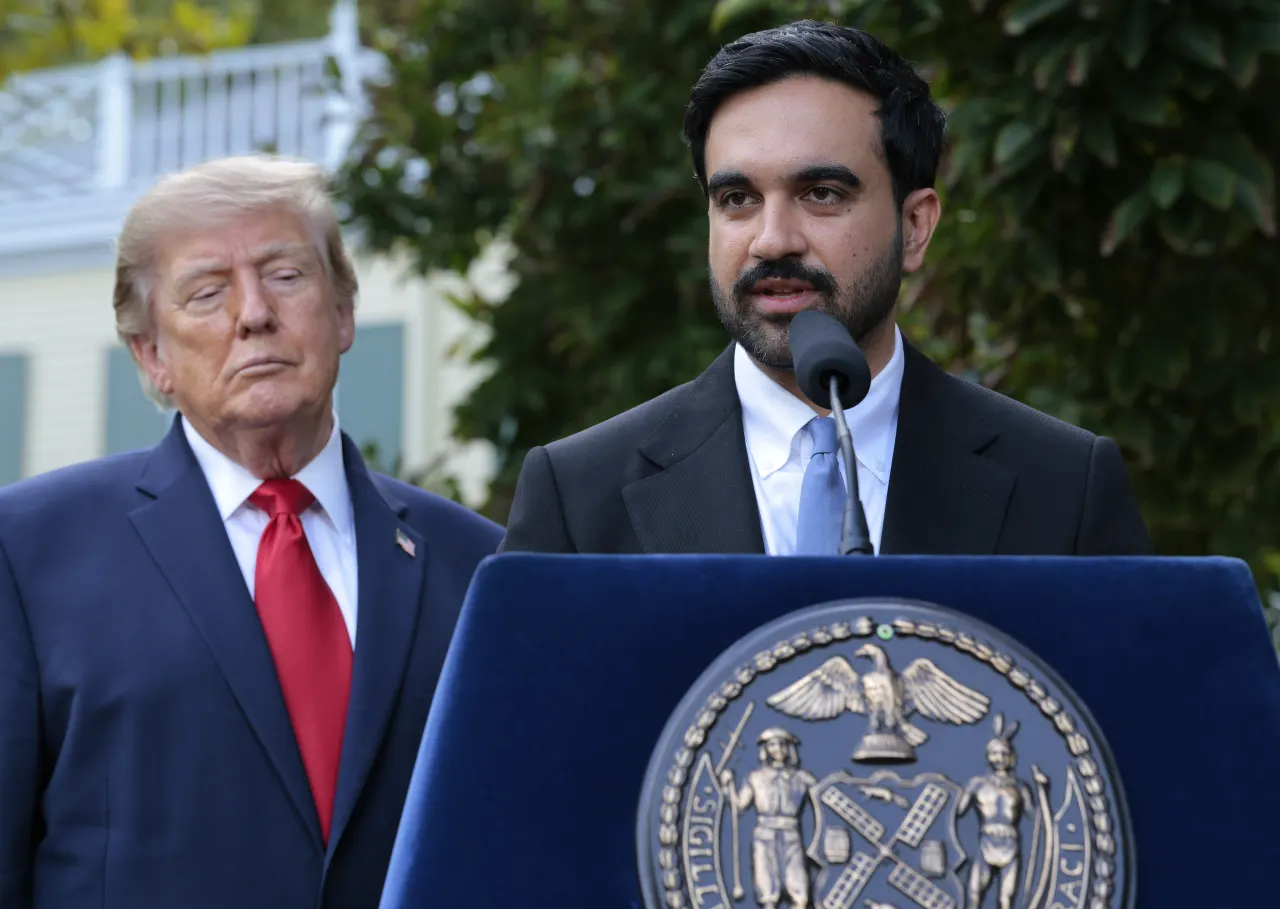
New York Mayor Zohran Mamdani has condemned the $111 billion Paramount–Warner Bros. Discovery merger, arguing that it threatens media competition, independence and public accountability. He criticised federal leaders who supported the deal, saying it would give billionaires such as David Ellison greater influence over what Americans see and hear, while praising New York Attorney General Letitia James for securing protections for workers.
The deal’s final legal obstacles were removed after Paramount reached settlements with attorneys general from 12 states, including New York, and the Writers Guild of America in antitrust lawsuits. The merger is expected to reshape Hollywood and could cause substantial layoffs; Mamdani’s criticism came shortly after he hosted President Donald Trump at Gracie Mansion, where they maintained a cordial relationship and discussed housing and immigration despite their political differences.
- Sources
- 2
- Outlets
- 2
- Left · Centre · Right
- 0 · 0 · 0
In short
- Mamdani says the merger threatens media independence.
- Settlements cleared the final legal barriers to the $111 billion deal.
- Hollywood could face major restructuring and job losses.
How this story developed
- 2 months ago The Mayor escalated his attack on the merger by calling it a "shameful monument to corruption" and warning of heightened billionaire influence over American media.
- 2 months ago Mamdani demonstrated political flexibility by maintaining relations with President Donald Trump at Gracie Mansion, where they discussed housing and immigration despite their disagreement on the media deal.
- 2 months ago New York Mayor Zohran Mamdani condemned the $111 billion Paramount–Warner Bros. Discovery merger following the removal of final legal barriers through settlements with 12 states and the Writers Guild of America.
Full account
New York's mayor Zohran Mamdani has condemned the Paramount-Warner Bros. Discovery merger as a profound failure of regulatory oversight and public accountability. Publishing his critique on social media Tuesday, following Monday's settlement of antitrust cases, Mamdani outlined a principled vision of media plurality as essential to American democratic freedom, whilst depicting the $111 billion transaction as fundamentally antagonistic to that ideal. His intervention articulated anxieties about consolidated corporate control accumulating power among an already privileged financial elite.
The settlement, reached Monday between Paramount and attorneys general from twelve states—including New York—alongside the Writers Guild of America, formally removes the final legal barriers to transaction completion. Under its terms, Paramount undertook commitments regarding annual film production volumes, enhanced domestic production investment, respect for existing union arrangements, and creation of an editorial governance structure for its news operations, CBS News and CNN. State officials characterised these concessions as protective of industry vitality and employment sustainability, though their effectiveness hinged upon subsequent regulatory monitoring and compliance verification.
Mamdani's public denunciation assumed heightened irony from its immediate temporal context—emerging merely hours after he welcomed President Trump to Gracie Mansion, the mayor's official residence. The presidential visit represented an exceptionally rare occurrence in American political history; previous such invitations remain spaced across decades, with Ronald Reagan's 1981 visit constituting the most recent precedent. Notably, the transaction benefits from backing by Larry Ellison, the technology billionaire and father of Paramount's chief executive David Ellison, who maintains close alignment with the administration. Yet Mamdani characterised his pragmatic engagement with Trump as necessary to secure tangible benefits for New York residents, notwithstanding fundamental policy disagreements.
Beneath the appearance of unified state action, however, lay pronounced divisions within the attorneys general coalition. New York, Connecticut, Minnesota and Nevada had initially opposed settlement acceptance. Connecticut's chief prosecutor subsequently articulated serious misgivings regarding the abandonment of complete news division divestiture, describing the compromise as a retreat from safeguarding independent journalism. New York's attorney general offered more qualified support, emphasising anticipated productivity gains and pledging continued oversight authority. This public divergence between state officials revealed competing priorities across the enforcement coalition and differing assessments regarding acceptable regulatory compromise.
Where outlets differ
From the full account, which is AI-written from the sources:
Source 1 emphasises Trump's relationship with Mamdani and provides historical precedent for Gracie Mansion presidential visits; Source 2 emphasises specific settlement terms and enforcement mechanisms
Source 1 frames the story as political theatre involving Trump's undisclosed interests; Source 2 foregrounds internal disagreement within the twelve-state alliance over settlement adequacy
Source 2 names individual attorneys general (Bonta, Tong, James) and their divergent public positions; Source 1 provides broader context about Mamdani's pragmatic Trump engagement without naming other officials
Source 2 specifies settlement concessions (production targets, investment amounts, editorial board creation); Source 1 emphasises the contrast between cordial Trump meeting and subsequently harsh criticism
Steelman: both sides, in good faith
The strongest fair case each way — we don't pick a winner.
The case for
Media consolidation of this scale concentrates editorial control in the hands of a few billionaires, undermining the diversity of voices and editorial independence essential for democratic discourse. Large mergers predictably result in workforce reductions and diminished competition for content workers and consumers alike. Historical antitrust law exists precisely to prevent this concentration of media power, and permitting such deals sets a precedent that further erodes the competitive landscape upon which a functioning media ecosystem depends.
The case against
The modern media landscape operates within a complex, competitive ecosystem featuring streaming platforms, independent producers, international competitors, and diverse distribution channels that constrain any single entity's power. Business scale and integration can yield efficiencies, better creative resources, and improved financial performance necessary for competing in a global market; regulatory oversight from multiple state attorneys general already vetted this transaction, and consumer choice remains a powerful check on corporate behaviour. Blocking efficient business combinations may ultimately harm workers and innovation by preventing companies from achieving the scale necessary to invest in quality content and compete internationally.
Explained simply
Paramount Pictures and Warner Bros Discovery are two of the world's largest entertainment companies that produce films, television shows and streaming content watched by millions globally. A proposed merger would combine these two major competitors into a single corporate giant, concentrating enormous influence over entertainment and media in one organisation. Regulators in the United States have been examining whether such a deal would harm competition in the media industry.
The main concern is that a merged company would give a small number of billionaire investors, including David Ellison, outsized control over what entertainment content reaches the public. Critics also worry about job losses throughout the entertainment industry, particularly for writers, producers and other creative workers. Various unions and state officials have sought to protect workers' interests as the deal has moved forward.
Coverage · 2 sources
Business Companies Government Politics Research Science
Read the full article at the source →
Originally published by Deadline as “NY Mayor Zohran Mamdani Blasts Paramount-WBD Deal As “Shameful Monument To Corruption””.