News, events and chat from Sheffield and South Yorkshire.
Sheffield Local Plan delayed as inspectors request expanded consultation on green belt development
Developed over time first seen 2 months ago
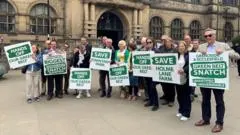
Sheffield's Local Plan has been further delayed after planning inspectors requested additional public consultation on the council's draft development blueprint. This matters because Sheffield has not had an updated Local Plan since 2009, leaving the city vulnerable to uncontrolled development without guaranteed infrastructure or affordable housing provisions.
The proposed plan would see more than 3,500 homes, alongside schools and cemeteries, built on 14 green belt sites concentrated mainly in two postcodes. The final council decision, originally scheduled for summer, is now postponed until at least 26 October to allow for further consultation. The delay has proved contentious: the council's Labour and Green Party groups support the plan (arguing that rejection could impose stricter housing targets requiring even more green belt development), whilst the Sheffield Greenbelt Alliance welcomes the postponement as essential to protect farmland and wildlife habitats.
- Sources
- 3
- Outlets
- 3
- Left · Centre · Right
- 0 · 1 · 0
In short
- Sheffield Local Plan delayed by inspectors pending fresh consultation until October
- Proposes 3,500 homes and facilities on 14 green belt sites
- Council warns delay risks stricter targets; campaigners welcome protection for green spaces
How this story developed
- 2 months ago Planning inspectors have requested that Sheffield City Council carry out a further public consultation on its draft Local Plan, extending the decision timeline until at least 26 October and delaying a final council vote initially scheduled for summer.
- 2 months ago Sheffield's Local Plan has been delayed further after planning inspectors requested an expanded public consultation on the draft plan.
- 2 months ago Sheffield's Local Plan has been further delayed after planning inspectors requested additional public consultation on the council's draft development blueprint.
- 2 months ago Sheffield’s Local Plan has been delayed again after planning inspectors requested further information and another public consultation on proposed green belt development. The consultation runs until 26 October, potentially postponing councillors’ final decision by several months and extending uncertainty over the city’s development strategy.
- 2 months ago Sheffield's Local Plan, which will set development policy through 2039 and determine where over 3,500 homes can be built, has been postponed following planning inspectors' requests for additional information and renewed public consultation.
Full account
Sheffield City Council's Local Plan, intended to shape the city's development over the coming decade, has encountered further delays as planning inspectors request additional consultation on contentious green belt proposals. The plan encompasses over 3,500 new residential properties alongside educational facilities and cemeteries, to be constructed across 14 green belt sites within the city, with the bulk of development concentrated in just two postcode areas. This represents the first comprehensive planning framework update in the city since 2009.
The planning inspectorate, which has been scrutinising the draft plan since 2023, has now instructed the council to undertake an extended public engagement process to address specific concerns about elements of the proposal. The further consultation window extends until 26 October, postponing what had been anticipated as a final decision by the full council during the summer months. The additional delay extends what campaigners describe as an unprecedented number of consultation rounds, prolonging uncertainty for affected communities and development interests alike.
Political support for the plan splits along party lines, with the council's Labour administration and Green Party members backing its adoption. Labour councillors have argued that rejection would risk the imposition of higher housing targets by central government, potentially necessitating even greater incursion into protected green belt areas. The Green Party has positioned the plan as essential for maintaining planning standards and preventing poorly designed applications. The Liberal Democrats, by contrast, oppose the scheme.
Opposition activists have united through the newly formed Sheffield Greenbelt Alliance, viewing the delay as a tactical victory that protects farmland, woodland and wildlife habitats from immediate development pressure. Campaigners have characterised the protracted examination process as symptomatic of inadequate resources and planning rigour in the plan's preparation. The council has emphasised that absence of an adopted Local Plan creates risks of unplanned development proceeding without adequate provision for supporting infrastructure or affordable housing requirements.
Where outlets differ
From the full account, which is AI-written from the sources:
Only one usable news source provided; SOURCE 1 contained no news content (Google privacy policy boilerplate only)
Steelman: both sides, in good faith
The strongest fair case each way — we don't pick a winner.
The case for
Sheffield faces a genuine housing crisis and planning vacuum—the city has operated without an updated Local Plan since 2009, creating uncertainty and potentially inviting uncontrolled development. The proposed plan attempts to deliver necessary infrastructure, schools, and affordable housing alongside the required 3,500+ homes; rejecting it risks imposing stricter targets that could paradoxically require even more green belt development. Concentrating development on 14 sites represents a deliberate strategy to protect other green spaces whilst meeting urgent housing needs.
The case against
Green belt land provides irreplaceable environmental and agricultural functions that, once lost, cannot be recovered. The concentration of 3,500 homes across just two postcodes raises legitimate concerns about fairness and concentrated environmental impact on those communities. Proper public consultation on permanent land-use changes—particularly for farmland and wildlife habitats—is not a delay but a democratic necessity, ensuring communities understand implications and contribute meaningfully to decisions affecting their surroundings for generations.
Explained simply
A Local Plan is a long-term strategy that sets out where a city should build new homes, schools, shops and other buildings over the next 15 years or so. Every local council needs one to manage development and guide how their area grows. Sheffield's Local Plan has been in preparation for several years and is now being formally reviewed before councillors can decide whether to approve it.
The plan is controversial because it proposes building more than 3,500 new homes on green belt land—protected countryside and fields around the edge of the city. It identifies 14 green belt sites for development, with most construction concentrated in just two postcodes. Releasing green belt is contested because it means permanent loss of farmland, wildlife habitats and open space that would otherwise remain protected indefinitely.
Different political groups and campaigners have conflicting views about whether to proceed. Labour and Green councillors support the plan, arguing that rejecting it would leave Sheffield facing even higher housing targets and a messier pattern of development decisions. Liberal Democrats oppose it, and environmental campaigners argue that green fields and wildlife should be protected instead. The outcome of this decision will shape Sheffield's development priorities and the fate of its surrounding countryside for decades.